
Clean a bamboo matcha whisk immediately after use with clean lukewarm water. Move the tines gently through a bowl of water, inspect the inner rows for green residue, rinse again if needed, shake off loose droplets and leave the whisk exposed to circulating air until fully dry. Do not put a chasen in a dishwasher or scrub its fine tines.
This page covers routine cleaning after preparing matcha. First-use blooming, long-term storage, repair and buying a whisk are different tasks. Keeping those jobs separate makes the care instructions safer and easier to follow.
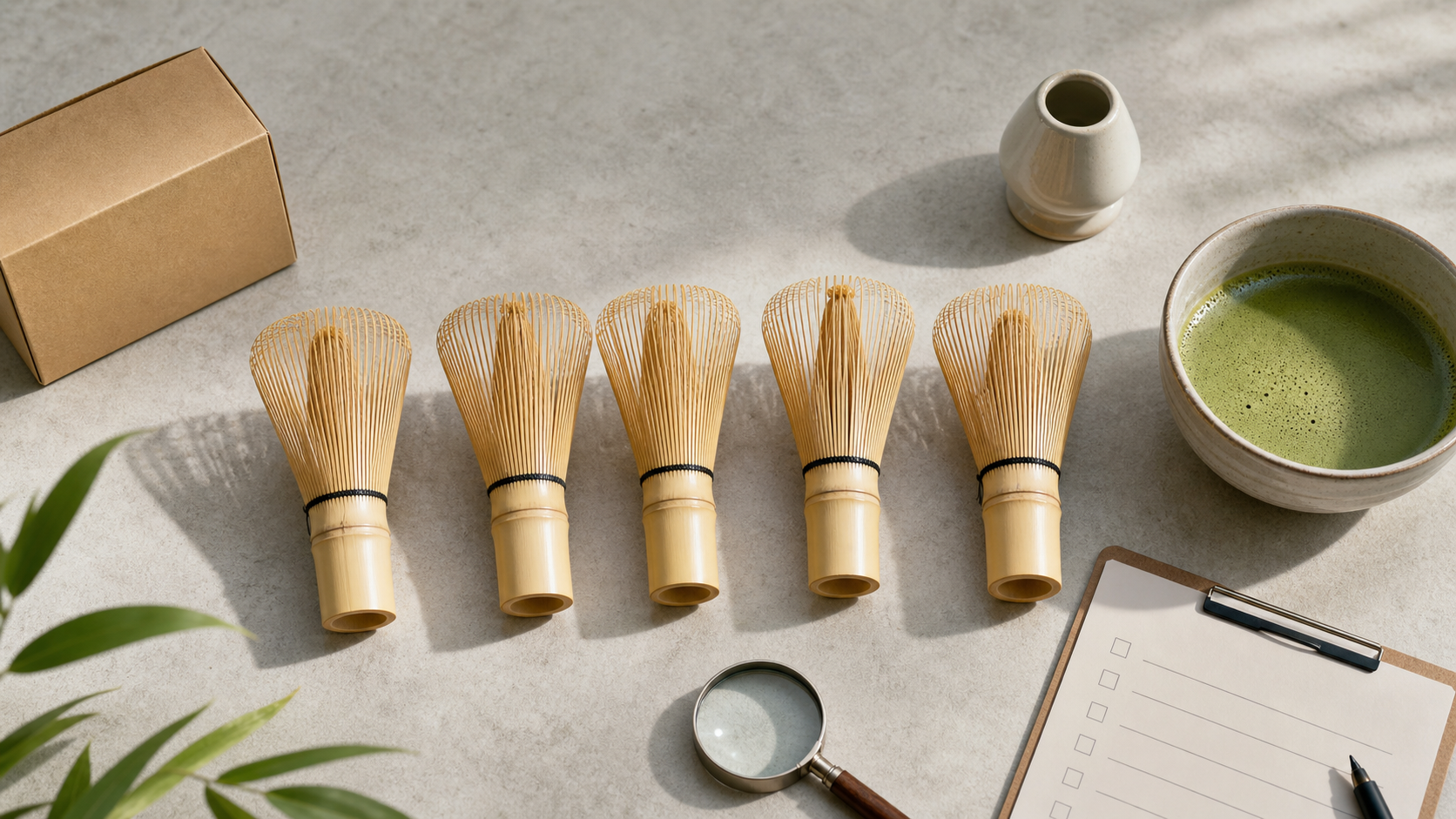
A five-step after-use cleaning routine
- Rinse promptly. Hold the handle and pass only the tines through a gentle stream of lukewarm water, or place them in a bowl of clean water. Do not leave matcha to dry between the inner tines.
- Whisk clean water briefly. Use a light back-and-forth motion in the bowl. The water should loosen suspended powder without fingers, a brush or a cloth pulling on the delicate tips.
- Inspect from several angles. Look between the outer and inner rows and near the base of the tines. If green material remains, replace the water and repeat gently.
- Remove loose water. Lift the whisk and give it a small controlled shake over the sink. Do not strike it against the bowl or counter.
- Air-dry completely. Keep the damp whisk in an open, ventilated place. Do not return it to a shipping tube, box, drawer or other closed container while moisture remains.
The goal is residue removal with minimal mechanical stress. A chasen is cut into many thin bamboo tines; aggressive handling can bend, fray or break them even when the whisk looks sturdy at the handle.
Do you need soap?
For a chasen used only to whisk pure matcha and water, tea specialists commonly recommend a prompt water-only rinse. Avoid scented detergent, bleach, abrasive cleaners and dishwasher cycles unless the whisk’s manufacturer gives different instructions. The concern is not a dramatic claim about bamboo “losing all its oils”; it is the practical difficulty of rinsing chemicals from a dense, delicate natural-fiber tool without damaging it.
Keep the whisk out of milk, syrup and finished latte foam when possible. Whisk matcha with water first, then pour the concentrate into the other ingredients. If dairy, plant beverage, sugar or another perishable mixture dries deep inside a chasen, a simple tea-rinse routine may no longer be adequate. Follow the maker’s care directions and replace a whisk that cannot be cleaned confidently.
Water temperature and soaking limits
Use water that feels comfortably warm, not boiling. Very hot water is unnecessary for removing fresh matcha and adds avoidable stress to thin bamboo. Routine cleaning is a rinse, not prolonged soaking: immerse the tines briefly, but keep the bound handle area from sitting in water.
A short warm-water preparation before whisking is a separate first-use or pre-use practice. It should not be confused with leaving a used whisk submerged for an extended period.
Green color, stuck powder or mold?
| What you see | Practical response |
|---|---|
| Loose bright-green particles | Repeat the gentle clean-water whisk and inspect again. |
| Faint even green tint on otherwise sound bamboo | May be cosmetic staining; confirm there is no removable material, odor or fuzzy growth. |
| Dark or fuzzy spots, persistent musty odor, or material that returns | Stop using the whisk. Do not rely on a cosmetic rinse to establish that it is safe. |
| Splintered, sharply broken or shedding tines | Replace the whisk so fragments do not enter a drink. |
A photograph on the internet cannot reliably diagnose growth on a damp natural material. When appearance or odor is genuinely suspicious, replacement is more defensible than bleach, boiling or an attempt to hide the spot.
Cleaning mistakes that shorten useful life
- Waiting until powder has dried hard inside the tine rows.
- Pressing the whisk against the bottom or wall of the bowl while rinsing.
- Pulling individual tips with a towel, sponge, toothbrush or fingernail.
- Using a dishwasher, boiling water or a forceful spray.
- Leaving the whisk submerged by its handle.
- Sealing damp bamboo in its retail tube or a drawer.
- Continuing to use a whisk that sheds splinters.
No responsible guide can promise that cleaning will make every whisk last a fixed number of months or years. Frequency of use, tine count, bamboo condition, whisking force, bowl contact, drying environment and accidental damage all matter.
Café cleaning workflow
A café should not treat a traditional bamboo chasen as if it were automatically covered by a home ritual. Define which drinks it contacts, how it is rinsed between orders, where it dries, who inspects it and when it is discarded. Local food-safety requirements and the business’s sanitation plan control commercial use.
For higher throughput, test whether a suitable food-contact mixing tool is easier to clean and standardize. The sensory role of a chasen does not exempt a business from hygienic equipment practices.
Related preparation and sourcing guides
Use the 2 g beginner preparation guide to reduce bowl contact and unnecessary force. Commercial buyers comparing tine patterns, inspection points and packaging can use the bamboo matcha whisk buyer’s guide. Sailtik does not claim that one cleaning method guarantees a specific lifespan for every whisk.
Frequently asked questions
How often should I wash a matcha whisk?
After every use. Fresh suspended matcha is easier to remove than powder that has dried between the tines.
Can I clean a matcha whisk in the dishwasher?
No. Heat, detergent, water pressure and movement can damage a traditional bamboo chasen. Clean it by hand.
Can I wipe the tines with a towel?
Air-drying is safer. Cloth can catch the thin tips and pull them out of shape. If droplets remain, use a gentle shake rather than rubbing.
This is general equipment-care information. Follow the whisk maker’s instructions and applicable commercial food-safety requirements.