
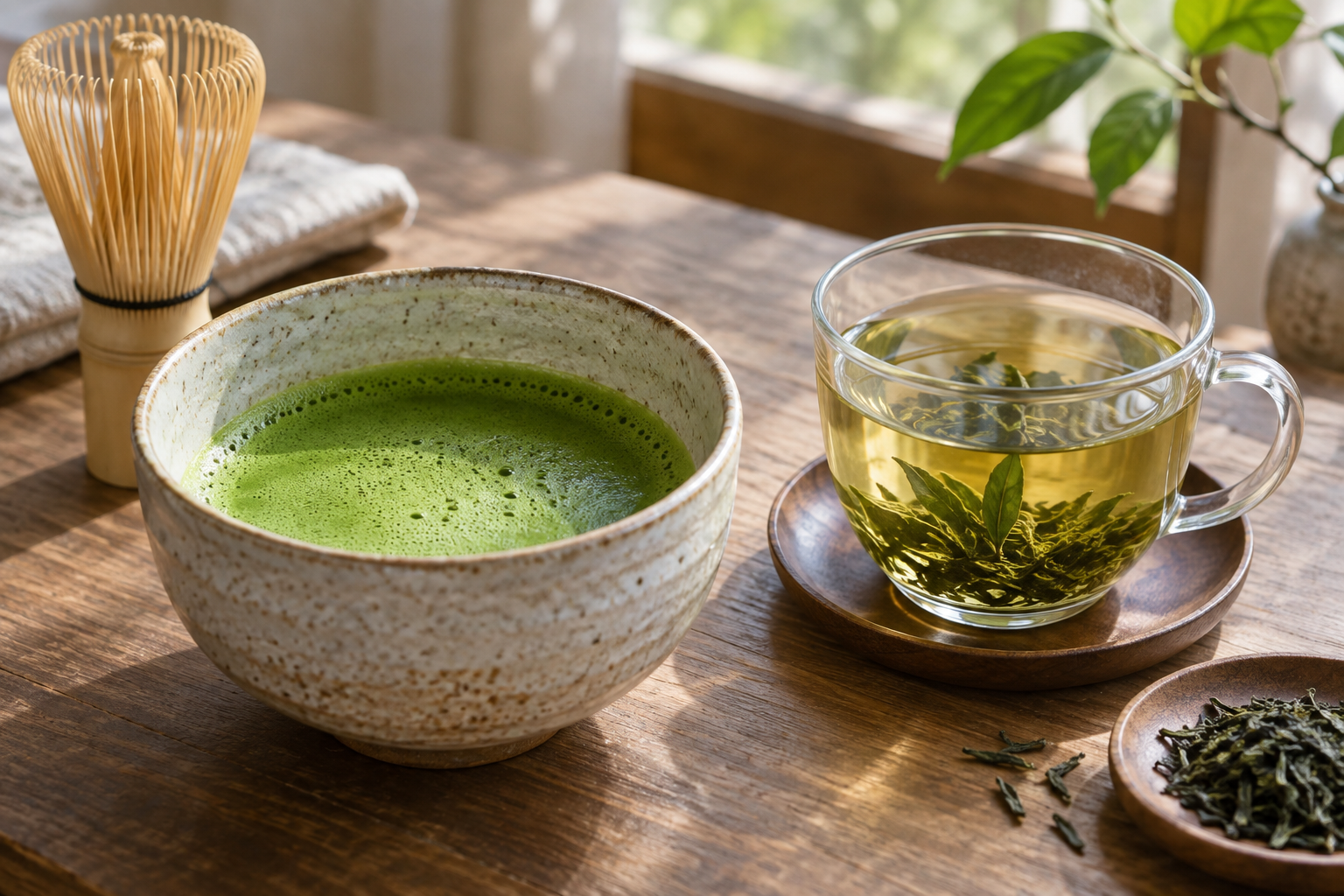
Usually, matcha has more caffeine per serving than ordinary brewed green tea. The reason is not that matcha comes from a different plant. Both come from Camellia sinensis. Matcha is powdered tea that stays in the drink, while brewed green tea is steeped and then strained or removed. The actual result still depends on the amount of tea, water, steep time and product.
Why the preparation changes the comparison
When you drink matcha, you consume the ground leaf. A typical bowl or cup may use around 1–2 grams of powder, but café recipes can use more. With ordinary green tea, caffeine moves from the leaves into the water during steeping; most of the leaves do not end up in the finished drink. A large mug made with a weak tea bag can therefore contain less caffeine than a small, heavily dosed matcha.
This is a serving comparison, not a rule about every product. A strong loose-leaf green tea brewed for several minutes can approach the lower end of a light matcha serving. A decaffeinated green tea and a high-dose café matcha are even farther apart.
What do current sources say?
Harvard Health describes matcha as typically having more caffeine than other green teas, while still usually having less than coffee. A recent review of matcha composition found that caffeine varies across powders and samples; that kind of variation is why a single number should not be printed as if it were a label for every bowl.
For a practical estimate, treat the powder dose as the first question. A one-gram preparation and a three-gram latte are not the same serving, even if both are called “one matcha.” Water temperature and whisking affect extraction and texture, but the grams of powder remain the bigger driver when the whole leaf is consumed.
Matcha vs brewed green tea: the useful differences
| Detail | Matcha | Brewed green tea |
|---|---|---|
| What you drink | Powder dispersed in water or milk | Water infused with tea leaves |
| Leaves in the cup | Yes, as powder | Usually no; leaves are removed |
| Main caffeine variable | Grams of powder and product concentration | Leaf amount, water, temperature and steep time |
| Sweetener required? | No; plain matcha is unsweetened | No; plain tea is unsweetened |
| Can the result reverse? | Yes. A weak matcha can contain less caffeine than a strongly brewed green tea. | |
Does more caffeine mean matcha feels stronger?
Not necessarily. People notice caffeine differently depending on sleep, food, body size, medication, tolerance and the speed of the drink. Matcha also contains L-theanine, but that does not make it caffeine-free or guarantee a particular “calm” feeling. If you are comparing two drinks for an afternoon routine, compare their published caffeine values or reduce the powder dose rather than relying on colour or taste.
Milk and sweetener change the nutrition and flavour of a matcha latte; they do not erase the caffeine already present in the powder. A green tea bag with sugar has the opposite issue: the caffeine may be modest while the added sugar is easy to overlook.
How to make a fair comparison at home
- Weigh or estimate the matcha powder you actually use.
- For green tea, record the number and size of bags or grams of loose leaf.
- Keep the cup volume and steeping instructions consistent for a few days.
- Use the brand’s label or published lab data when available; otherwise describe the result as an estimate.
Do not compare a teaspoon of matcha with a whole pot of green tea without stating the serving size. That is how otherwise reasonable caffeine charts become misleading.
Bottom line
Matcha generally delivers more caffeine than a normal serving of brewed green tea because the powdered leaf remains in the drink. It is not a guaranteed winner: dose and brewing strength can reverse the result. If you want a lower-caffeine cup, use less matcha, choose a lighter tea, or check a decaffeinated product rather than trusting the drink’s colour.
Sources and scope
- Harvard Health: Matcha (matcha vs brewed green tea caffeine context).
- Peer-reviewed matcha composition review (variation in caffeine and other compounds across samples).
- U.S. FDA caffeine information (general caffeine context and sensitivity caveats).