
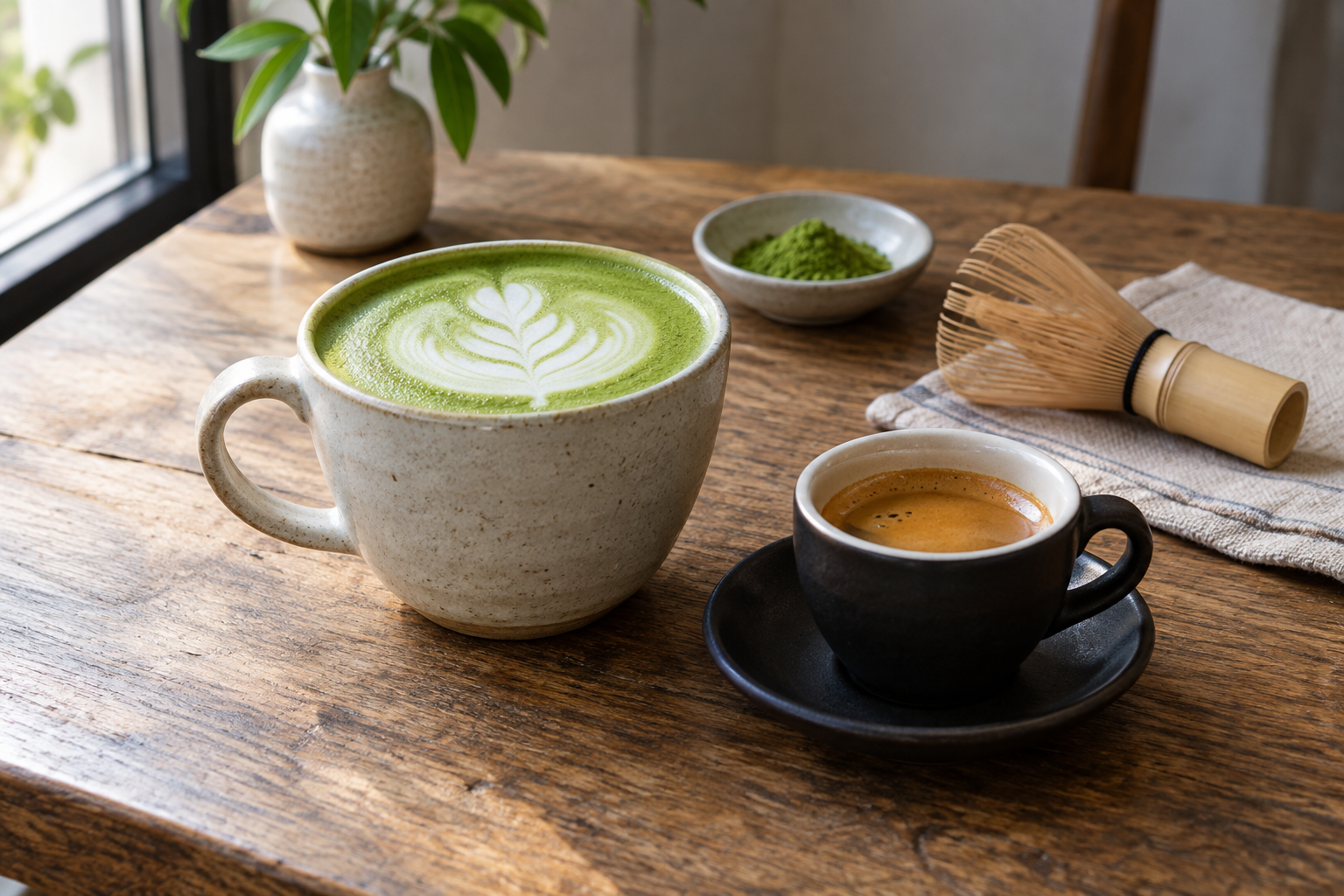
No. A traditional matcha latte is not coffee. It is a tea-based drink: matcha powder is whisked with water and mixed with steamed or cold milk. It can sit on a café’s coffee menu and still contain no espresso or brewed coffee. The confusing part is caffeine: matcha has caffeine, so it can feel like a coffee alternative even though the ingredients and preparation are different.
What is actually in a matcha latte?
The base is finely ground green tea leaf, not a coffee extract. A café may whisk the powder with a small amount of warm water, then add milk. A homemade version might use dairy or a plant-based milk, with sweetener added to taste. The green colour comes from the tea powder itself.
That is different from a caffè latte, which combines espresso with steamed milk. If the order contains espresso as well as matcha, it is a hybrid drink—sometimes called a “dirty matcha”—rather than a standard matcha latte. The name varies by café, so the ingredient list matters more than the label.
Why does a matcha latte show up in coffee shops?
Coffee shops sell more than coffee. “Latte” describes the milk-based format, not the plant used to make the drink. Chai latte, turmeric latte and matcha latte use the same broad café language even though none is automatically an espresso drink.
For example, Starbucks lists its Matcha Latte under its menu but describes the drink as milk, classic syrup and matcha made from ground green tea. Its current U.S. nutrition page lists the grande recipe as 65 mg of caffeine and says the value is approximate. That is a useful reminder: a drink can be on a coffee-chain menu without being coffee, and a menu’s recipe—not the word “latte”—determines what is in the cup.
Does a matcha latte have caffeine?
Usually, yes. Caffeine comes from the tea leaves in the matcha. The amount depends on the powder dose, recipe and café. Starbucks’ current coffee-science explainer gives a tall Matcha Tea Latte as roughly 40–45 mg of caffeine, while its product nutrition page lists approximately 65 mg for a grande Matcha Latte. Those figures are brand-specific estimates, not a universal matcha-latte standard.
A coffee latte’s caffeine comes from its espresso shots. A single espresso shot is often around 60–75 mg, but café recipes and shot sizes differ. Comparing the drinks by colour or “strength” is unreliable: a generously dosed matcha can contain more caffeine than a lightly made one, and a double-espresso latte will change the comparison again.
Matcha latte vs coffee latte at a glance
| Question | Matcha latte | Coffee latte |
|---|---|---|
| Plant source | Green tea leaves, ground into powder | Coffee beans, brewed as espresso |
| Green tea powder present? | Yes | No |
| Espresso present? | Not in a standard recipe | Yes |
| Caffeine | Yes; depends on matcha amount | Yes; depends on espresso shots |
| Sweetness | May come from syrup, sugar or flavoured milk | May come from syrup or flavoured milk |
What to ask when ordering
If you want a tea-based drink, ask whether the café’s matcha latte contains only matcha, milk and sweetener. If you want coffee flavour as well, ask for espresso to be added; do not assume the barista will make a hybrid drink unless the shop offers it. If caffeine matters to you, ask about the number of matcha scoops or espresso shots and check the shop’s nutrition information when it is available.
Plant-based milk changes the milk component, but it does not remove the caffeine in the matcha. “Unsweetened” also describes added sugar, not caffeine. Those are separate customisations.
The short answer
A matcha latte is a milk-based matcha drink, not coffee. It belongs on many coffee-shop menus because cafés use “latte” for a style of drink. It still contains caffeine from green tea leaves, and the exact amount changes with the powder dose and recipe. For a broader look at the two stimulants, see our guide to matcha and coffee comparisons; for the ingredient itself, start with what matcha is.
Sources and scope
- Starbucks Matcha Latte nutrition and ingredients (U.S. menu checked September 2026).
- Starbucks coffee-science explainer (caffeine examples and preparation caveat).
- Harvard Health: Matcha (matcha as powdered green tea and caffeine context).