
If you want to use matcha while trying to lose weight, use it as a beverage choice—not as a treatment. The most defensible strategy is to replace a higher-calorie drink with plain or lightly sweetened matcha while keeping your overall eating and activity plan in charge.
Matcha does not create a guaranteed calorie deficit, and no preparation time, grade or dose has been proven to make a person lose weight. Green-tea research suggests at most a modest average effect, often from concentrated extracts rather than ordinary matcha drinks.
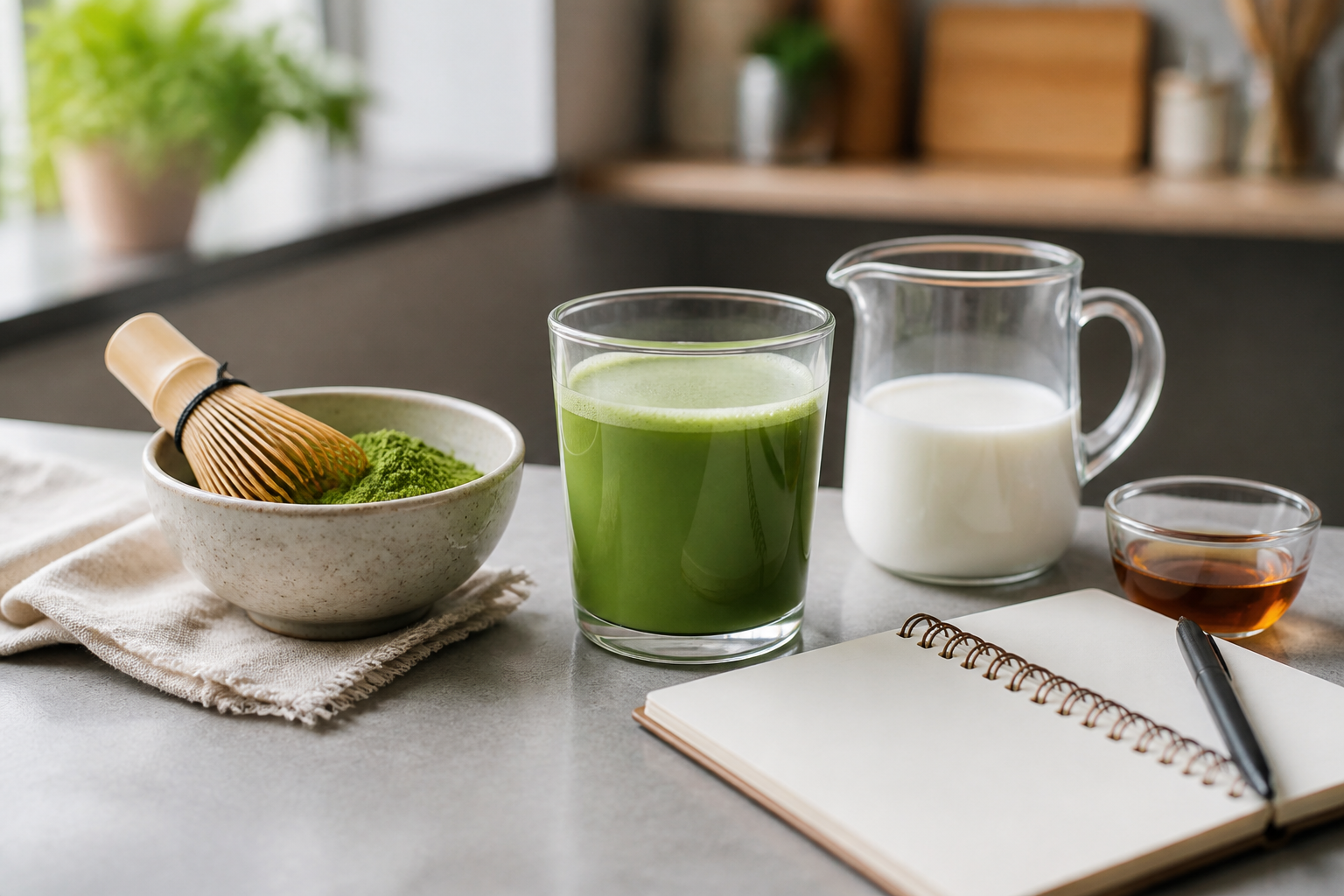
The practical method
- Identify the drink you are replacing. A swap can reduce intake; adding matcha on top of the existing routine may not.
- Start with a measured powder serving. Sailtik generally recommends 1.5–3 g per cup for beverage testing, but this is a recipe range—not a weight-loss dose.
- Whisk with water first. This disperses the powder and makes the base recipe repeatable.
- Choose milk deliberately. Read the nutrition label and measure the amount instead of assuming every plant milk is low in calories or sugar.
- Control sweeteners and toppings. Syrup, sweetened premix, cream and cold foam can change the beverage more than the matcha does.
- Count all caffeine sources. Do not increase servings simply because progress is slow.
- Track the total routine. Food, beverages, activity, sleep and medicines can all affect weight.
Three preparation patterns
| Pattern | Construction | What it tests |
|---|---|---|
| Plain matcha | Measured powder plus water | The lowest-complexity beverage and easiest baseline |
| Unsweetened latte | Measured powder, water and a measured unsweetened milk | Whether added creaminess improves adherence without excessive extras |
| Controlled-sweetness latte | Same base plus a measured sweetener | The smallest sweetness level that makes the drink sustainable for you |
None of these is a universal “fat-burning recipe.” The useful comparison is with the beverage it replaces and with your complete plan. A sweetened matcha latte can still fit some plans, but its ingredients must be counted honestly.
Why we do not prescribe a special timing trick
Current search results often recommend matcha first thing in the morning or immediately before exercise. Those instructions overstate what the evidence can establish for an ordinary matcha beverage. Timing should first protect sleep, avoid unwanted stomach symptoms and fit the user’s routine.
Because matcha contains caffeine, late-day use may be unsuitable for some people. If a morning cup replaces a sweetened coffee and helps maintain a consistent plan, that behavioral fit is more defensible than claiming a special metabolic window.
What the evidence says—and does not say
The National Center for Complementary and Integrative Health says green-tea catechins and caffeine may have a modest effect on body weight. It also stresses that results can vary with product composition and activity, and that many studies used green-tea extracts rather than a beverage.
The NIH Office of Dietary Supplements similarly describes any effect as small. The CDC’s weight-management guidance emphasizes healthy eating, activity, sleep and stress management. Together, these sources support using matcha as one compatible choice—not presenting it as the engine of weight loss.
Avoid these shortcuts
- Do not buy a grade solely because it is marketed for weight loss.
- Do not treat “ceremonial,” “premium” or “organic” as proof of a metabolic effect.
- Do not copy a green-tea-extract dose into a matcha recipe.
- Do not replace a meal with matcha unless a qualified professional has designed that plan for you.
- Do not ignore syrup, premix, milk or toppings when comparing drinks.
- Do not keep increasing caffeine when the scale does not change.
Safety and individual limits
Green tea consumed as a beverage has not raised safety concerns for most adults in moderate amounts, but matcha contains caffeine. Concentrated extracts are a different product category; NCCIH reports gastrointestinal effects, increased blood pressure, medicine interactions and uncommon liver injury primarily with tablets or capsules.
Ask a qualified clinician for individualized advice if you are pregnant or breastfeeding, take medicines, have a liver or heart condition, have an eating disorder history, or need treatment for overweight or obesity.
Frequently asked questions
Should I drink matcha with water or milk?
Either can fit. Water gives the simplest baseline; milk changes taste, texture and nutrition. Compare actual labels and measured portions rather than relying on the milk category.
How much matcha should I take to lose weight?
There is no established matcha dose that guarantees weight loss. A culinary serving recommendation should not be converted into a medical dose.
Will drinking it every day work better?
Daily use does not guarantee an outcome. Read our separate guide on daily matcha and weight loss for the causal evidence and a tracking method.
For cafés and product developers
A café can responsibly develop a less-sweet recipe, publish complete nutrition where required and avoid unsupported slimming claims. Sailtik can recommend samples according to the beverage’s target color, flavor and commercial format; that sample process does not establish a health outcome. Contact Carol with the recipe and application if you need a matcha sample selected for beverage testing.
This article is general education, not individualized medical or nutrition advice.