
No ceremonial, culinary, organic, Japanese, Chinese or other matcha category has been proven best for weight loss. Grade, origin, color and price can affect identity, flavor, documentation and recipe performance, but they do not establish a superior slimming outcome.
If matcha is part of a weight-management plan, the most useful product is one with a clear ingredient identity and suitable documentation that makes a lower-sugar beverage enjoyable enough to replace a higher-calorie option. That is a recipe and adherence decision—not evidence that the powder burns fat.
Why “best matcha for weight loss” lists are misleading
Current search results commonly rank matcha by ceremonial wording, bright color, presumed EGCG content, organic certification or origin. Those features may matter for other buying objectives, but a ranking requires human trials that compare defined matcha products on a meaningful weight outcome. The available evidence does not provide that comparison.
One small non-randomized matcha study paired the intervention with a low-calorie diet and did not find significant between-group differences in body weight, BMI, waist circumference or fat mass. Broader green-tea reviews describe any average effect as small or clinically unimportant. Neither line of evidence identifies a winning matcha grade.
Select the product in this order
| Check | What to look for | What it does not prove |
|---|---|---|
| Product identity | 100% matcha when you want pure tea powder, or a fully declared blend | A weight-loss effect |
| Finished recipe | A powder whose taste works with little or measured sweetener | That darker or brighter green burns more fat |
| Documentation | Ingredient statement, allergen declaration and relevant lot documents | Clinical efficacy unless a specific valid study exists |
| Testing fit | Color, bitterness, aroma and stability in the intended drink | That one supplier’s grade name equals another’s |
| Serving consistency | A weighed recipe that can be repeated | A medically effective dose |
Pure matcha versus sweetened mixes
Pure matcha contains tea powder as the ingredient. A latte mix may contain sugar, milk solids, flavors or carriers, and one gram of the mix is not one gram of matcha. Read the ingredient list and serving instructions before comparing products.
A sweetened mix is not automatically incompatible with weight management, but its complete contribution must be counted. Choosing pure matcha can give the recipe developer more control over milk and sweetener; it does not make the powder a treatment.
Ceremonial versus culinary grade
These labels are commonly used to communicate sensory position and intended application, but they are not universal clinical categories. A smoother high-end matcha may be easier to drink plainly. A more robust café grade may remain perceptible in milk. Either outcome can help a recipe work, yet neither grade has demonstrated superior weight loss.
Do not assume a higher price, brighter color or softer taste means more caffeine or a fixed catechin concentration. If a measurable chemical specification matters, request evidence for the identified product and lot rather than inferring it from grade language.
Does organic status or origin change the answer?
Organic certification concerns a production and certification system; it is not proof of a better weight outcome. Origin can influence cultivar, processing, sensory profile, documentation and buyer preference, but no country or region can claim a clinically superior slimming matcha from origin alone.
Choose certification and origin when they are genuine requirements for your market or brand. Keep those procurement decisions separate from health marketing claims.
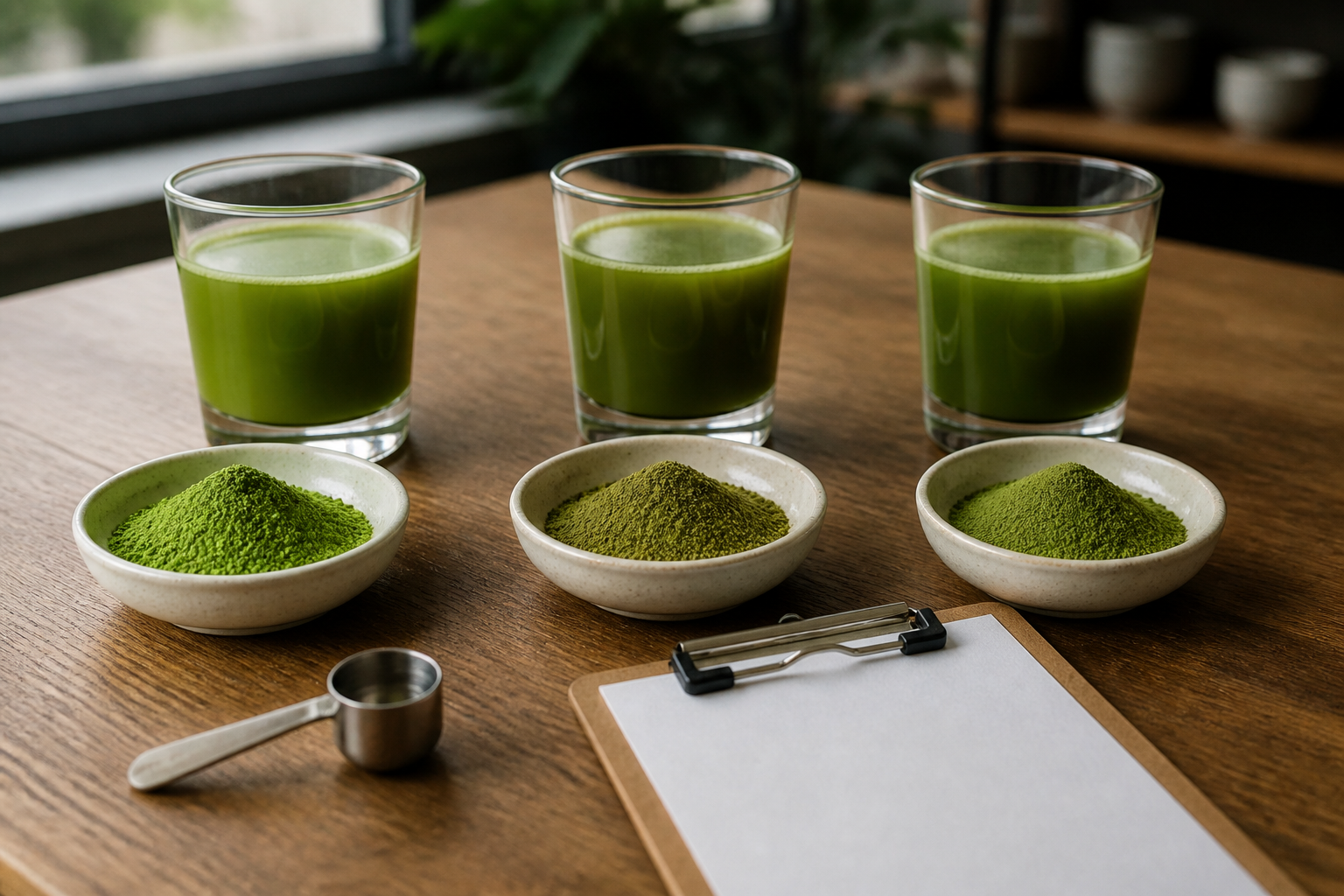
A three-sample test that answers the real question
- Use the same powder mass, liquid volumes and preparation method for each sample.
- First taste every powder with water to identify bitterness, aroma and aftertaste.
- Repeat in the intended milk and at the same sweetness level.
- Reduce sweetener stepwise and note which sample remains acceptable.
- Record color and flavor after the realistic holding time.
- Review documentation separately from sensory scoring.
- Select for the finished product, not for an unsupported health promise.
This test can identify the matcha that supports a less-sweet recipe for a particular customer. It cannot demonstrate that the chosen sample causes weight loss.
Frequently asked questions
Is ceremonial matcha best for weight loss?
No. It may be preferred for a smoother water-based drink, but no ceremonial label proves a better weight outcome.
Is organic matcha better for losing weight?
No comparative clinical evidence establishes that organic certification produces more weight loss. Buy certified organic when that verified attribute matters to the buyer or market.
Should I choose the matcha with the most caffeine?
No. More caffeine is not a validated selection rule for weight loss and may worsen sleep or side effects. Count total caffeine and use product-specific data where available.
For cafés and private-label buyers
Sailtik recommends samples around the intended drink, target color, flavor, pack format and business model. Samples are selected internally rather than sending every model, and the buyer should judge fit in the actual recipe. Contact Carol with the application and sweetness target if you need a sample set; no sample recommendation is a weight-loss claim.
For preparation decisions, see how to use matcha during weight management. For the underlying efficacy question, read what human evidence shows.
This article is general education, not individualized medical or nutrition advice.