
Pure, single-ingredient matcha is generally gluten-free because it is powdered tea leaf, not wheat, barley or rye. That answer applies to the powder itself. A latte mix, flavored product, dessert, topping or café preparation needs its own ingredient, label and cross-contact check.
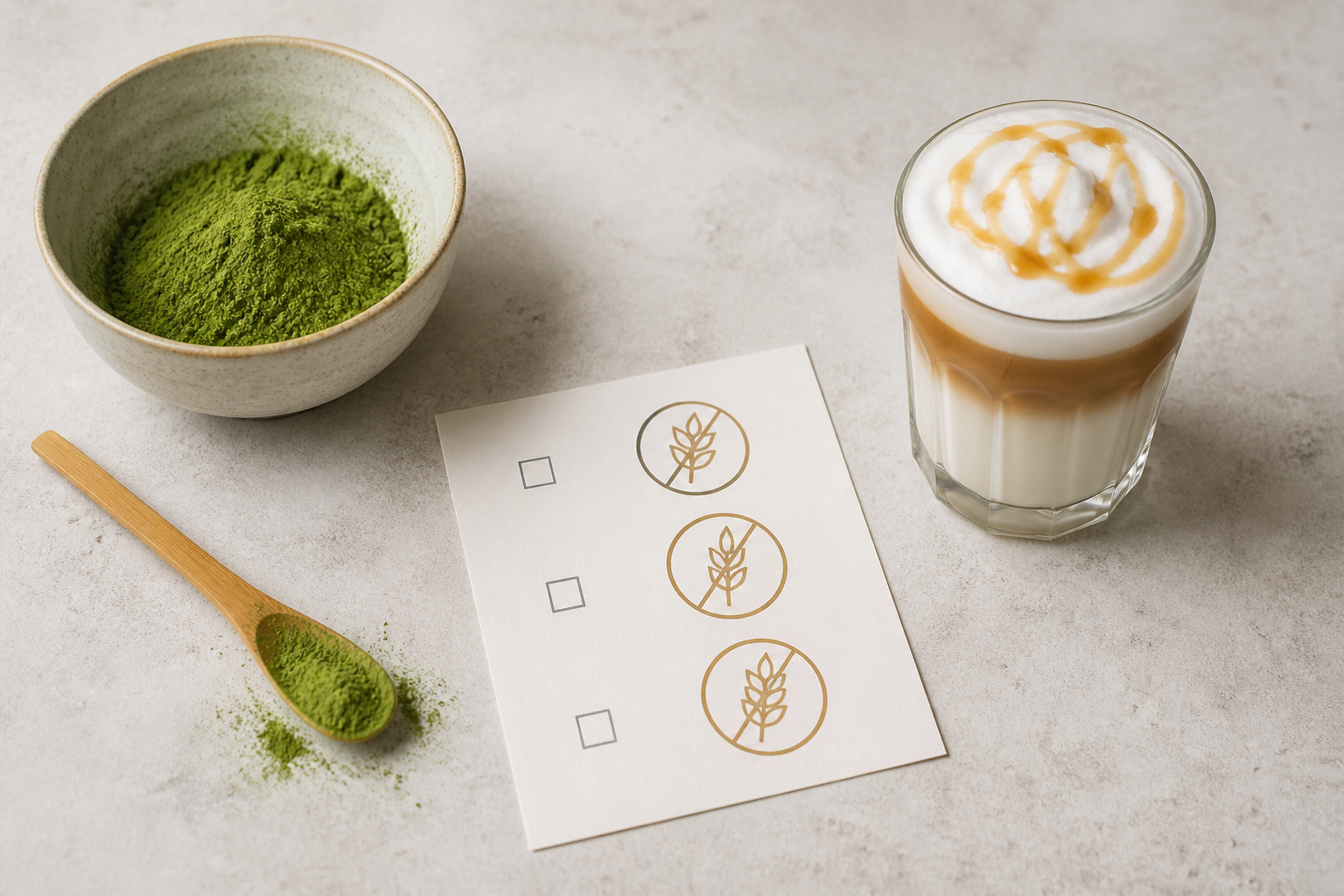
Why plain matcha is different from a matcha product
Traditional matcha is finely milled Camellia sinensis leaf. Tea leaves do not naturally contain the gluten proteins associated with wheat, barley and rye. A plain powder whose only ingredient is tea therefore starts with a simple ingredient answer. “Matcha” on the front of a package, however, does not guarantee that the package contains only matcha.
| What you are checking | What to review |
|---|---|
| Plain matcha powder | Ingredient statement, supplier specification and any allergen/cross-contact statement |
| Latte or instant mix | All ingredients, milk or oat components, flavorings, carriers and processing controls |
| Prepared café drink | Drink ingredients, toppings, shared tools and the store’s allergen procedure |
| Matcha dessert or snack | Complete package label, facility statement and recipe components |
What “gluten-free” means on a U.S. label
The U.S. Food and Drug Administration says gluten occurs naturally in wheat, rye, barley and their crossbreeds. Its voluntary “gluten-free” labeling rule requires a food making that claim to contain less than 20 parts per million (ppm) of gluten and to meet additional ingredient conditions. A food can be naturally free of gluten without displaying a gluten-free claim, but a claim on a processed food still has to meet the rule.
For a person with celiac disease or a medically advised gluten-free diet, “the tea leaf itself has no gluten” is not the same as “every product or drink made with this brand is safe.” Ask for the current label and preparation information when the answer matters medically.
Dairy-free is a separate question
Pure matcha powder can be dairy-free because dairy is not part of the tea leaf. A matcha latte may contain cow’s milk, milk powder, sweet cream or a plant-based alternative. Changing to oat, soy or almond milk changes the dairy answer but does not automatically establish gluten safety: some oat products and flavorings require their own label and cross-contact review.
A practical check before buying or ordering
- Read the ingredient list rather than relying on green color or the word “tea.”
- Look for wheat, barley, rye, malt, cookie pieces, cereal, or a flavored premix.
- Check the manufacturer’s allergen and shared-equipment statement.
- For a café drink, ask about the powder, milk, syrups, toppings and shared blender or whisk.
- If you have celiac disease or a serious reaction history, ask the seller or clinician what level of certainty you need.
Sealed single-ingredient powder is easier to evaluate than a drink assembled from several ingredients. A restaurant’s answer may also change by location or supplier, so a previous order is not proof about today’s cup.
Also separate an ingredient statement from a certification claim. A supplier may describe a powder as naturally free of gluten, while a retailer or café may use different controls for storage, scooping and preparation. If the product is repacked, ask which label applies to the package in your hands and whether the lot has a current allergen statement.
“Gluten-free” does not describe caffeine, dairy, soy or other allergens. Each needs a separate review. A drink can be gluten-free and still contain dairy; a plant-based drink can be dairy-free and still need an oat or flavoring check.
Frequently asked questions
Does matcha contain gluten?
Pure matcha made only from tea leaf does not normally contain gluten. The exact package still determines whether an added ingredient or cross-contact warning changes the decision.
Is matcha tea gluten and dairy free?
Plain powder and water are generally both gluten-free and dairy-free. A latte, sweetened mix or flavored product must be checked as a complete recipe.
Do brand names answer the question?
No. Named products can contain different ingredients and controls. Our separate brand pages review specific labels when current evidence is available.
Bottom line
Pure, single-ingredient matcha is generally gluten-free, but the finished product and preparation are what you consume. Read the label, ask about cross-contact and separate gluten from dairy when evaluating a recipe. Sailtik can provide an allergen declaration for a selected matcha transaction; it does not replace the label or controls for another brand’s finished drink.
This article is general food-safety education, not individualized medical advice.