
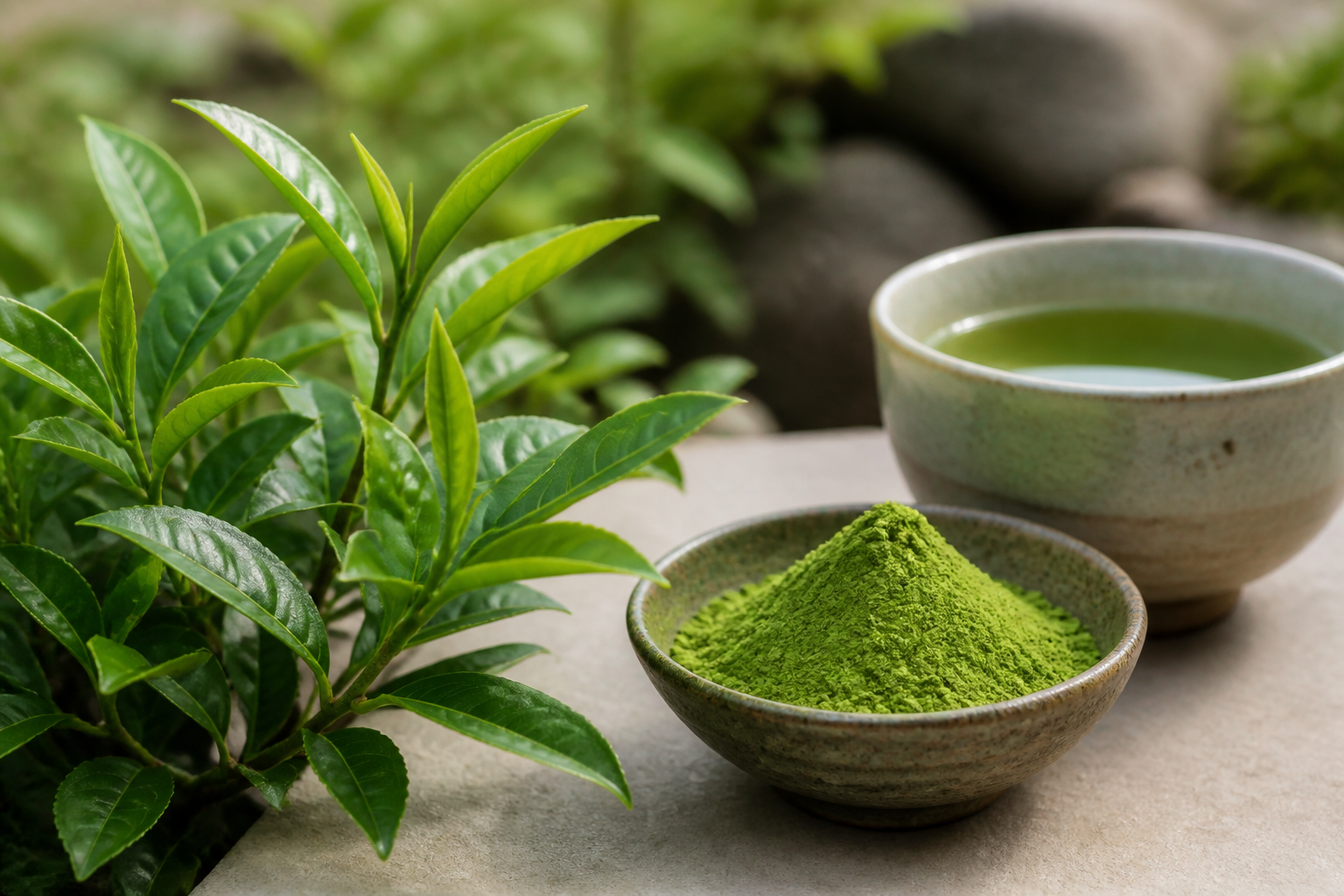
Matcha is not grass. It comes from Camellia sinensis, the tea plant also used to make green, black, white and oolong tea. Matcha is the finely processed powder made from tea leaves.
Why people sometimes call it grass
Matcha is green, leafy and often described with words such as grassy, vegetal or fresh. Those are flavor and appearance descriptions, not botanical classifications. A matcha drink may taste grassy because of the tea leaf, cultivation, processing, freshness and preparation.
How matcha is made
- Tea plants are cultivated and, for traditional matcha production, may be shaded before harvest.
- Leaves are harvested and heat-fixed to limit oxidation.
- The leaf is dried and prepared as tencha, with coarse stems and veins separated.
- The prepared leaf is milled and sifted into a fine powder.
Powdered grass or ordinary leaf powder may be green, but color alone does not make it matcha. Check the ingredient statement, processing description and supplier documentation when identity matters.
Sailtik supplies matcha for beverage and food testing from Guizhou or Zhejiang origins. Buyers should assess the sample and documents for their own application.