
The Starbucks Matcha Crème Frappuccino is not fake matcha, but it is better judged as a sweet blended café treat than as a health drink. On the U.S. Starbucks nutrition page checked for this article on September 11, 2026, a standard Grande 16 fl oz order showed 320 calories, 45 g sugar, 13 g fat and about 65 mg caffeine. That is a very different nutrition profile from plain whisked matcha.
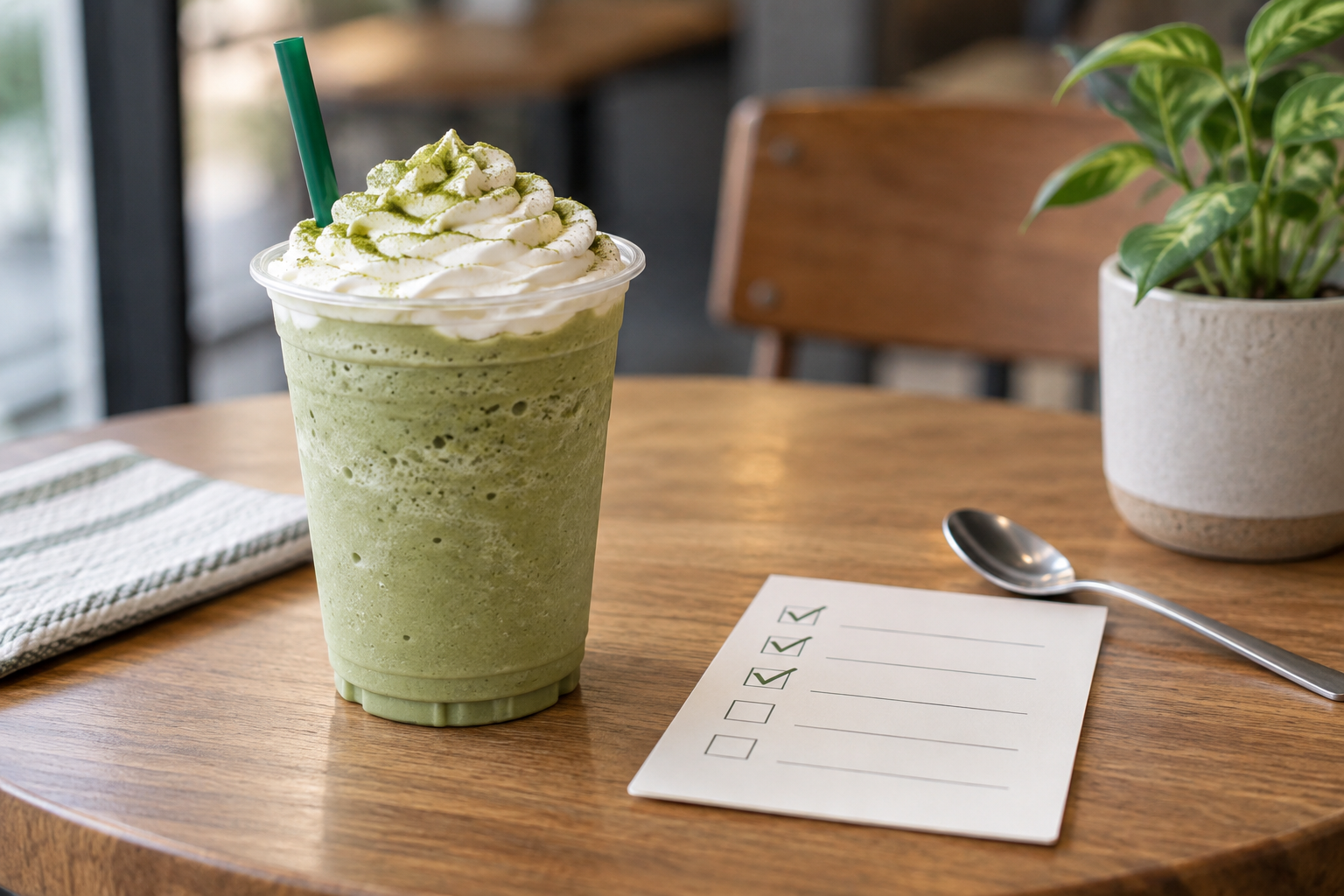
The honest answer depends on what you mean by healthy. If you mean, “Does it contain ground green tea?” yes—the ingredient statement identifies the matcha component as powdered green tea. If you mean, “Is it a low-sugar daily matcha?” no. The standard drink also includes milk, crème Frappuccino syrup, whipped cream and classic syrup, so the tea powder is only one part of the recipe.
What the current Grande numbers say
Starbucks nutrition can change by country, size, milk choice and recipe update, so the date and market matter. The current U.S. Grande baseline I checked showed this:
| Standard Grande U.S. Matcha Crème Frappuccino | Amount shown | Why it matters |
|---|---|---|
| Calories | 320 | More like a snack or dessert drink than plain tea. |
| Total sugar | 45 g | High for one drink; Starbucks lists both syrup and sweetened whipped cream ingredients. |
| Total fat | 13 g | Driven partly by whole milk and whipped cream. |
| Saturated fat | 8 g | A meaningful number if you watch saturated fat. |
| Protein | 5 g | Not much protein for the calories. |
| Caffeine | About 65 mg | Moderate compared with many coffees, but still relevant for caffeine-sensitive people. |
Those numbers also explain why older answers online can be confusing. Some pages quote higher Frappuccino nutrition totals from earlier menus or other markets. For this topic, stale numbers are common enough that you should check the live Starbucks nutrition panel if the exact grams matter for diabetes management, pregnancy, medication interactions, allergies or a clinical diet plan.
The part people miss: total sugar is not the same as added sugar
The Starbucks panel shows total sugar, not a clean split between lactose from milk and sugars added through sweetened components. The FDA explains that total sugars include naturally occurring sugars, while added sugars are sugars added during processing or preparation. So it would be sloppy to describe the full 45 grams as added sugar.
It is still fair to say the drink is sugar-heavy. The ingredient list includes crème Frappuccino syrup, vanilla syrup in the whipped topping and classic syrup, all separate from milk. The FDA’s Daily Value for added sugars is 50 g per day on a 2,000-calorie diet. Without an exact added-sugar split in the visible Starbucks panel, the safer wording is: this order has 45 g total sugar and several sweetened parts, so it is not a low-sugar choice.
Is it healthier than a coffee Frappuccino?
Not automatically. The word matcha can make the drink sound lighter than it is, but the Frappuccino format matters more than the tea name here. A crème Frappuccino is built for a cold, sweet, blended texture. You are drinking matcha inside a dessert-style base, not drinking a bowl of unsweetened tea.
Compared with coffee-based Frappuccinos, the caffeine may be gentler for some people, but that does not make the drink nutritionally light. The 65 mg caffeine figure is moderate; the FDA cites 400 mg per day as an amount not generally associated with negative effects for most adults, while also noting that sensitivity, medications, medical conditions, pregnancy and breastfeeding can change the right limit.
When it can fit just fine
A Matcha Crème Frappuccino can fit if you treat it like a planned sweet drink. It may make sense as an occasional café order, a shared drink, a dessert replacement, or a lower-caffeine alternative to a coffee Frappuccino when you still want something blended and sweet.
It makes less sense if you are ordering it because you want the benefits of plain matcha, a low-sugar afternoon drink, or a nutritionally dense breakfast. Five grams of protein is not much for a 320-calorie drink, and the sugar load arrives quickly because the texture is easy to drink fast.
How to make the order less heavy
The practical move is not to pretend the Frappuccino is plain matcha. It is to decide what you actually want from it, then trim the parts you care least about.
- Choose Tall instead of Grande if you mainly want the flavor.
- Ask for no whipped cream if the topping is not important to you.
- Reduce classic syrup pumps if your store can customize that component.
- Do not add extra drizzles, cold foam or flavored syrups on top of an already sweet base.
- If you want matcha more than a blended dessert, compare it with an iced matcha latte customized with less syrup.
- If caffeine is the concern, remember that the Frappuccino still contains matcha caffeine.
For the broader latte version, Sailtik’s Starbucks matcha health guide and Starbucks matcha sugar guide go deeper into the non-Frappuccino drinks.
What not to assume from the green color
Green does not mean unsweetened. Matcha does not mean Japanese ceremonial grade. And a drink containing real matcha is not automatically equivalent to drinking matcha prepared at home. The public Starbucks page confirms the ingredient identity, but it does not turn that into an origin, harvest, cultivar or grade claim. Sailtik’s ingredient guide to Starbucks matcha covers that distinction.
This is the small but important judgment call: the Matcha Crème Frappuccino can be enjoyable and still not be the drink you choose for daily matcha habits. If you want a sweet blended drink, order it knowingly. If you want tea flavor with more control, start with a matcha latte or make matcha at home where you control powder amount, milk and sweetener.
Bottom line
Calling this drink simply “healthy” or “unhealthy” flattens the useful answer. The standard Grande is high enough in sugar and low enough in protein that it fits best as an occasional sweet café drink. Its nutrition profile comes less from the matcha and more from the Frappuccino base, syrups, milk and whipped cream around it.
Sources checked
- Starbucks U.S.: Matcha Crème Frappuccino product page
- Starbucks U.S.: Matcha Crème Frappuccino nutrition page
- FDA: added sugars on the Nutrition Facts label
- FDA: caffeine intake context
- Sailtik: is Starbucks matcha good for you?
- Sailtik: does Starbucks matcha have sugar?
- Sailtik: is Starbucks matcha real?
FAQ
Does the Starbucks Matcha Crème Frappuccino have real matcha?
Yes. The U.S. ingredient statement checked for this article identifies matcha as ground green tea. That does not make the full blended drink the same as plain matcha.
How much sugar is in a Grande Matcha Crème Frappuccino?
The U.S. Starbucks nutrition page checked on September 11, 2026 listed 45 g total sugar for a standard Grande. Customizations can change the number.
Is the Matcha Crème Frappuccino better than a matcha latte?
Not if your goal is a lighter matcha drink. The Frappuccino is blended with a sweet base and usually whipped cream; a matcha latte gives you more room to adjust sweetness and milk.
Does the Matcha Crème Frappuccino have caffeine?
Yes. The Grande U.S. nutrition page listed about 65 mg caffeine. Starbucks marks caffeine as approximate, so treat it as a useful estimate rather than a laboratory value.