
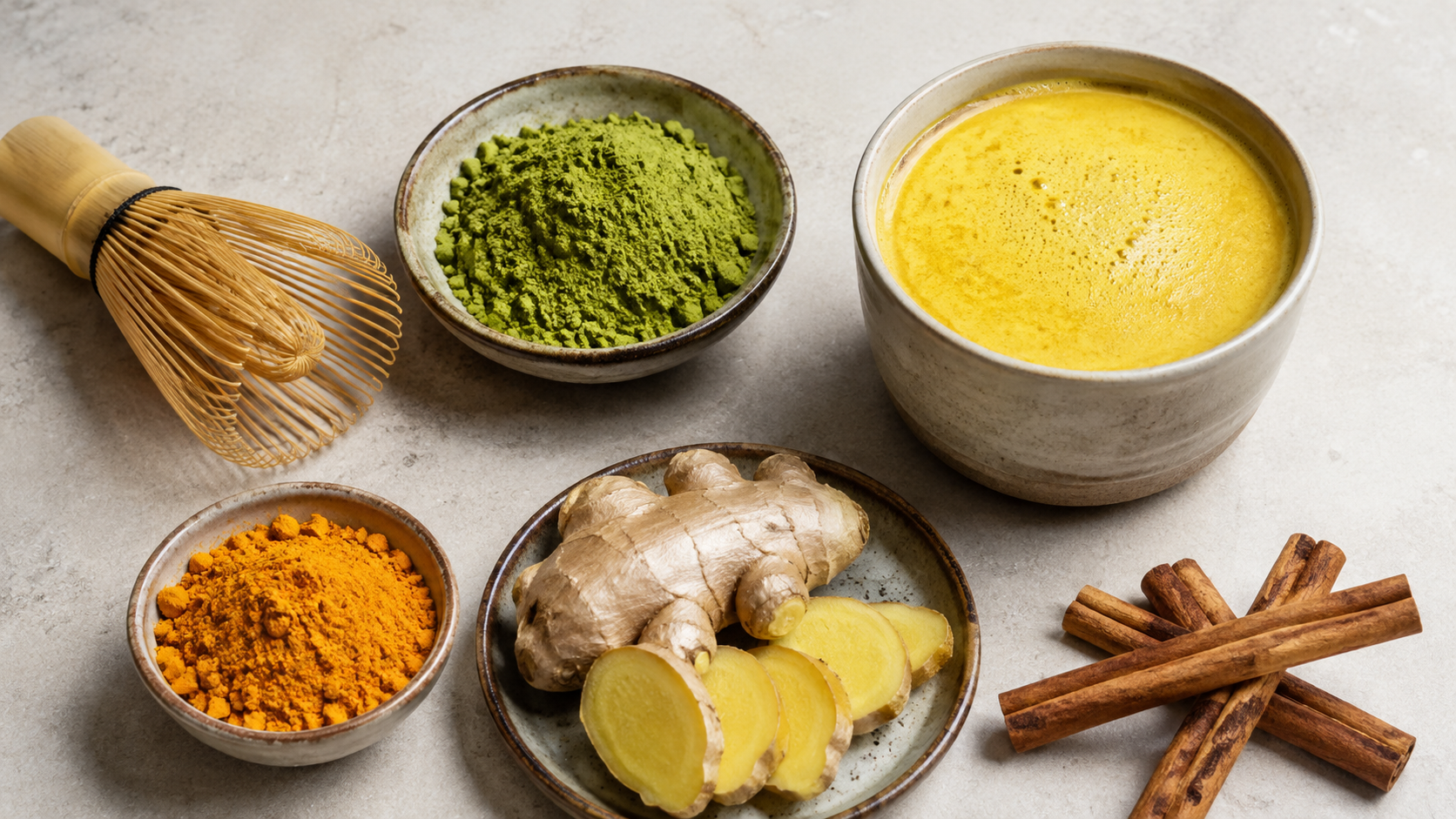
Golden matcha powder is not an official matcha grade. Depending on the seller or recipe, it may mean a turmeric-and-matcha blend, a golden-milk style latte powder, a named commercial item, or simply a marketing description. The only reliable way to identify it is to read the ingredient list: plain matcha should be tea leaf only, while golden matcha blends commonly add turmeric, ginger, cinnamon, dairy powder, sweetener or other ingredients.
The short answer
If a package says “golden matcha powder,” do not assume it is a special Japanese matcha grade. The Japan Matcha Association describes matcha as powdered tencha, which keeps the definition anchored in tea leaf. A yellow or gold drink usually comes from added turmeric, spices, milk, plant milk, sweetener or recipe presentation, not from a recognized “golden” grade of matcha.
This intent deserves a separate page because it is different from asking what matcha is made of. The user is trying to decode a phrase they saw on a label, recipe or search result.
Four meanings of golden matcha
| Meaning | What it usually looks like | How to verify it |
|---|---|---|
| Turmeric matcha blend | Matcha mixed with turmeric and sometimes ginger, cinnamon or black pepper. | Ingredient list shows both tea and spices. |
| Golden-milk latte powder | A ready-to-mix latte base that may include milk powder, coconut, sweetener or flavors. | Ingredient list includes more than tea and spice. |
| Brand or product name | “Golden Matcha” appears as the product title even if the contents vary. | Check the back label; do not rely on the front name. |
| Color or quality descriptor | Used loosely to imply premium color, warmth or wellness positioning. | Ask whether the powder is pure matcha, a blend, or a flavored drink mix. |
Is golden matcha real matcha?
It can contain real matcha, but the phrase itself does not prove that the product is pure matcha. If the only ingredient is powdered green tea leaf, it is matcha even if the seller uses a creative name. If the powder contains turmeric, ginger, cinnamon, sweetener or milk powder, it is a matcha blend. That can be enjoyable, but it should be labeled and used as a blend rather than evaluated by pure-matcha standards alone.
This distinction also protects buyers from a common mistake: comparing a sweet golden latte mix against unsweetened matcha powder. The products have different ingredient costs, flavor goals, solubility behavior and nutrition profiles.
Why turmeric changes the question
Many “golden” drinks borrow the language of golden milk, where turmeric gives the drink a yellow-gold color. Turmeric is a food ingredient, but high-dose extracts and supplement-style claims are a separate matter. The National Center for Complementary and Integrative Health notes turmeric is commonly used in foods and is also sold as a supplement; that is a reminder to separate culinary use from health promises.
For a matcha buyer, the practical question is not whether turmeric is good or bad in the abstract. The question is whether this specific product tells you the dose, ingredient order, caffeine level, sweetener content and intended use clearly enough to make a decision.
How to read a golden matcha label
- Look at the first ingredient. If sugar, creamer or maltodextrin appears before matcha, it is primarily a sweetened mix or carrier-based powder.
- Separate tea from spices. Matcha, turmeric, ginger and cinnamon each affect flavor differently. “Golden” usually points to turmeric or spice color, not a tea grade.
- Check caffeine disclosure. Turmeric has no caffeine, but matcha does. A blend may not list caffeine even when it contains tea.
- Check whether it is sweetened. A sweet latte powder is not interchangeable with plain matcha in baking, unsweetened drinks or café recipes.
- Check preparation instructions. Some blends are built for milk; others can become gritty or harsh in water.
- Check claims. Be cautious with detox, inflammation, fat-loss or metabolism language unless the seller provides reliable product-specific evidence.
How it differs from turmeric-matcha slimming claims
A definition page should not turn into a weight-loss claim page. If your question is whether matcha tea with turmeric helps you lose weight, read Sailtik’s separate guide: does matcha tea with turmeric help you lose weight? This page answers a narrower buying and labeling question: what the phrase “golden matcha powder” might mean.
For cafés and product developers
Golden matcha can be a useful menu or private-label concept, but define it precisely before sourcing. Decide whether the product is a pure matcha with a golden brand name, a matcha-turmeric spice blend, or an instant latte mix. Each version needs different specifications:
- Pure matcha: origin, grade positioning, color, particle size, flavor and documentation.
- Matcha-turmeric blend: matcha percentage, spice ratios, solubility, sediment and flavor balance.
- Instant latte mix: sweetener, dairy or non-dairy base, allergen labeling, serving size, calories and beverage cost.
If you are comparing quality language such as ceremonial, culinary or café grade, use Sailtik’s matcha grades explained guide. “Golden” is not a substitute for those specifications.
Bottom line
Golden matcha powder is a phrase that needs context. It can be a pleasant turmeric-matcha blend, an instant latte mix, a named product or a loose color descriptor, but the phrase alone does not define tea quality. Before buying it, read the full ingredient list and decide whether you want pure matcha, a spice blend or a sweetened instant drink.
Sources checked
- Japan Matcha Association matcha definition page.
- NCCIH turmeric overview.
- Sailtik internal pages on plain matcha composition, turmeric-matcha weight-loss claims and matcha grade terminology.
FAQ
Is golden matcha the same as ceremonial matcha?
No. Ceremonial matcha is a market quality term for drinking matcha, while “golden” usually points to a separate naming or formulation choice. Always check the ingredient list.
Why is golden matcha yellow?
Yellow or gold color usually comes from turmeric, dairy or non-dairy milk, added sweeteners or spices. Pure matcha itself is green, though the exact shade varies by leaf, processing and storage.
Can golden matcha contain real matcha?
Yes, it can. A golden matcha blend may contain real matcha plus turmeric or other ingredients. The phrase does not prove the percentage or quality of the matcha ingredient.
Should I use golden matcha for baking?
Only if the flavor fits the recipe. Turmeric, ginger, cinnamon, sweeteners or milk powders can change color, bitterness, sweetness and texture, so it is not a one-for-one replacement for plain culinary matcha.