
Matcha does not stay at peak quality forever. Its color, aroma and flavor can deteriorate as the powder is exposed to oxygen, moisture, light, heat and surrounding odors. A date on the package, however, should be interpreted together with the label wording, package condition and storage history—not as a universal switch from safe to unsafe at midnight.
Sailtik generally declares an 18-month shelf life for unopened matcha stored under the specified conditions. The final label, specification and transaction documents for the selected product control. Opening the bag changes the exposure conditions, so an unopened shelf-life statement should not be converted into a promise that an open bag will remain unchanged for 18 months.
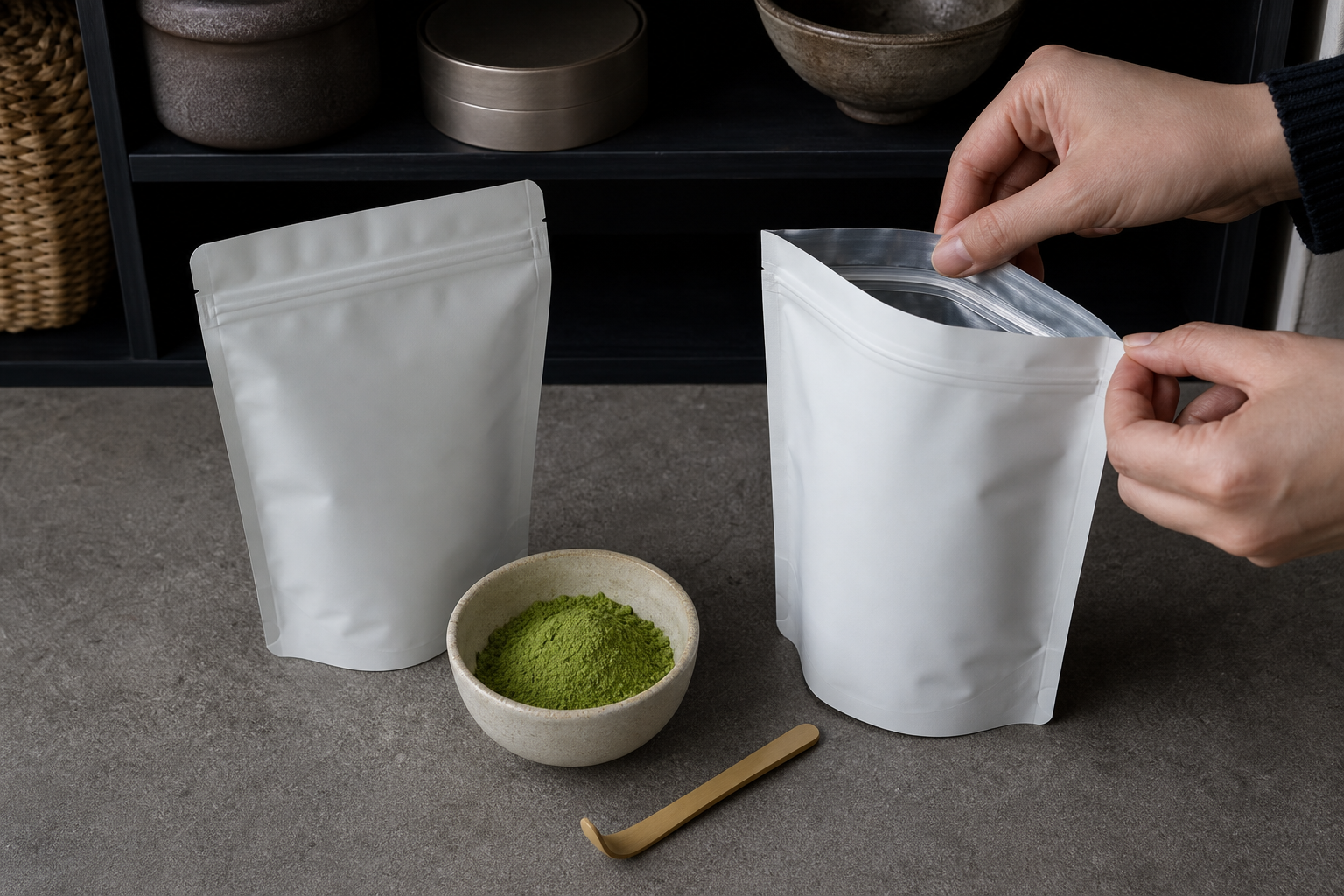
Does matcha expire or just lose freshness?
Consumers use “expire” to mean several different things: the printed date has passed, the tea tastes flat, the color has dulled, or the food may be unsafe. Those are not equivalent. In the United States, FDA explains that—except for infant formula—federal law generally does not require quality-based dates on packaged foods. FDA supports “Best if Used By” to indicate the period of best flavor and quality.
That does not mean every old or damaged package should be consumed. A dry powder can be contaminated through water, dirty tools, pests, damaged seals or poor handling. A date is only one piece of evidence. If the product has become wet, shows mold or pest activity, has an abnormal odor, or has an unknown storage history, do not rely on a blog post to declare it safe.
The five main enemies of matcha freshness
| Exposure | What it can change | Control |
|---|---|---|
| Oxygen | Aroma, color and taste through oxidation | Remove excess air when practical and reseal promptly |
| Moisture | Clumping, flow, accelerated deterioration and potential safety concern | Use dry tools; prevent condensation and steam exposure |
| Light | Pigment and quality-component stability | Use opaque, light-barrier packaging and dark storage |
| Heat | Speeds quality loss | Store cool and away from ovens, sunlight and hot delivery areas |
| Odor | Fine powder can pick up surrounding aromas | Keep sealed and away from spices, coffee, cleaners and strong foods |
Published work on storage temperature and matcha catechin stability supports treating temperature and time as real quality variables. A 2026 Food Chemistry study further evaluated water activity and light exposure. These studies help explain deterioration mechanisms; they do not establish one universal expiration date for every formula, package and distribution route.
How to store unopened matcha
- Keep the original seal intact until the product is needed.
- Store in a cool, dry, dark place with stable temperature.
- Keep cartons off the floor and away from walls where condensation or pests may be missed.
- Protect pouches from puncture, crushing and direct sunlight.
- Use first-expired, first-out rotation and record receiving lot and date.
- Follow the specific label and supplier storage instruction rather than a generic online rule.
Sailtik’s usual commercial packaging is 1 kg, 5 kg or 10 kg aluminum-foil bags. The barrier package helps only while it remains intact and correctly sealed. A puncture or failed seal should be isolated and assessed rather than placed into normal stock.
How to store matcha after opening
After opening, minimize the number and duration of exposures. Use a clean, completely dry scoop. Press excess air from a flexible pouch without forcing powder into the closure, clean the zipper area, reseal fully and return the bag to dark, cool storage.
For cafés, a small daily-use container can protect the master bag from repeated opening. The container should be food-contact suitable, clean, dry, odor-free, opaque or stored in the dark, and labeled internally with the product, lot and opening date. Do not continuously top up old powder with new powder; empty, clean and dry the container under the business’s hygiene procedure.
Does matcha need to be refrigerated?
Refrigeration can slow some quality changes, but it also introduces operational risks. A cold package opened in warm humid air can collect condensation, and a poorly sealed pouch can absorb refrigerator odors. Refrigeration is therefore a controlled storage choice, not an automatic requirement for every package.
- Keep the package tightly sealed and protected from odors.
- If an unopened or sealed package has been chilled, allow it to reach room temperature before opening.
- Avoid repeated cold-to-warm cycling.
- Do not place an open pouch beside uncovered foods or in a humid service refrigerator.
- Follow the product-specific label when it gives a storage temperature.
Can you freeze matcha powder?
Freezing an intact, moisture-protected reserve may help preserve quality in some storage plans, but it is easy to lose the benefit through condensation or repeated opening. Divide stock before freezing rather than repeatedly thawing a large master bag. Keep the barrier package sealed while it warms to room temperature, then open it.
Freezing cannot reverse oxidation, restore lost aroma or make a damaged product safe. It also should not be used to extend a commercial date without the responsible business’s shelf-life validation and labeling review.
How to tell whether matcha has deteriorated
| Observation | Likely meaning | Action |
|---|---|---|
| Less vivid color | Possible quality loss or photography/lighting difference | Compare under controlled light with a retained reference |
| Flat aroma | Volatile aroma loss | Review opening date, seal and storage temperature |
| More stale or harsh taste | Possible oxidation or recipe variation | Prepare a controlled comparison before deciding |
| Soft clumps that break easily | Static or compression may contribute | Check moisture history and sift only if otherwise acceptable |
| Wet, hard or discolored clumps | Possible moisture intrusion | Quarantine; do not serve while acceptability is uncertain |
| Mold, insects, package swelling or abnormal odor | Potential contamination or package failure | Do not use; isolate and contact the supplier or food-safety lead |
Color alone cannot establish safety, and taste-testing is not a safe way to investigate suspected contamination. FDA’s food date and safety guidance recommends examining products for noticeable changes and contacting the producing company with product questions.
Can you drink matcha after the printed date?
First identify the date type and applicable market rule. A quality-oriented “Best if Used By” date is not identical to a safety-based instruction. Then review whether the package is unopened, intact and correctly stored. A consumer with any doubt should contact the manufacturer and can choose to discard the product.
A café, importer or brand should not improvise a date extension for inventory merely because the powder looks acceptable. Commercial release needs documented shelf-life responsibility, traceability and a decision consistent with the business’s food-safety system and local law.
Bulk matcha rotation for cafés and distributors
- Forecast consumption from the weighed recipe. Use the dose and yield guide rather than guessing from cup count.
- Choose a bag size that can be consumed while sensory quality remains acceptable after opening.
- Record lot, receipt date, best-before date and opening date.
- Retain a sealed reference when the quality program requires one.
- Use a smaller daily container and keep the master bag sealed.
- Investigate unusual color, odor, clumping or seal failure before service.
- Rotate first-expired, first-out and never mix lots without traceability.
For a 10–50 kg café buyer, freight efficiency matters, but buying a larger bag is not economical if repeated exposure wastes product. Compare freight savings with realistic weekly usage, storage capacity and the open-bag handling process.
Sailtik shelf-life and packaging questions
Sailtik generally offers 1 kg, 5 kg and 10 kg foil-bag formats and typically uses an 18-month unopened shelf-life declaration. Private-label formats have different pack sizes and require the final packaging configuration, label and commercial documents to align. Do not copy a shelf-life statement from one format to another without confirmation.
Review the matcha packaging guide and contact Carol with the intended order size, destination, turnover rate and storage conditions. Carol can confirm the applicable product documentation; no general web page replaces the final label or specification.
Frequently asked questions
Does unopened matcha go bad?
Unopened matcha can still lose quality over time, especially if the barrier is damaged or storage is hot. Use the printed date, seal condition and storage history together.
How long is matcha good after opening?
There is no universal number. Package barrier, headspace, temperature, humidity, opening frequency and sensory target all matter. Date the opening, protect the powder and set a verified internal quality window for the actual operation.
Can a glass jar or stainless-steel container store matcha?
A clean, dry, food-contact-suitable, tightly sealed container can be useful for daily stock. Clear glass needs dark storage. The container should not introduce odors, moisture or loss of lot traceability.
Can prepared matcha latte be kept overnight?
That is a prepared-food question, not the powder’s shelf life. Milk, plant beverage, sugar, other ingredients, cooling time and local food code control. A café should follow its validated recipe, refrigeration and discard procedure.