
Prepared matcha is mildly acidic under published test conditions, not strongly acidic and not reliably alkaline. A peer-reviewed study of ten commercial matcha samples measured 2.5% matcha-water solutions at approximately pH 5.58–5.94. Every tested sample was below neutral pH 7.
That range is useful evidence, but it is not a universal specification. The powder, concentration, water, temperature, other ingredients and measurement procedure can change the result. “Matcha has a pH of exactly X” is therefore less accurate than reporting a defined sample and recipe.
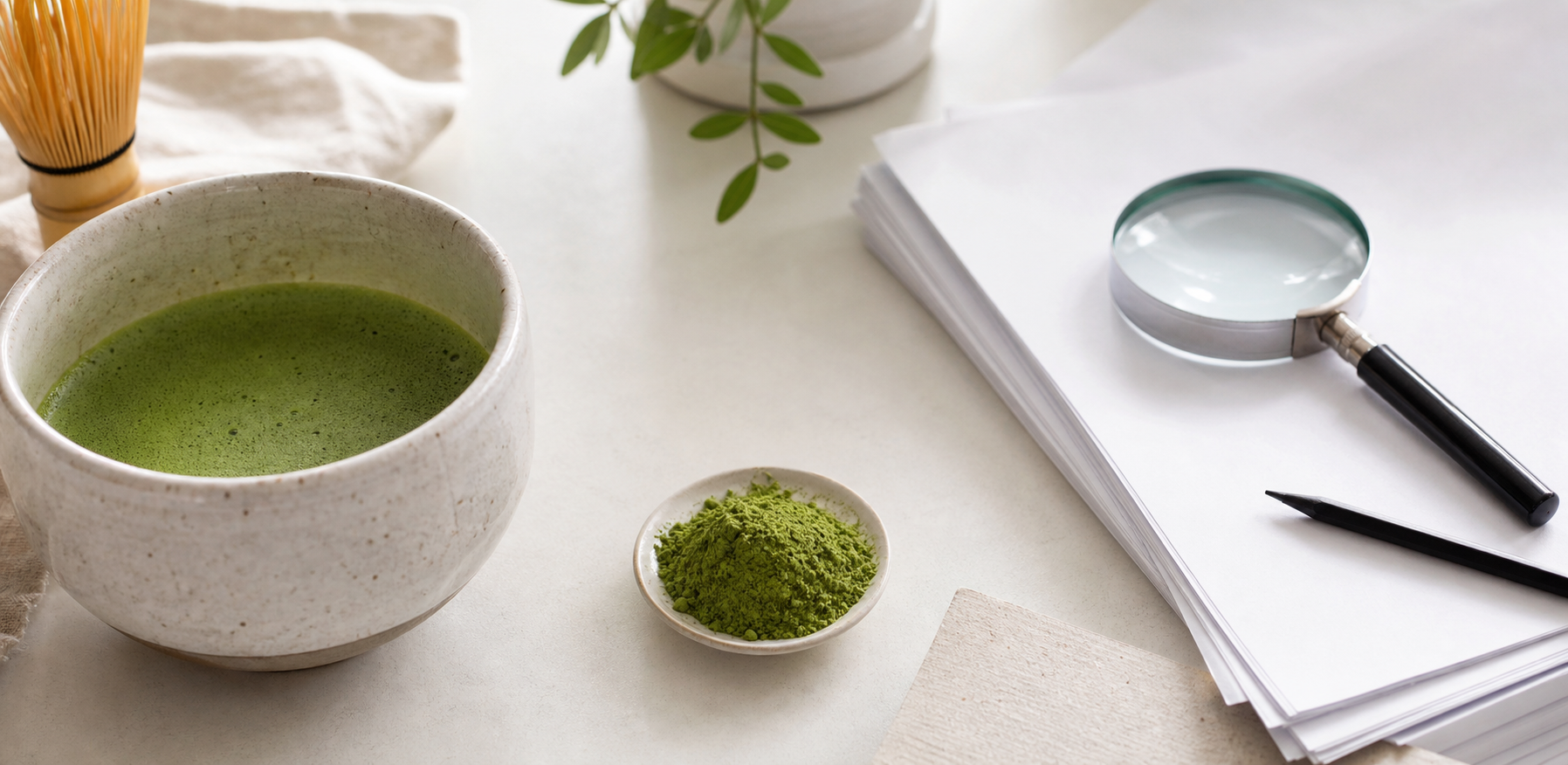
What the matcha pH study measured
The 2023 study prepared 2.5% aqueous solutions from ten matcha products and measured technological properties including pH. The authors described these as 2.5% aqueous solutions; the published preparation and measurement conditions therefore belong with the reported values. The samples varied, but their pH values clustered roughly between 5.58 and 5.94.
Because pH below 7 is acidic, those solutions qualify as mildly acidic. A separate study of matcha foam formation reported pH around 6.0, which is consistent with that classification. Neither paper establishes that every matcha, every water source or every café recipe will give the same reading.
| Statement | Supported? | Why |
|---|---|---|
| Matcha-water mixtures can be mildly acidic | Yes | Published measurements of defined mixtures were below pH 7. |
| All matcha is exactly pH 9 | No | That conflicts with peer-reviewed measurements and lacks a universal test basis. |
| Every cup is pH 5.6 | No | Products, concentration, water and additions vary. |
| Dry matcha powder has the same pH as a drink | Not a valid shortcut | pH is measured in an aqueous system under stated conditions. |
Why your own matcha may test differently
- Powder concentration: 1.5 g in a large drink is not the same system as 2.5 g in 100 g water.
- Water: starting pH and mineral buffering differ by source and treatment.
- Product composition: cultivar, origin, harvest, processing and storage can change measured components.
- Recipe additions: lemon, fruit, syrup, milk, plant beverage and premix ingredients can shift finished-drink pH.
- Temperature and timing: readings should use a defined, repeatable procedure.
- Instrument quality: a calibrated meter provides more useful data than interpreting the color of a wet paper strip in an opaque green suspension.
For a commercial specification, state the sample identity, ratio, water, temperature, equilibration time, instrument and calibration procedure. A result without method information is difficult to reproduce.
pH and titratable acidity are not the same
pH describes hydrogen-ion activity at the time of measurement. Titratable acidity measures how much base is required to bring a sample to a selected endpoint. Two beverages can have a similar pH yet resist neutralization differently because their buffering components differ.
This is one reason a single pH number does not completely predict sour taste, enamel exposure, shelf-life behavior or stomach response. Those questions need their own composition, exposure and clinical evidence.
Does “alkaline-forming” mean the drink is alkaline?
No. “Alkaline-forming” is a diet-marketing concept about metabolism or urinary measurements; it is not a measurement of the liquid in the cup. A matcha-water mixture that reads below pH 7 is acidic at measurement even if a website describes the food with an alkaline-diet label.
Food does not meaningfully override the tightly regulated pH of blood in a healthy person. Urinary pH, beverage pH and blood acid-base balance are different systems and should not be presented as interchangeable.
Does mild acidity explain bitterness or astringency?
Not by itself. Matcha’s taste also reflects amino acids, catechins, other polyphenols, aroma compounds, dose, water temperature and particle dispersion. Bitterness does not prove a low pH, and a smooth or umami-rich cup does not prove alkalinity.
For sensory evaluation, control the recipe and compare samples blind where possible. Sailtik generally recommends 1.5–3 g per cup for application testing, but that range is a formulation starting point, not a pH guarantee.
What about coffee, reflux and sensitive stomachs?
A matched laboratory comparison is required before claiming that one specific matcha drink is a certain number of times less acidic than a particular coffee. Coffee origin, roast, extraction and serving recipe also vary.
More importantly, beverage pH alone does not predict whether an individual will experience heartburn, nausea or other digestive symptoms. Caffeine, serving concentration, volume, temperature, milk, sweetener, timing, medication and personal sensitivity may matter. This pH page does not diagnose an “acidic person” or recommend matcha as treatment for reflux.
How a café or brand should substantiate a pH claim
- Define whether the claim concerns pure powder, a water suspension, a latte or a ready-to-drink product.
- Use the actual product and finished formulation.
- Fix powder concentration, water and temperature.
- Use a calibrated method and record replicate results.
- Repeat when the powder, supplier, water system or recipe changes.
- Keep pH claims separate from medical, dental and shelf-life claims unless those are independently supported.
Sailtik’s published materials do not assign one pH value to all grades or lots. Buyers who need pH as a purchasing specification should request product-specific testing criteria rather than copying a generic internet number. For wider evidence boundaries, see the matcha health-evidence guide.
Frequently asked questions
Is matcha acidic or basic?
Published matcha-water tests were mildly acidic, with values around pH 5.6–5.9 under the cited 2.5% test conditions.
Is matcha tea alkaline?
Do not assume so. Claims near pH 9 conflict with peer-reviewed measurements of commercial matcha solutions below pH 7.
How acidic is matcha?
Mildly acidic in the published tests, but the exact result requires a defined powder, concentration, water and method.
Sources
- Molecules: bioactive compounds and technological properties of matcha
- Food Research International: physicochemical analysis of matcha foam formation
This article provides general product and measurement information, not medical advice.