
You can use matcha powder in straight tea, lattes, smoothies, yogurt or oats, baked goods, frozen desserts and savory mixtures. The useful method changes with the application: disperse it in water for drinks, blend it into wet foods, and distribute it evenly through a dry mix or base for cooking.
Start small, weigh the powder and judge the finished recipe rather than the raw color alone. Sailtik’s general beverage starting range is 1.5–3 g per cup, but a cookie, smoothie and bowl of straight matcha do not share one universal dose.
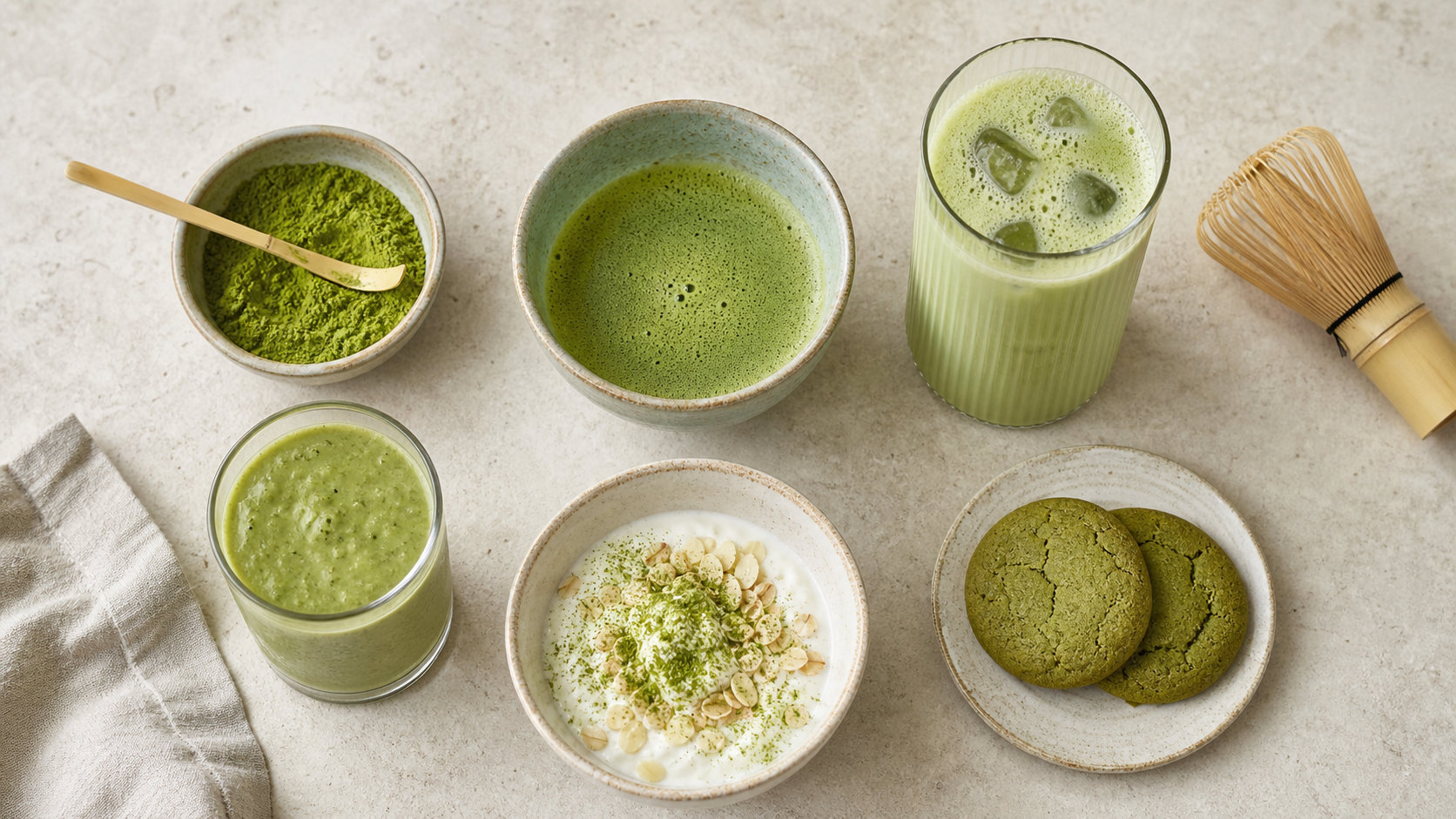
Choose the use before choosing the matcha
| Use | Practical starting point | Main thing to evaluate |
|---|---|---|
| Straight matcha | 2 g with 60–70 ml water at 70–80°C | Aroma, bitterness, umami, texture and aftertaste |
| Hot or iced latte | 1.5–3 g per finished cup | Whether matcha remains recognizable through milk and sweetness |
| Smoothie | Start around 1 g in one serving, then adjust | Balance against fruit, greens and other strong flavors |
| Yogurt, oats or chia | Begin with 0.5–1 g per serving | Even mixing, bitterness and sweetness balance |
| Baking | Use a tested recipe or record matcha against flour weight | Color and flavor after heat, cooling and storage |
| Ice cream or frozen dessert | Test in the complete base | Flavor release, color, sweetness and frozen texture |
| Savory mixture | Add gradually to a dressing, salt or sauce | Whether vegetal bitterness supports the dish |
These are development starting points, not promises that every powder or recipe will perform identically. Fruit acidity, cocoa, dairy, fat, sugar, salt, heat and storage all change the result.
1. Whisk it as straight matcha
Sift 2 g matcha into a dry bowl, add a small amount of water and mix out dry pockets. Add enough water to reach 60–70 ml total, then whisk briskly. Water around 70–80°C (158–176°F) is a practical first test; boiling water can make harshness more obvious.
Matcha is suspended leaf powder, not a fully soluble tea extract. Some settling is normal. Sifting, initial wetting and prompt serving improve dispersion. Follow the complete 2-gram matcha preparation method for tool alternatives and troubleshooting.
2. Make a hot or iced matcha latte
First disperse 1.5–3 g matcha in roughly 30–60 ml water. Combine that concentrate with the chosen milk or plant beverage, then adjust total liquid and sweetness. Preparing the concentrate first gives better control than dropping dry powder directly into a full cold glass.
Milk, plant beverage, ice and syrup dilute the tea impression, so a powder that tastes refined in water may disappear in a latte. Compare candidates in the actual recipe. The hot, iced and café-scale matcha latte guide provides weighed formulas.
3. Blend it into a smoothie
For one smoothie, begin around 1 g and blend it with the liquid phase before adding a large load of frozen ingredients. Banana, berries, leafy greens, cocoa, nut butter and protein powders can easily dominate matcha, so change one ingredient or dose at a time.
A smoothie is not a neutral quality test. Its color and flavor reflect the entire formula. Also count matcha as a caffeinated ingredient when combining it with coffee, energy ingredients or multiple servings.
4. Stir it into yogurt, oats or chia
Mix 0.5–1 g into a spoonful of yogurt or the recipe’s liquid until smooth, then fold that concentrate into the full serving. This prevents dry green pockets. For oatmeal or chia pudding, judge the result after normal hydration because thickness can change flavor perception and dispersion.
Unsweetened bases expose bitterness more clearly; sweetened or fruit-flavored bases can mask it. Record the powder weight if you want to reproduce the result instead of relying on “one scoop.”
5. Use matcha in baking
Distribute matcha evenly through the recipe’s dry ingredients before they meet the wet phase. For flour-based products, record matcha as a baker’s percentage: matcha weight divided by flour weight, multiplied by 100. This makes a successful test scalable without pretending one percentage fits cookies, cake, bread and filling.
Raw batter is not the approval point. Heat, oxygen, pH, sugar, fat and holding time can alter color and flavor. Compare the product after cooling and again at its normal serving or display time. Commercial developers can use the culinary matcha baking test guide.
6. Add it to ice cream and frozen desserts
Make a smooth matcha slurry with part of the liquid base before combining it with the full mix. Test after freezing, not only before: cold temperature, sweetness, fat and overrun can change how strongly matcha is perceived.
For commercial products, check color, flavor, texture and melt behavior across the intended shelf life. The matcha ice cream and gelato guide explains a controlled pilot process.
7. Try a savory application
Matcha can be tested in a vinaigrette, creamy dressing, dipping salt or sauce where a vegetal, slightly bitter note makes sense. Mix a small weighed amount into a portion of the base before scaling. Do not assume a dramatic green color will remain in an acidic, oily or heated system.
A savory use is less forgiving than a sweet latte: excess powder can turn subtle complexity into a dry or astringent finish. Run a control without matcha and compare low and higher test levels blind.
How to prevent clumps
- Sift compacted powder before whisking or mixing.
- Make a small paste or slurry before adding the full liquid volume.
- Use the right tool: a whisk, shaker, frother or blender creates better dispersion than slow stirring.
- Mix into a compatible phase: disperse matcha in water or another liquid before folding it into a thick base.
- Serve suspensions promptly or stir again if particles settle.
Which matcha should you use?
“Ceremonial,” “premium” and “culinary” are market-positioning terms, not one globally regulated grading system. Select by the finished application. Straight tea exposes aroma and aftertaste; a latte needs enough presence through milk; baking needs acceptable performance after processing.
Within Sailtik’s confirmed positioning, 5A–7A are intended for ceremonial and higher-end straight-drinking or gifting uses, 3A–4A for café drinks and premium baking, and 1A–2A for cost-focused culinary, daily baking and budget milk-tea applications. Higher grade is not automatically the best commercial choice. Test the exact recipe, target customer and cost per accepted serving.
Store the unused powder correctly
Protect matcha from moisture, light, heat and odors, and reseal the package promptly. Use a clean, dry utensil. An ingredient’s labeled shelf life does not mean an opened powder will keep the same aroma and color under poor storage, and it cannot be copied to a finished latte, cookie or premix.
For more detail, see the matcha shelf-life and storage guide.
Frequently asked questions
Can you put matcha powder directly in water?
Yes, but it will not truly dissolve. Sift it, wet it with a small amount of water, then whisk, shake or froth until evenly dispersed.
Can I add matcha powder to anything?
You can test it in many foods and drinks, but flavor, color, texture and caffeine still matter. Start with a small controlled portion rather than adding powder blindly to the whole recipe.
Do I need a bamboo whisk?
No. A bamboo whisk is effective for straight tea, while a sealed jar, shaker, handheld frother or blender may suit other applications. The goal is even dispersion.
How much matcha powder should I use?
For beverages, Sailtik generally recommends 1.5–3 g per cup as a testing range. Other foods require their own weighed trials because recipe size and competing flavors differ.
Use the finished result as the decision
Choose one application, weigh the powder, fix every other ingredient and compare controlled levels. Record dispersion, aroma, color, bitterness, sweetness balance, texture and cost. That approach is more useful than assuming the greenest raw powder or the highest grade label will work best everywhere.
For commercial testing, Sailtik normally recommends selected 10 g samples according to the customer’s business model and application rather than sending every internal model. Contact Carol with the product type, recipe environment, target position, expected volume and destination for a focused sample recommendation.