
Plain matcha powder is not normally sweetened; it should be ground green tea with no added sugar. Matcha drinks, café lattes, bottled beverages and instant mixes are different. They may add sugar, classic syrup, flavored syrup, sweetened milk, creamer, fruit purée, cold foam or toppings. So the right answer is: plain matcha is unsweetened, but many finished matcha drinks are sweetened.
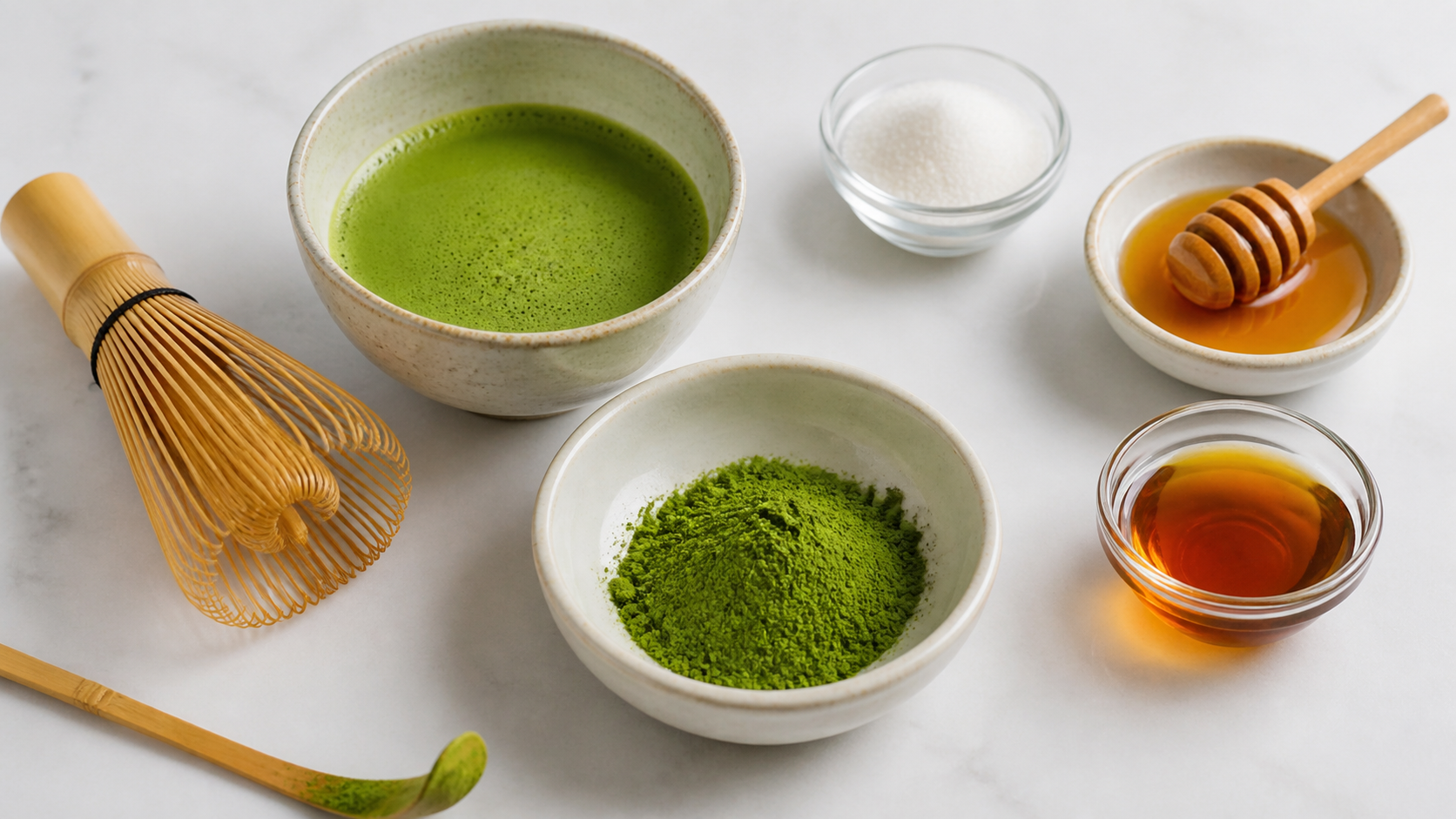
Where sweetness can enter
| Item | Usually sweetened? | How to check |
|---|---|---|
| Plain ceremonial or culinary matcha powder | No, if it is truly plain. | Ingredient list should say matcha, green tea or ground green tea only. |
| Matcha premix or latte powder | Often yes. | Look for sugar, cane sugar, creamer, maltodextrin, glucose syrup or flavor systems. |
| Traditional matcha with water | No by default. | The sweetness comes only if you add it. |
| Homemade matcha latte | Depends on recipe. | Milk contributes its own sugars; syrups or honey add more. |
| Chain café matcha latte | Often yes. | Check the current product page for syrup, sauces, sweetened powders and toppings. |
| Bottled matcha drink | Often yes. | Use the nutrition panel and ingredient list for that bottle. |
Plain matcha tastes different from sweetened matcha
Unsweetened matcha can taste grassy, savory, vegetal, creamy, umami, bitter or astringent depending on powder quality, dose, water temperature and whisking. It is not naturally sugary in the way fruit juice is. If a matcha drink tastes dessert-sweet, that sweetness is usually coming from the recipe, not from the tea leaf itself.
That distinction matters when people compare matcha at home with café matcha. A plain bowl made from 2 g of powder and water is a suspended tea drink. A latte from a chain may include milk plus syrup. A bottled matcha drink may use sugar or other sweeteners to stabilize a familiar ready-to-drink flavor. These are different products under the same matcha umbrella.
Current Starbucks example
Starbucks is useful as a dated example because it separates the matcha ingredient from the finished-drink recipe. In the U.S. product data checked on September 1, 2026, the standard hot Matcha Latte listed milk, classic syrup and matcha; the matcha component expanded to ground green tea. The standard Iced Matcha Latte listed milk, ice, classic syrup and matcha. In other words, the drink is sweetened by the recipe even though the matcha ingredient itself is ground green tea.
This does not mean every Starbucks country, seasonal product or custom order has the same formula. It also does not mean every matcha powder is sweetened. It simply shows why “is matcha sweetened?” must specify whether you mean the powder, the latte, the mix or the exact drink.
Should matcha tea be sweetened?
It does not have to be. Sweetening is a taste and use-case decision, not a requirement. If your goal is to learn matcha flavor, start unsweetened or lightly sweetened so you can taste the powder. If your goal is a café-style latte, a small amount of syrup or sugar can soften bitterness and make lower-grade powder more approachable.
- Try preparation fixes first: use fresh powder, sift it, avoid boiling water and control the dose before adding more sugar.
- Sweeten after whisking: it is easier to adjust sweetness once clumps and bitterness are under control.
- Match sweetener to format: simple syrup dissolves better in iced drinks than granulated sugar.
- Do not hide stale powder: heavy sweetness can mask harshness but will not make old matcha taste fresh.
Quick label checklist
- If the package says “matcha powder,” check whether the only ingredient is green tea or matcha.
- If it says “matcha latte mix,” assume it may be sweetened until the label proves otherwise.
- If ordering at a café, check syrup, sauce, cold foam, whipped cream and flavored toppings separately.
- If sugar intake matters, use the nutrition panel for the finished serving, not just the tea ingredient.
- If taste is the issue, read a preparation guide before increasing the sweetener.
Bottom line
Plain matcha powder should be unsweetened tea leaf. Sweetened matcha usually means a finished drink, latte mix, bottled beverage or café recipe with added sugar, syrup or sweetened components. Whether you should sweeten matcha depends on your taste goal: start with better preparation, then add only enough sweetness for the format you are making.
For nutrition math, see Sailtik’s matcha calories, sugar and carbs guide. If the cup tastes harsh, start with how to make matcha taste good. For the chain-specific case, see whether Starbucks matcha has sugar.