
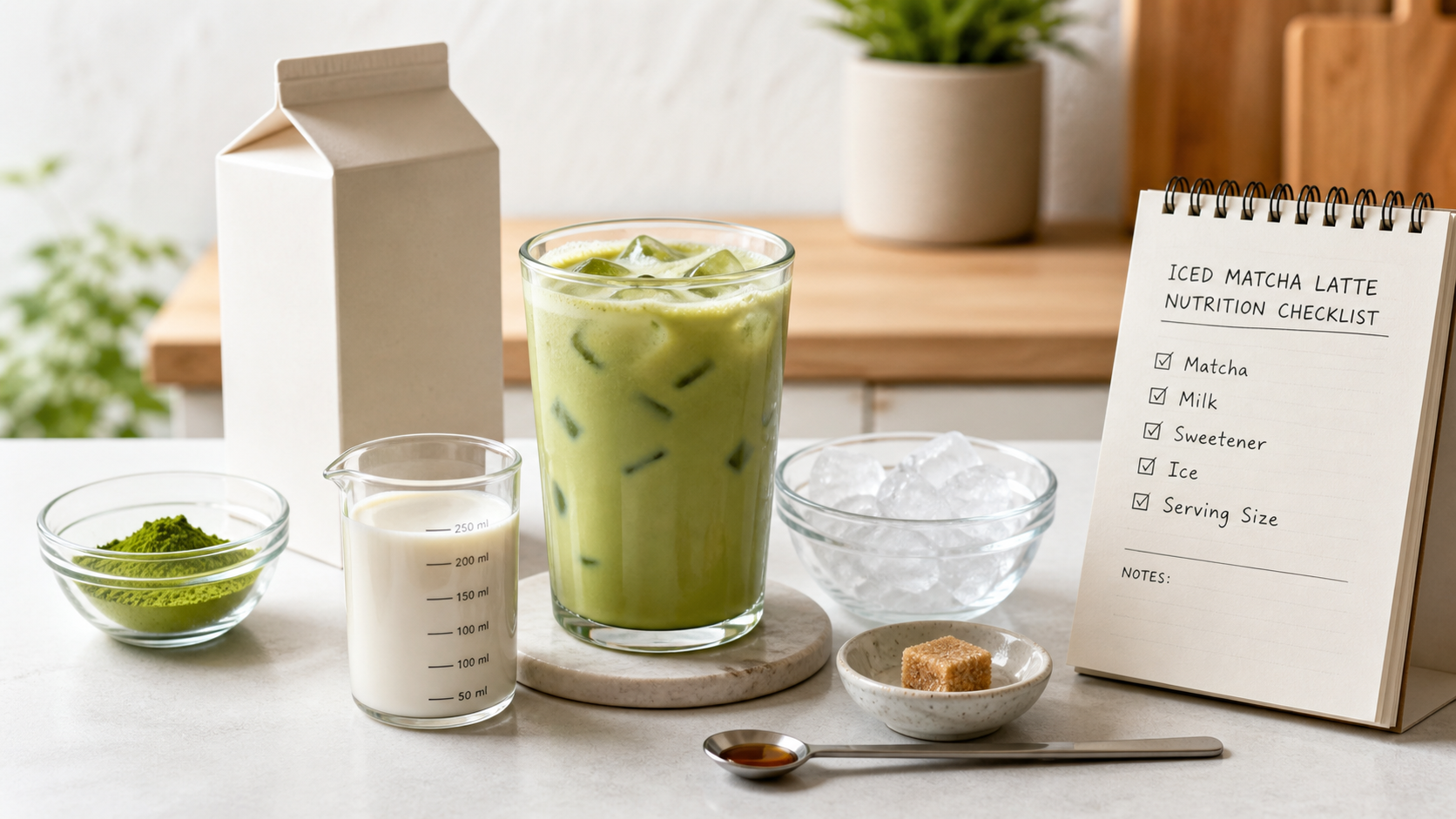
An iced matcha latte can be a reasonable drink, but it is not automatically “good for you” just because it contains matcha. Judge the whole glass: matcha dose, milk, sweetener, cup size, toppings, caffeine and how often you drink it. A small unsweetened iced latte made with plain matcha and milk is a different nutrition decision from a large café drink with syrup, sweetened powder and cold foam.
The practical verdict
An iced matcha latte is more like a customizable milk drink than a plain cup of tea. It may fit your diet if the calories, sugar, dairy or plant milk, and caffeine fit your day. It may be a poor fit if you are trying to limit added sugar, avoid caffeine, manage blood glucose closely, avoid dairy allergens, or reduce liquid calories.
The cold format matters because iced café drinks are often served in larger cups, use ice that changes perceived strength, and may include sweetened bases or syrups. Temperature itself is not the health issue; the recipe and serving size are.
What to check before calling it healthy
| Part of the iced latte | Why it matters | Better question to ask |
|---|---|---|
| Matcha powder | Provides tea flavor and naturally occurring caffeine. | Is it plain matcha or a sweetened matcha mix? |
| Milk or plant milk | Changes calories, protein, fat, carbohydrates and allergens. | Is the milk unsweetened, sweetened, dairy, oat, soy, almond or another option? |
| Syrup or sugar | Often drives most of the nutrition difference between a plain drink and a dessert-style drink. | Can syrup be reduced or removed? Is sugar already in the powder? |
| Serving size | A large iced cup can contain more milk, powder and syrup than a small home glass. | What are the ounces and default recipe amounts? |
| Toppings | Cold foam, whipped cream, fruit sauces and flavor syrups can change the answer. | Are toppings part of the standard drink or optional add-ons? |
| Frequency | A daily sweetened drink matters more than an occasional one. | Is this replacing breakfast, dessert, coffee or plain tea? |
A current branded example: Starbucks U.S. iced matcha latte
Brand examples are useful because they show how much the recipe matters. Starbucks U.S. public ordering data checked on September 2, 2026 describes its Iced Matcha Latte as matcha, milk, classic syrup and ice. The standard recipe changes by size:
| Starbucks U.S. size checked | Calories | Sugars | Caffeine | Default matcha / syrup count shown |
|---|---|---|---|---|
| Tall, 12 fl oz | 120 | 16 g | 40 mg | 2 matcha powder, 2 classic syrup |
| Grande, 16 fl oz | 190 | 25 g | 65 mg | 3 matcha powder, 3 classic syrup |
| Venti, 24 fl oz | 240 | 33 g | 85 mg | 4 matcha powder, 4 classic syrup |
Those numbers are for that brand’s current standard U.S. iced build, not for every café and not for every customization. Starbucks also says nutrition is based on standard recipes and can vary when products are customized. The useful lesson is not “Starbucks equals all iced matcha lattes”; it is that syrup, milk choice and size can move the drink from tea-forward to sugar-forward quickly.
Sugar is usually the biggest swing factor
Plain matcha does not need added sugar. Finished iced lattes often contain sugar because of syrup, sweetened milk, sweetened matcha powder, fruit sauce or topping foam. The U.S. FDA separates total sugars from added sugars on Nutrition Facts labels because naturally present sugars and sugars added during processing or preparation are not the same labeling concept. A café menu may show total sugar without showing a separate added-sugar line, so ingredient review still matters.
If you want a lighter iced latte, first ask whether the matcha powder is already sweetened. Then adjust syrup, size and toppings. Asking for “less sweet” may be more reliable than assuming “matcha” means unsweetened.
Caffeine still counts
Matcha naturally contains caffeine. The amount in an iced latte depends on how much powder is used, whether the drink includes espresso, and the size. FDA consumer guidance says that for many adults, up to 400 mg of caffeine per day is not generally associated with dangerous negative effects, while sensitivity varies and some people should use lower limits. Pregnant people, people with certain conditions, children and anyone advised to limit caffeine should follow their clinician’s guidance rather than a generic matcha article.
How to make an iced matcha latte that is easier to defend nutritionally
- Use plain matcha powder instead of a pre-sweetened mix when you want control over sugar.
- Measure the powder. A vague heaping spoon can make the drink bitter or unexpectedly caffeinated.
- Choose milk intentionally: dairy may add protein; some plant milks add sugar unless labeled unsweetened.
- Add sweetener last and in measured amounts. Taste before adding more.
- Keep toppings separate from the base drink. Cold foam, whipped cream and sauces can change the answer more than the matcha does.
- If you drink it every morning, treat it as part of breakfast or your caffeine budget, not as “free hydration.”
When an iced matcha latte may not be the right choice
It may not be a good fit if you need to avoid caffeine, if milk or plant-milk allergens are an issue, if a sweetened drink conflicts with your nutrition plan, or if it crowds out meals with more protein and fiber. It is also not a treatment for weight loss, blood sugar control, anxiety, inflammation, detoxing or any disease. Matcha research should not be converted into a promise about a sweetened latte.
Bottom line
An iced matcha latte can be good for you in the ordinary dietary sense when it is made with a recipe that fits your needs. The health answer is not in the word “matcha”; it is in the full build. Check whether the powder is plain or sweetened, how much syrup is used, what milk is added, how large the cup is, and how the caffeine fits the rest of your day.
Related guides
For the broader hot-or-iced latte framework, read is a matcha latte good for you?. For ingredient distinctions, see what is in a matcha latte. If sweetness is the main concern, use plain matcha versus sweetened café drinks.
FAQ
Are iced matcha lattes healthy?
They can be, but only if the complete recipe fits your diet. Plain matcha plus unsweetened milk is different from a large syrup-heavy drink.
Is an iced matcha green tea latte good for you?
The answer depends on size, sugar, milk, caffeine and toppings. Check the current menu or recipe rather than judging from the drink name alone.
Is drinking an iced matcha latte every morning okay?
For many adults it can be okay if the caffeine, sugar, calories and milk choice fit the rest of the day. A daily sweetened latte should be counted as a regular nutrition habit, not an occasional treat.