
Matcha green tea is not a proven treatment for uterine fibroids. A small clinical trial studied concentrated green-tea extract rich in EGCG, but it did not prove that drinking matcha shrinks fibroids or controls heavy bleeding.
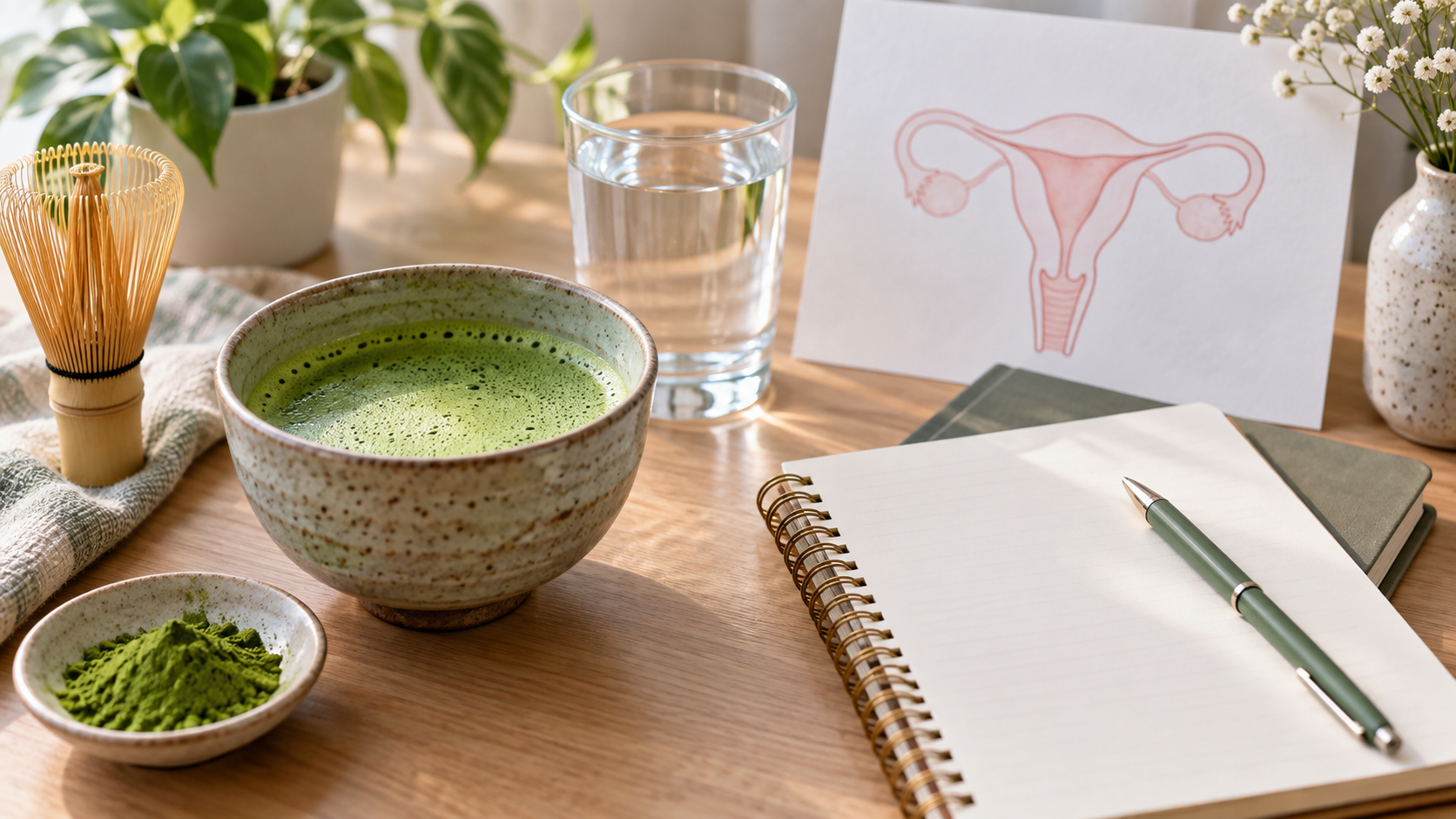
Fibroids are noncancerous growths in or around the uterus. The Office on Women’s Health and ACOG both describe symptoms such as heavy periods, pelvic pressure, frequent urination, fertility concerns and anemia. Those are not problems to manage with a tea rule alone.
What the EGCG study actually tested
The most-cited green-tea fibroid trial was a pilot randomized controlled study with 39 recruited women and 33 who completed the study. The treatment group took 800 mg per day of green-tea extract containing EGCG for four months. The paper reported reductions in fibroid volume and symptom severity compared with placebo.
That result is worth knowing, but it has narrow limits: it was small, it used capsules rather than ordinary matcha drinks, and it does not establish a standard fibroid treatment. A later botanical-drugs review discusses green tea as a candidate area, not as settled first-line care.
Why beverage matcha is a different question
| Topic | Careful interpretation |
|---|---|
| Plain matcha | A beverage with caffeine, catechins and powdered tea leaf. |
| Green-tea extract | A concentrated supplement form with different dosing and safety questions. |
| Fibroid symptoms | Heavy bleeding, anemia and pelvic pressure need medical evaluation. |
| Pregnancy or fertility plans | Do not use supplement claims without clinician input. |
| Sailtik product claims | Sailtik matcha is not marketed here as fibroid treatment. |
A cup of matcha may be fine for many adults who tolerate caffeine. It should not be used to delay imaging, anemia workup, medication discussion or procedure options when symptoms are significant.
Safety details people skip
NCCIH notes that green-tea extracts have been linked with rare liver problems, while beverage green tea has a different safety profile. That matters because fibroid search results often jump from “EGCG study” to “drink matcha.” Those are not interchangeable.
If periods are heavy, another practical point is iron. Caffeinated tea around meals can be a poor fit for someone already struggling with iron intake or anemia. That does not mean matcha is banned; it means timing and medical context matter.
What not to assume
- Do not assume drinking matcha shrinks fibroids.
- Do not treat EGCG capsules as the same as a bowl of matcha.
- Do not ignore heavy bleeding, anemia or pelvic pressure.
- Do not use matcha instead of prescribed fibroid treatment.
- Do not take concentrated extracts during pregnancy or fertility treatment without medical advice.
Bottom line
Matcha can be an ordinary drink, but it is not fibroid therapy. The evidence worth mentioning is about concentrated EGCG extract in a small study, not a guarantee from beverage matcha. Use medical care to evaluate fibroids; judge matcha separately by caffeine tolerance and personal symptoms.
Sources checked
- Office on Women’s Health: uterine fibroids
- ACOG: uterine fibroids FAQ
- PMC: green-tea extract pilot trial in fibroids
- PMC: botanical-drug review for uterine fibroids
- NCCIH: green tea usefulness and safety
- Sailtik: matcha and menopause caffeine boundaries
- Sailtik: matcha health evidence boundaries
FAQ
Can matcha shrink fibroids?
There is not enough evidence to say that drinking matcha shrinks fibroids.
Is EGCG the same as matcha?
No. Matcha contains EGCG, but extract capsules deliver a different product form and dose than a normal drink.
Can I drink matcha if I have fibroids?
Many adults can, but heavy bleeding, anemia, pregnancy plans and medication use should guide the decision.
Should I try green-tea extract for fibroids?
Ask an OB-GYN first. Extracts have different dose and safety concerns from beverage tea.