
Matcha green tea is not a menopause treatment, but it can be a reasonable drink for some people in perimenopause or after menopause. The catch is caffeine: it may feel helpful in the morning, yet it can worsen hot flashes, palpitations or sleep for some people.
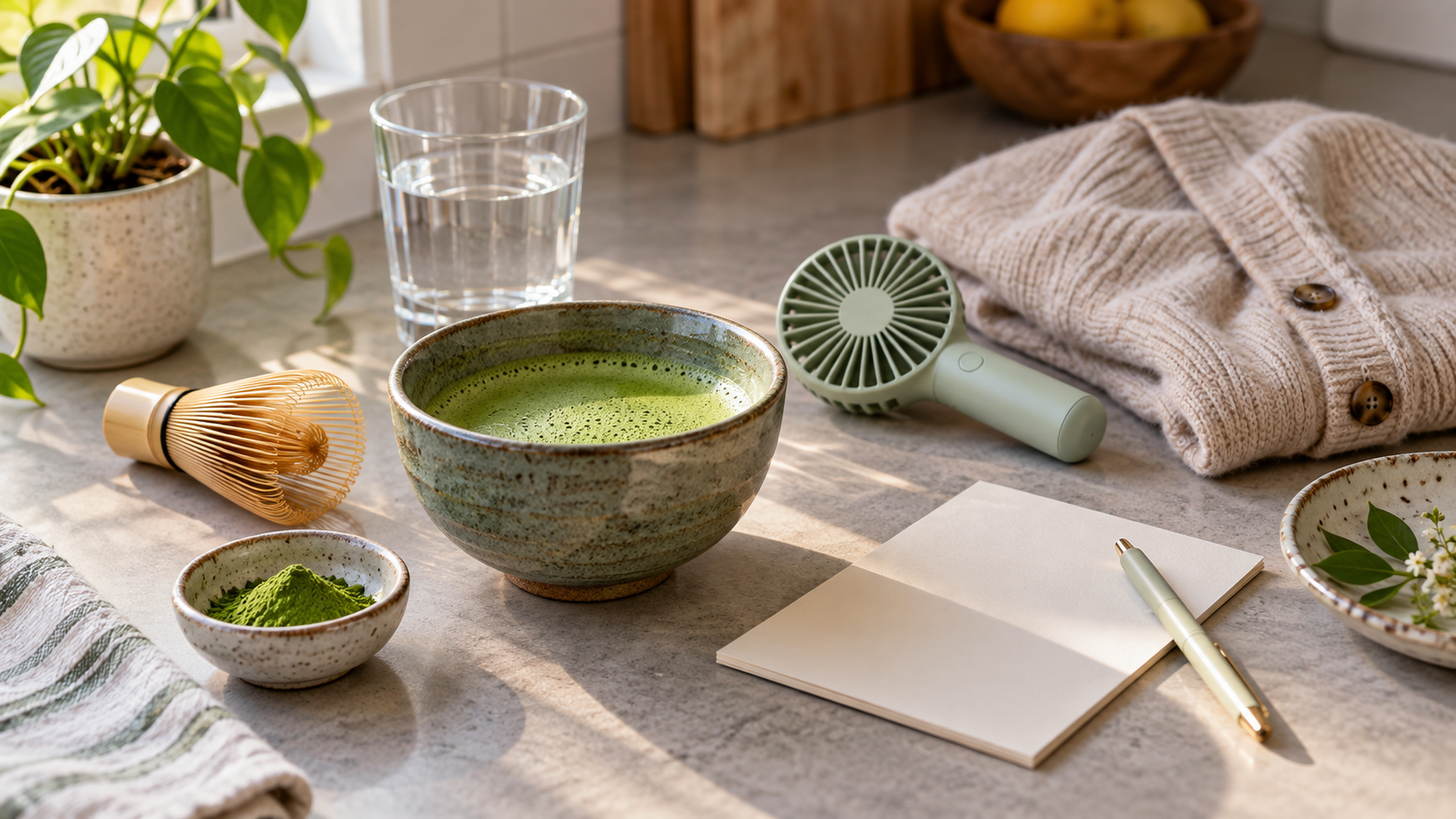
That is why this query should not be answered like a generic antioxidant post. Menopause is a real hormonal transition, and the practical question is whether a specific cup of matcha fits a person’s symptom pattern.
What menopause guidance says about caffeine
ACOG lists caffeine among foods and drinks that can trigger hot flashes for some people. The Office on Women’s Health also suggests tracking hot-flash triggers, including caffeine, stress, alcohol, spicy foods and heat. MedlinePlus lists caffeine avoidance among lifestyle steps that may reduce menopause symptoms for some people.
So matcha is not automatically good or bad. It is a testable variable. If hot flashes or night sweats become worse on matcha days, the serving size, timing or drink choice may need to change.
Where matcha may help, and where it may backfire
| Menopause scenario | How matcha fits |
|---|---|
| Morning fatigue | A small morning serving may feel smoother than coffee for some people. |
| Hot flashes | Caffeine can be a trigger, so track symptoms rather than assuming benefit. |
| Night sweats or poor sleep | Afternoon matcha may be a bad trade if sleep is already fragile. |
| Bone and heart health | Healthy diet, activity and medical screening matter more than one drink. |
| Supplement use | Green-tea extracts are different from beverage matcha and deserve more caution. |
Plain matcha gives the cleanest read. A sweet iced matcha latte adds sugar and calories. A “menopause matcha” blend may include herbs or hormones-adjacent claims that should be checked separately.
A practical way to test tolerance
If matcha is part of the routine, keep the test boring: use the same amount, drink it before noon, and track hot flashes, sleep, heart fluttering, anxiety and digestion for a week. If symptoms change, switch to a smaller serving or take a caffeine break before blaming menopause itself.
People using hormone therapy, nonhormonal hot-flash medication, osteoporosis medication or heart/blood-pressure medication should be more careful with concentrated green-tea supplements than with ordinary beverage matcha. NCCIH notes that green tea and extracts can interact with medicines, including raloxifene and some cardiovascular drugs.
What not to assume
- Do not assume matcha relieves hot flashes.
- Do not use matcha instead of evidence-based menopause care.
- Do not treat “natural” supplement blends as automatically safe.
- Do not drink late-day matcha if sleep is already a problem.
- Do not judge matcha from a sweet latte if the real question is caffeine tolerance.
Bottom line
Matcha may be a pleasant morning drink during menopause, especially when plain or lightly prepared. It is not a menopause remedy. The honest test is symptom-specific: hot flashes, sleep, heart rhythm, anxiety and medication context matter more than antioxidant claims.
Sources checked
- ACOG: what can help with hot flashes
- Office on Women’s Health: menopause symptoms and relief
- MedlinePlus: menopause
- NCCIH: menopausal symptoms and complementary approaches
- NCCIH: green tea usefulness and safety
- Sailtik: matcha caffeine compared with coffee
- Sailtik: matcha health evidence boundaries
FAQ
Can matcha stop hot flashes?
No reliable evidence shows that matcha stops hot flashes. Caffeine can trigger them in some people.
Is iced matcha better for menopause?
It may feel better if heat triggers symptoms, but iced matcha still contains caffeine.
Can I drink matcha while using hormone therapy?
Ask your clinician or pharmacist if you use hormone therapy or other medicines. Beverage matcha and concentrated extracts are not the same risk category.
What is the best time to drink matcha during menopause?
Morning is the safest trial window for many people because it is less likely to disturb sleep.