
Matcha green tea is usually not the best first drink during acute diarrhea. The misspelled query “diarea” almost certainly means diarrhea, and the safer answer is plain: prioritize fluids and simple foods; be careful with caffeine and sweet matcha lattes.
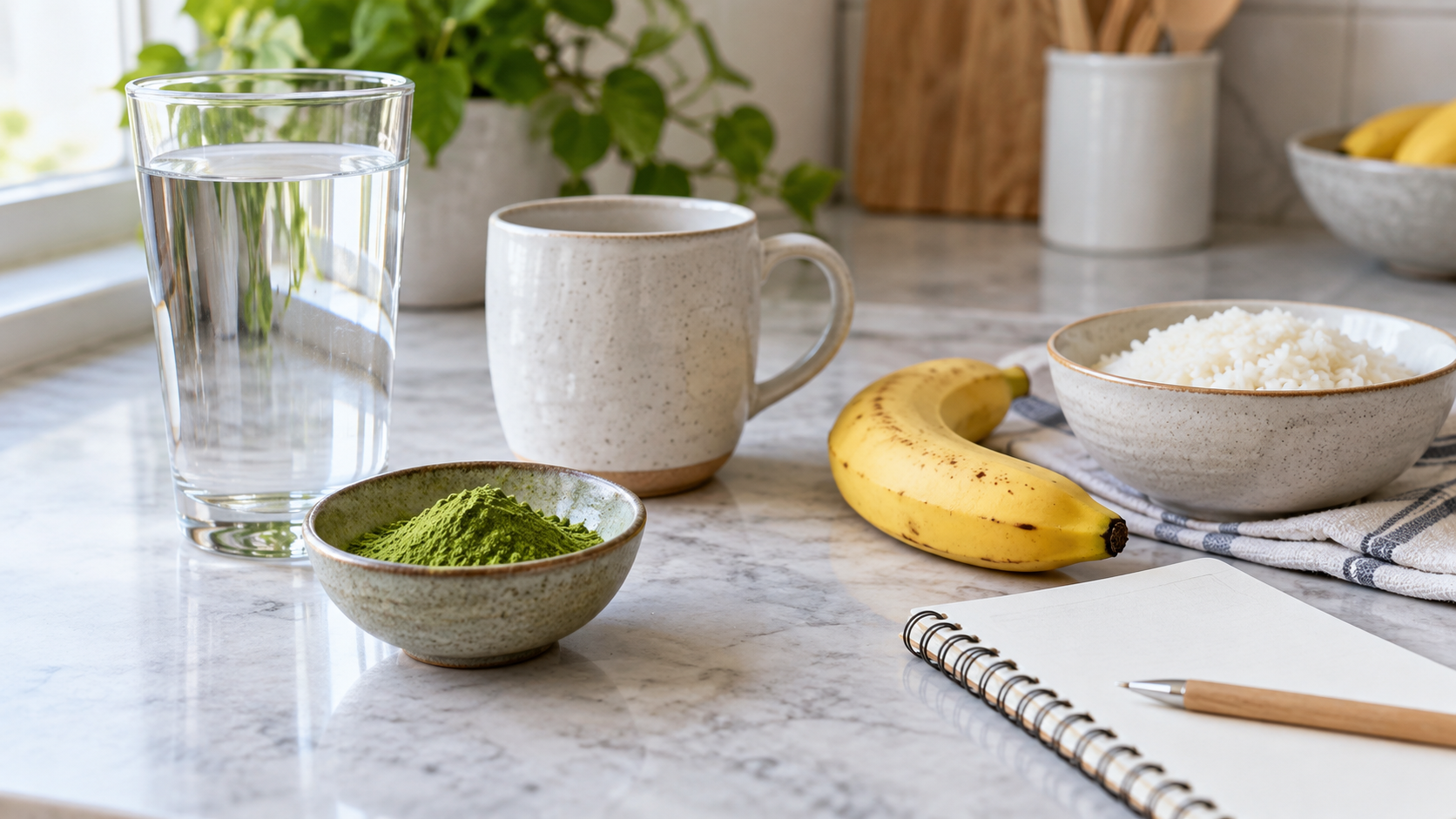
NIDDK advises avoiding drinks that can make diarrhea worse, including caffeinated drinks for some people, and drinks with large amounts of simple sugars. That matters because matcha often arrives as a café latte, not a small unsweetened bowl.
The short practical answer
| Situation | Matcha decision |
|---|---|
| Acute watery diarrhea | Skip matcha at first; use fluids you tolerate. |
| Recovering and appetite is back | Try a small weak serving only if caffeine usually agrees with you. |
| Urgency after coffee or tea | Avoid matcha until stools are normal. |
| Sweet matcha latte | Poor test drink because sugar and milk can worsen symptoms. |
| Severe symptoms | Seek medical advice rather than testing tea. |
Poison Control notes that caffeine can stimulate gastrointestinal motility, which is one reason some people feel a bowel urge after caffeinated drinks. That does not prove matcha causes diarrhea in everyone, but it explains why matcha is a risky “helper” when stool is already loose.
Why plain matcha and matcha latte are different
Plain matcha brings caffeine and tea solids. A latte can add lactose, sugar, syrups, sugar alcohols or high-fat ingredients. If diarrhea is active, those extras make it hard to tell what is helping or hurting.
If you want matcha again after symptoms improve, use a small plain serving with water and avoid drinking it on an empty stomach. Do not restart with a large iced latte.
When diarrhea is not a tea question
MedlinePlus lists many causes of diarrhea, including infections, medicines, food intolerances and digestive diseases. Blood in stool, signs of dehydration, high fever, severe pain, persistent symptoms or diarrhea in infants, older adults or immunocompromised people needs medical guidance.
Matcha can be part of a normal diet when tolerated, but it is not oral rehydration therapy and it is not a treatment for infection.
What not to assume
- Do not assume matcha stops diarrhea.
- Do not use matcha instead of hydration.
- Do not test a sweet latte while trying to identify triggers.
- Do not ignore dehydration warning signs.
- Do not treat green-tea extract as gentler than a drink.
Bottom line
Matcha is not a diarrhea remedy. During acute diarrhea, water, oral rehydration when appropriate and tolerated foods matter more. Return to matcha only after symptoms settle, and keep the first serving small and plain.
Sources checked
- NIDDK: eating, diet and nutrition for diarrhea
- MedlinePlus: diarrhea
- Poison Control: is matcha tea good for you?
- NCCIH: green tea usefulness and safety
- Sailtik: can matcha cause diarrhea?
- Sailtik: matcha on an empty stomach
- Sailtik: matcha and gut health evidence
FAQ
Can matcha help diarrhea?
There is no good evidence that matcha helps acute diarrhea.
Why might matcha make diarrhea worse?
Caffeine can stimulate the gut, and latte ingredients such as milk or sugar may be triggers for some people.
Can I drink iced matcha after diarrhea?
Wait until symptoms are improving, then test a small plain serving. Avoid sweet lattes at first.
Is decaf green tea better?
It may be gentler for caffeine-sensitive people, but hydration and medical warning signs still matter more.