
Matcha can plausibly contribute to loose stool or urgency in some people, but direct evidence that an ordinary cup of matcha causes diarrhea is limited. Caffeine, the amount of powder, a sudden change in intake and other latte ingredients may all matter. A symptom that happens after matcha is a clue—not proof that matcha was the cause.
If diarrhea is severe, persists, contains blood or is accompanied by dehydration, high fever or significant pain, seek medical advice rather than trying to solve it by changing a tea recipe. This article is general information, not a diagnosis.
Diarrhea is not the same as needing to poop
A drink may make someone feel an urge to use the bathroom without producing loose, watery stools. That distinction matters. Poison Control notes that caffeine can enhance gastrointestinal motility, while its matcha review also emphasizes that human evidence for many medical claims about matcha remains limited. Faster or more noticeable movement is therefore a plausible explanation for urgency, not automatic evidence of diarrhea.
For the broader bowel-movement question, see Does Matcha Make You Poop? The present page focuses on loose stool as an unwanted symptom.
What direct matcha evidence shows—and does not show
A randomized, double-blind human study evaluated matcha and fecal microbiota, showing that matcha can be studied as a distinct food rather than assumed to behave exactly like brewed green tea. That study did not establish that a normal matcha beverage causes diarrhea. Search results often bridge this evidence gap with ingredient theories, animal research or personal stories.
Green-tea extract safety data also need careful interpretation. A capsule or concentrated extract can deliver a different amount and pattern of exposure than 1.5–3 g of powder whisked into a drink. NCCIH separates the generally reported safety of green tea as an adult beverage from adverse effects and rare liver injury associated mainly with extract products. Extract findings should not be copied onto every cup of matcha.
Possible contributors in a matcha drink
| Possible contributor | Why it is worth checking | What it does not prove |
|---|---|---|
| Caffeine | Can affect gut motility, and sensitivity varies. | That every caffeinated matcha drink will cause diarrhea. |
| Powder dose | A heaped spoon may be much larger than the intended recipe dose. | That a particular gram amount is a universal symptom threshold. |
| Milk or creamer | Lactose or another ingredient may be poorly tolerated by an individual. | That the matcha powder is responsible. |
| Syrup or sweetener | Some sugar alcohols and large sweetener loads can have a laxative effect. | That all sweetened matcha causes symptoms. |
| Other food, infection or medicine | Timing may coincide with an unrelated cause. | That the most recently consumed item is guilty. |
Caffeine content is not fixed by the word “matcha.” It varies with the powder, serving mass and preparation. Our guide to matcha caffeine versus coffee explains why a measured recipe and product-specific data are more useful than a universal internet number.
Does drinking matcha on an empty stomach cause diarrhea?
Many online pages present an empty stomach as the explanation, but high-quality direct evidence for that exact matcha claim is scarce. Some people report better tolerance when matcha is consumed with food, yet that personal response is not a proven mechanism or a guarantee. Food also changes the whole exposure: drinking more slowly, using a smaller portion or replacing a rich latte with plain matcha can all occur at the same time.
If a clinician has not told you to avoid the drink, changing only one variable at a time is more informative than changing the powder, dose, milk, sweetener and meal timing together.
A practical way to identify the trigger
- Pause during active symptoms. Prioritize fluids and follow medical advice for the underlying illness.
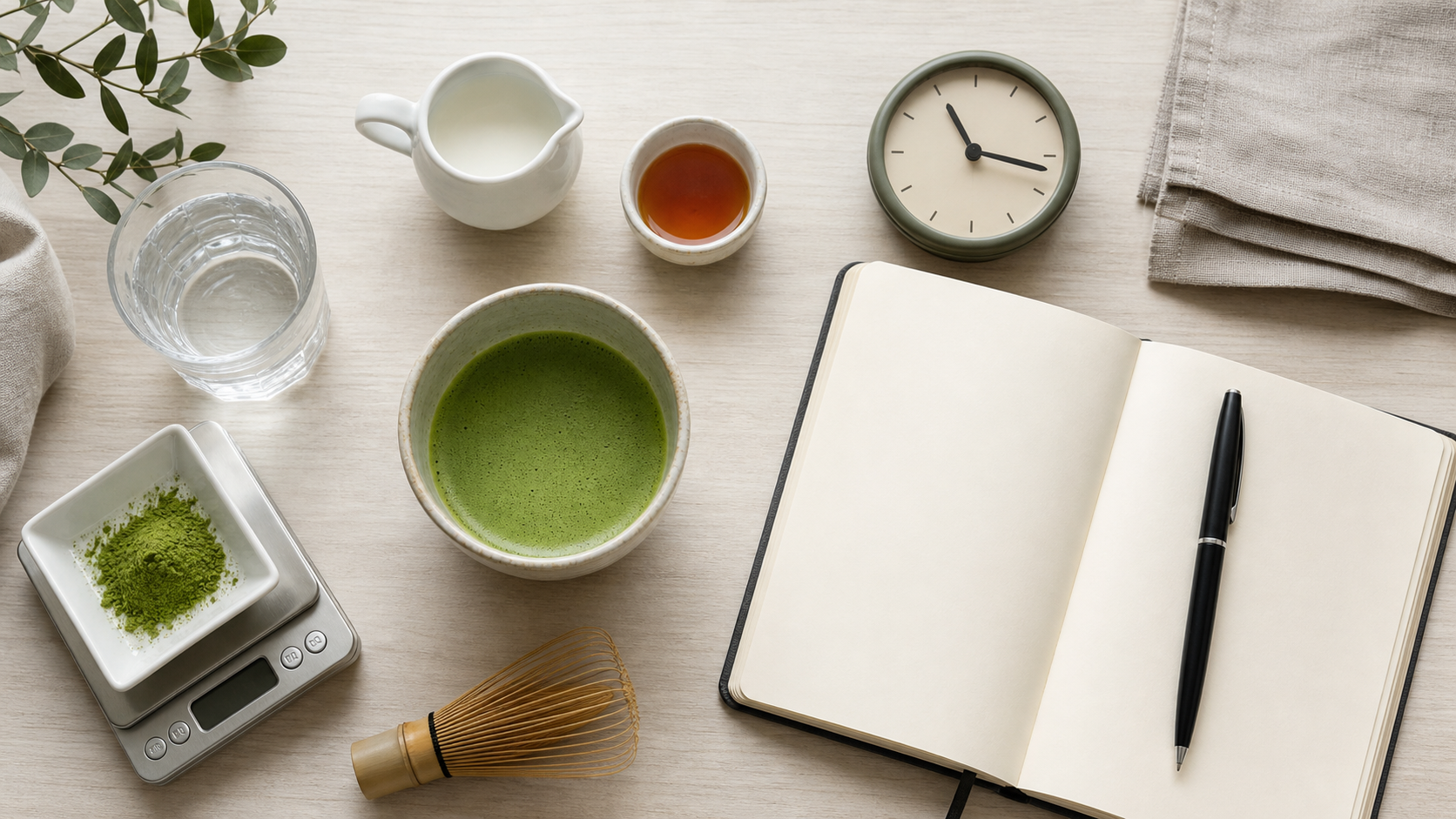
- Write down the exact recipe. Record powder grams, cup size, milk, sweetener, other caffeine and the time consumed.
- Check the timeline. Note when symptoms began, their frequency and any other food, medicine or illness exposure.
- Reintroduce cautiously only if appropriate. After recovery, a smaller, simple serving can help separate the powder from latte additions. Do not deliberately re-challenge after a serious reaction.
- Change one variable. A measured powder dose with water tests a different question from a large sweetened dairy latte.
- Stop if the pattern repeats. Recurrence after controlled exposures is useful information to share with a health professional, but it is still not a laboratory diagnosis.
Sailtik commonly recommends 1.5–3 g per cup for recipe development, but this is a formulation range, not a medical tolerance range. Individual sensitivity can differ, and a buyer should validate the complete finished beverage with its own users and labeling requirements.
When to seek medical care
NIDDK advises medical assessment for warning signs such as dehydration, severe abdominal or rectal pain, black or bloody stool, frequent vomiting, high fever, or diarrhea that lasts beyond the period appropriate for the person’s age and condition. Infants, older adults, pregnant people and those with weakened immunity may need earlier advice. If a reaction includes breathing difficulty, facial swelling or collapse, treat it as an emergency rather than ordinary digestive intolerance.
What cafés and matcha brands should say
A commercial product page should not promise that a grade is “gentle on the stomach,” prevents diarrhea or improves a digestive disease without adequate substantiation. Useful operational information is more concrete: declare ingredients accurately, identify allergens, provide a consistent powder dose, retain lot records and distinguish pure matcha from a sweetened premix.
For health-related marketing more broadly, our matcha human-evidence guide separates composition, plausible mechanisms and measured outcomes. Sailtik can provide commercial documentation for selected products, but those documents are not proof of a digestive-health claim.
Frequently asked questions
Can one cup of matcha give you diarrhea?
It is possible for symptoms to follow one cup in a sensitive person, especially when the drink is large or contains other poorly tolerated ingredients. The timing alone cannot identify whether matcha, caffeine, milk, sweetener, another food or an illness was responsible.
Is ceremonial-grade matcha less likely to cause diarrhea?
No clinical evidence establishes a grade label as protection from diarrhea. Grade systems mainly communicate sensory position and intended use. Dose, composition, recipe and the individual are more relevant to this symptom question.
Should I drink matcha while I already have diarrhea?
That is a different, person-specific management question. Because diarrhea has many causes and caffeine may not suit every recovery plan, follow hydration guidance and ask a health professional when symptoms are significant or persistent.
Sources
- Randomized matcha and human fecal microbiota study
- Poison Control: matcha, caffeine and bowel motility
- NCCIH: green tea usefulness and safety
- NIDDK: symptoms and causes of diarrhea
Last evidence review: July 31, 2026. This educational article does not diagnose, prevent or treat disease.