
Do not make a face mask with expired matcha powder if it is damp, musty, moldy or badly clumped. If the powder is only stale and dry, the question becomes skin irritation and clean handling, not matcha freshness alone.
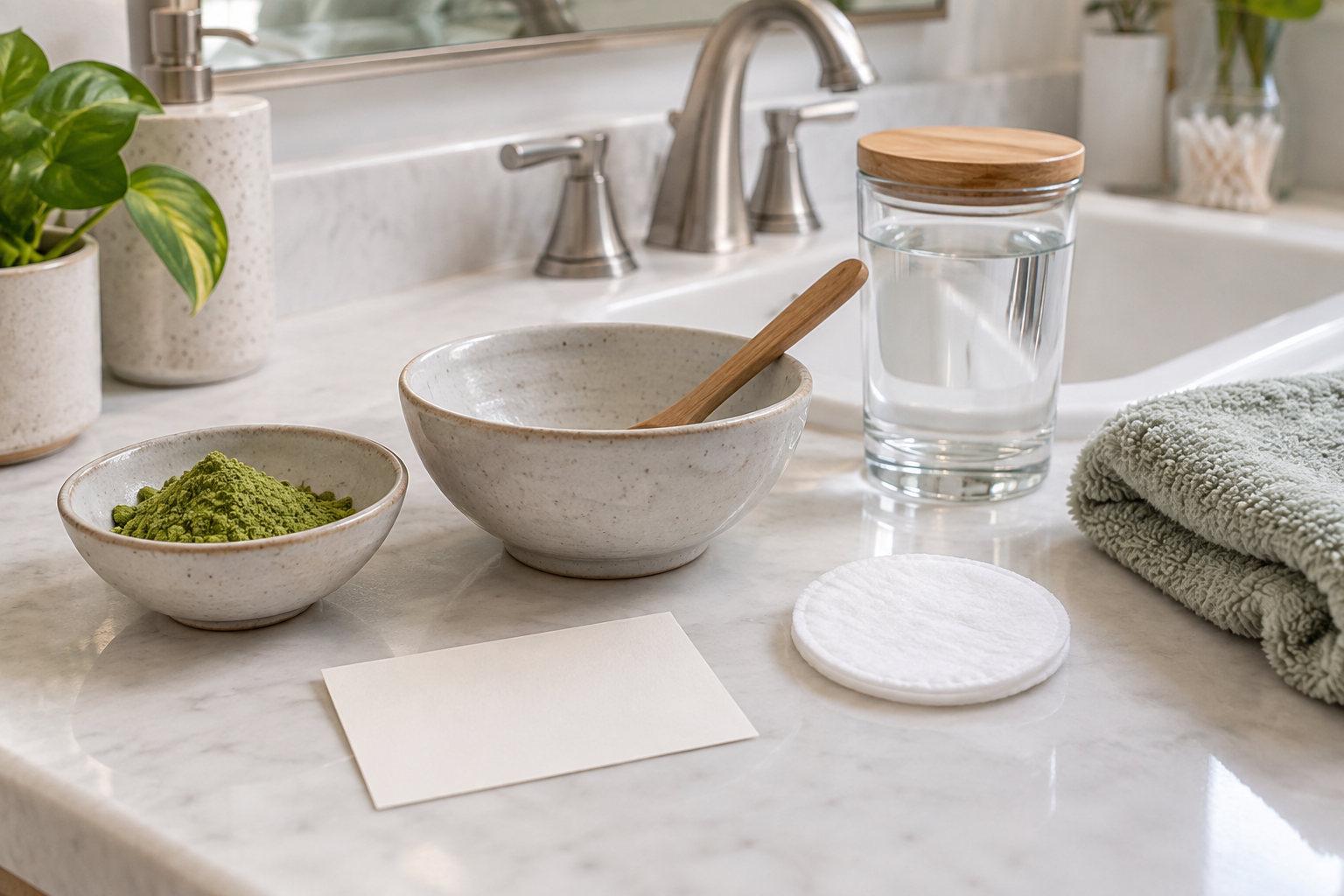
Many DIY posts treat old matcha as harmless because it is no longer good enough to drink. That misses the practical issue: a pantry powder becomes a cosmetic-style mixture the moment you add water, yogurt, honey or oil and spread it on your face.
A simple decision check
| Powder condition | Face-mask decision |
|---|---|
| Dry, sealed, slightly dull color | Possible, but still patch-test and mix only a fresh single use. |
| Flat aroma, no dampness | Likely a quality loss, not proof of skin safety. |
| Musty odor | Do not use on skin. |
| Wet clumps or caked powder | Do not use; moisture changes the risk. |
| Visible mold | Discard. Do not repurpose it. |
FDA’s cosmetic microbiology guidance is a useful lens here. It notes that cosmetics can become harmful if contaminated with bacteria or fungi, and lists contaminated raw materials, water, weak preservation, poor storage and consumer handling as routes for contamination. A kitchen bowl of matcha paste has no tested preservative system.
If you still try it
- Mix only enough for one application and discard the rest.
- Use clean utensils and clean water; do not dip fingers into a storage jar.
- Keep it away from eyes, broken skin, active rashes and irritated skin.
- Do not add lemon juice, essential oils or abrasive scrub particles to “boost” it.
- Stop immediately if you feel burning, strong stinging, itching or swelling.
The American Academy of Dermatology recommends testing skincare products on a small area before adding them to a routine. For a homemade mask, that advice is even more relevant because the mixture has not been stability-tested, preserved or labeled like a commercial product.
Why “expired” is not the only risk word
A dry, stale powder can be disappointing without being visibly spoiled. A damp powder is different. USDA’s mold guidance warns that molds can cause allergic or respiratory reactions and that some produce mycotoxins. Putting questionable powder on facial skin is not a smart waste-saving trick.
If your real goal is not skincare but avoiding waste, the safer route may be non-skin use only when the powder is dry and sound. For ordinary storage checks, see Sailtik’s matcha expiry guide. For food and drink ideas using sound powder, see how to use matcha powder.
Sources checked
- FDA: microbiological safety and cosmetics
- FDA: homemade cosmetics fact sheet
- AAD: how to test skin care products
- USDA FSIS: molds on food
FAQ
Can stale matcha help my skin?
Do not count on it. A stale pantry powder is not a proven treatment for acne, redness, aging or irritation.
Can I store leftover homemade matcha mask?
No. Mix a tiny amount for one use and throw away leftovers.
Should I patch-test it?
Yes. Stop using it if the test area becomes red, itchy, swollen or uncomfortable.