
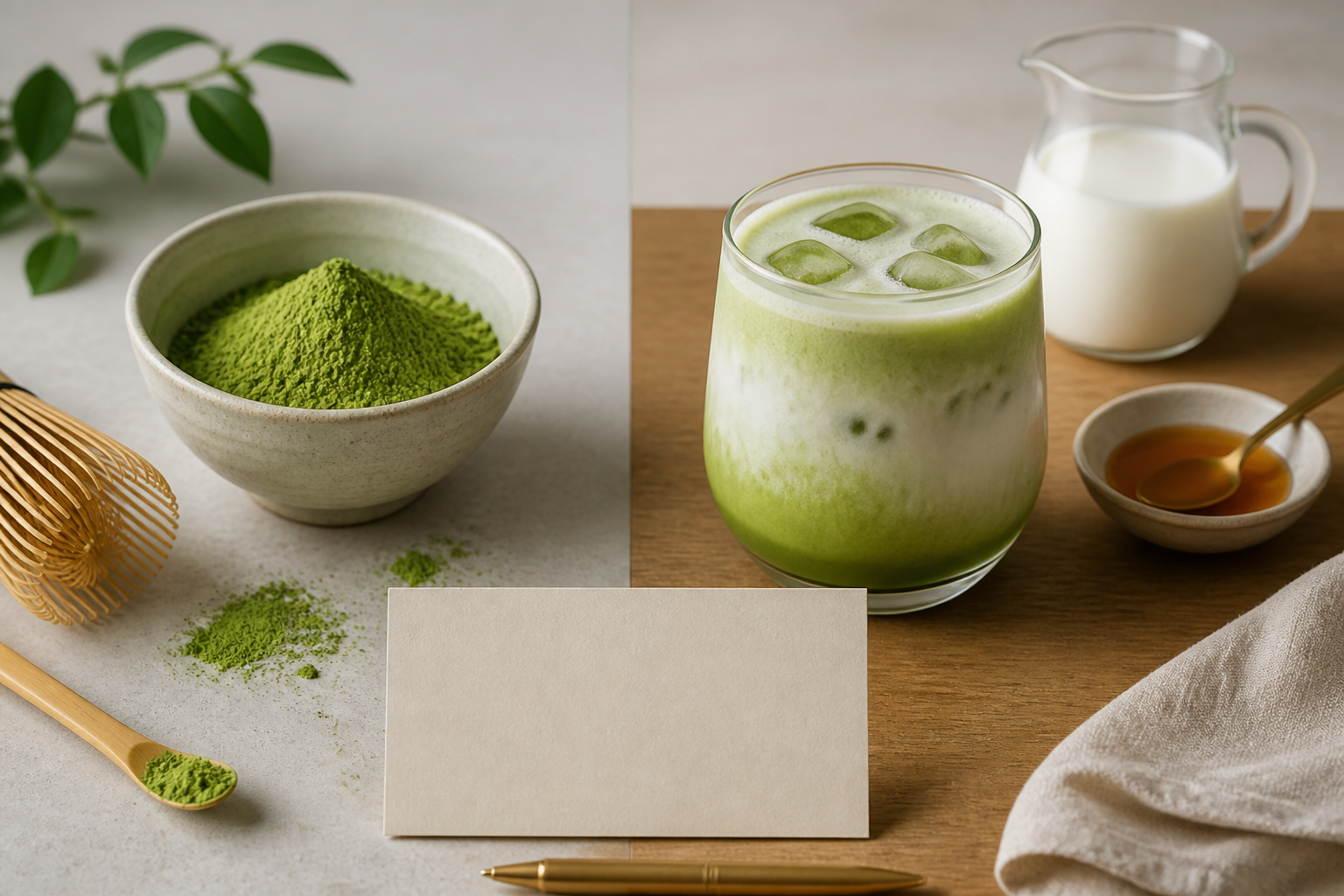
Matcha powder has calories, but a small plain serving usually contributes only a few. It is more accurate to call plain matcha low-calorie than zero-calorie. The finished drink can contain much more energy when you add milk, syrup, sugar, cream, fruit or toppings.
Why calorie answers differ
Nutrition databases and labels use different serving masses. One source may describe a teaspoon as about 1–2 g; another may use a brand’s measured serving. Small amounts can also be rounded on a label. The practical conclusion is not that matcha has no calories, but that the powder’s contribution is usually small compared with a sweetened latte.
Powder density and packing make spoon-based comparisons especially unstable. If you are logging calories precisely, use a scale and the package’s grams-per-serving information. If you are comparing cafés, use the nutrition information for that exact chain and size instead of subtracting an assumed powder value from a different recipe.
| Preparation | Main calorie variables |
|---|---|
| Powder plus water | Powder mass and the product’s nutrition data |
| Matcha latte | Milk or plant milk, syrup, size and powder mass |
| Sweetened mix | Sugar, creamer, carriers and serving size |
| Frappé or dessert | Ice cream, cream, sauces, toppings and total portion |
Plain powder is not the whole recipe
If you whisk matcha with water, there is no milk or sugar to add calories. A latte is different even when the same powder is used. Dairy and plant milks contribute different amounts of fat, carbohydrate and protein, while syrups and toppings can become the largest calorie source in the cup.
“Unsweetened matcha” describes the powder or mix, not necessarily the café drink. Ask whether the sweetener is already in the powder, added to the cup or included in a topping. Read the complete nutrition panel for packaged products.
How to estimate a home cup
- Weigh the matcha powder or use the label’s stated serving.
- Use the product’s calories per gram when available.
- Record milk, syrup, honey, sugar and toppings separately.
- Multiply each ingredient by the amount actually used.
- Do not transfer a branded latte’s calories to plain powder or vice versa.
For a rough calculation, a 2 g powder serving is usually only a few calories, but the exact result depends on the brand and label. That estimate is not a substitute for a product-specific nutrition panel, especially when the powder is a blend.
That distinction matters for products marketed as matcha latte mix. A mix may contain sugar, creamer, soluble carriers or flavorings before you add any milk. Treat it as a formulated beverage powder and use its own serving panel, not a generic plain-matcha estimate.
Packaging also matters for accuracy. A scoop that is heaped one day and level the next changes both grams and calories. For home tracking, a small kitchen scale is usually more reliable than trying to correct a spoon measurement by eye.
The same principle applies to cafés: record the actual powder mass and recipe components during a test, then update the nutrition calculation when the supplier or serving size changes.
Does low-calorie mean weight-loss food?
Not automatically. A low-calorie plain drink may help someone replace a higher-calorie beverage, but matcha itself does not guarantee weight loss. Adding a large amount of syrup or cream can reverse that comparison. See our separate weight-loss evidence review for the limits of health claims.
Frequently asked questions
Is pure matcha zero calories?
No. Plain powder contains a small amount of energy, although a label may round a tiny serving to zero or use a different serving size.
Does matcha burn calories?
Matcha is not a calorie-burning treatment. Caffeine and tea research should not be turned into a guaranteed weight-loss claim.
Why does a matcha latte have more calories?
Milk, sugar, syrups, cream and toppings contribute calories. The powder is only one part of the finished recipe.
Bottom line
Plain matcha is low in calories but not literally calorie-free. For accurate tracking, weigh the powder, use the product label and count every ingredient in the finished cup. Brand products such as Pure Leaf require their own current label review.
This article is general nutrition education, not individualized dietary or medical advice.