
A practical starting range is about 1.5–3 g of matcha powder per cup, then adjust it in the actual recipe. There is no single correct number for every bowl, latte or 16 oz iced drink. Cup volume, milk, ice, sweetness, powder strength and the flavor you want all change the useful dose.
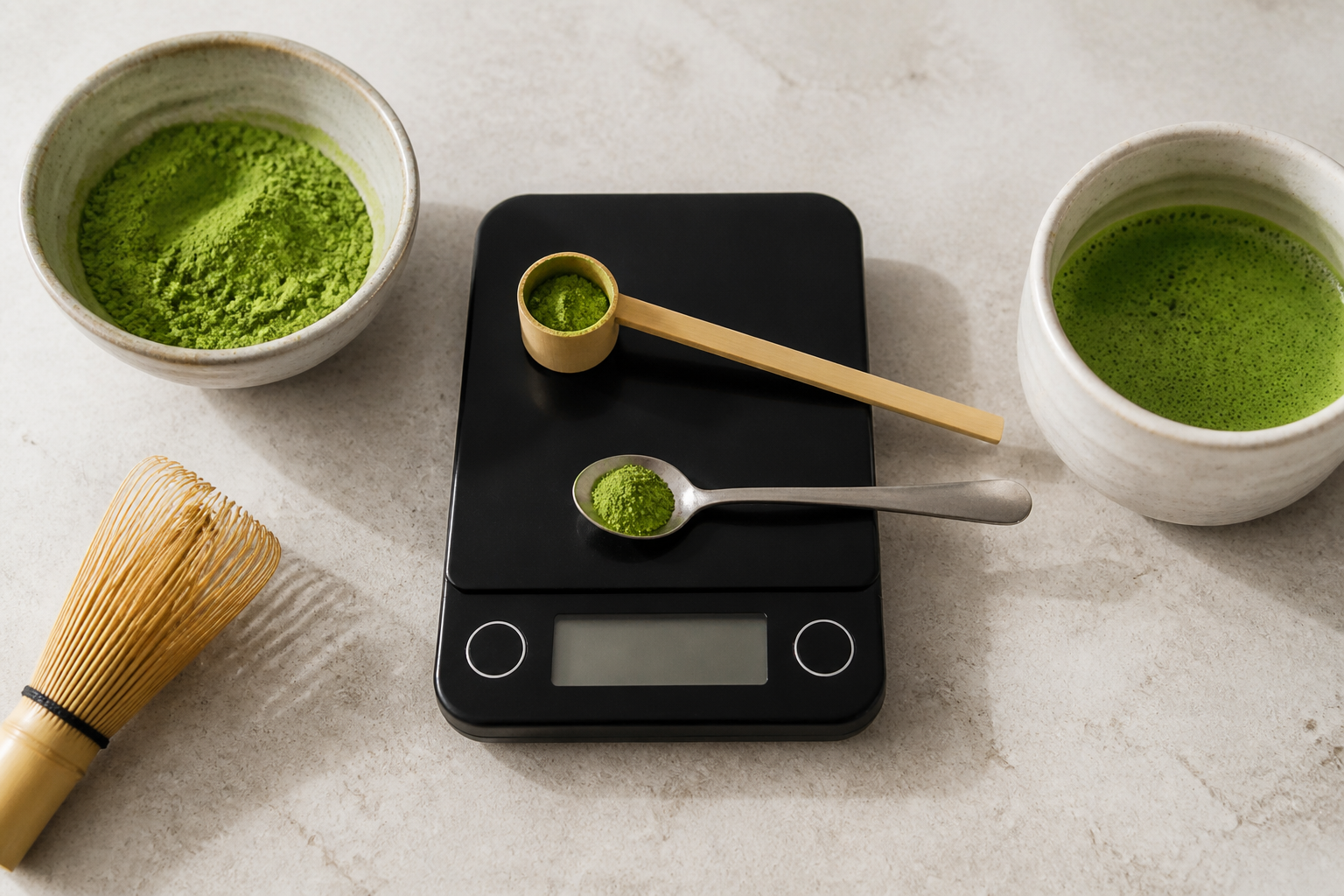
Start with grams, not a heaped spoon
Grams are the most repeatable way to compare batches. A teaspoon measures volume, while powder can be fluffy, compacted or clumped. Two “level” teaspoons may therefore contain different masses. If consistency matters, weigh the powder once, then use the same leveled scoop only after you know what that scoop delivers.
“Per cup” also needs a definition. A small bowl of tea, an 8 oz water drink and a 16 oz iced latte are not the same serving. Write down whether your number refers to the cup’s printed volume, the liquid before ice or the finished drink. That note prevents a recipe from drifting when staff change cups or suppliers.
| Use case | Reasonable test starting point | What to adjust |
|---|---|---|
| Small bowl with water | About 1.5–2 g | Bitterness, body, water volume and whisking |
| Hot or iced café latte | About 2–3 g | Milk, ice dilution, sweetness and cup size |
| Large 16 oz iced drink | Start near the top of the range, then test | Ice melt, milk volume and target color |
| Baking or dessert | Set by the complete formula | Heat, sugar, fat, flour and desired color |
Scale the recipe, not just the water
A larger cup does not always need a perfectly proportional increase. A 16 oz drink with lots of ice may contain less liquid than its printed volume suggests, while a hot latte may be mostly milk. Start with the target finished volume, then test the color, aroma, bitterness, mouthfeel and aftertaste at the temperature customers will actually receive.
- Measure powder before adding water or milk.
- Record cup size and finished beverage weight.
- Note the milk, sweetener, ice and flavor additions.
- Use the same whisking or shaking method every time.
- Recheck after five to ten minutes to see whether sediment or bitterness changes.
Why grade and origin change the best dose
A delicate premium powder may become harsh when overdosed in water, while a robust café powder may need enough mass to remain visible through milk and ice. Origin, harvest, processing, storage and lot variation also affect flavor. For a commercial menu, select the grade for the application and test several lots instead of copying a teaspoon recommendation from another supplier.
For repeatability, make a short test card: powder lot, grams, water or milk mass, temperature, mixing time, cup size, ice mass, sweetener and sensory score. A buyer can then compare samples without confusing a stronger dose with a better powder.
When changing suppliers, repeat the test at the old dose before changing the menu. A new color or aroma may tempt a larger scoop, but the commercial decision should come from measured cost per drink and customer sensory feedback.
Sailtik’s café starting guidance is 1.5–3 g per cup. It is a testing range, not a medical dose and not a guarantee that every grade tastes best at the same point. Samples can be compared from Guizhou or Zhejiang origins under the buyer’s real recipe.
Frequently asked questions
How many grams are in one teaspoon?
It depends on the powder and how the spoon is filled. Weigh your own level teaspoon instead of treating a volume conversion as exact.
How much matcha for an 8 oz cup?
Begin around 1.5–2 g, then adjust for the recipe and your preferred strength. A milk-heavy drink may need a different balance than water.
Is more powder always better?
No. More powder increases flavor intensity, cost and caffeine, and can add bitterness or sediment. Test the smallest amount that performs well.
Bottom line
Use 1.5–3 g as a practical café starting range, weigh it, and refine the amount in the real cup. Treat per-day, caffeine and serving-count questions separately because they require total-intake calculations rather than a per-cup recipe.
This is a recipe and sourcing guide, not individualized nutrition or medical advice.