
Yes, matcha powder contains iron, but a normal drink is not a high-iron serving. Japan’s official food composition data lists matcha powder at 17.0 mg iron per 100 g. A practical 2 g serving therefore contains about 0.34 mg iron, which is roughly 2% of the U.S. FDA Daily Value of 18 mg.
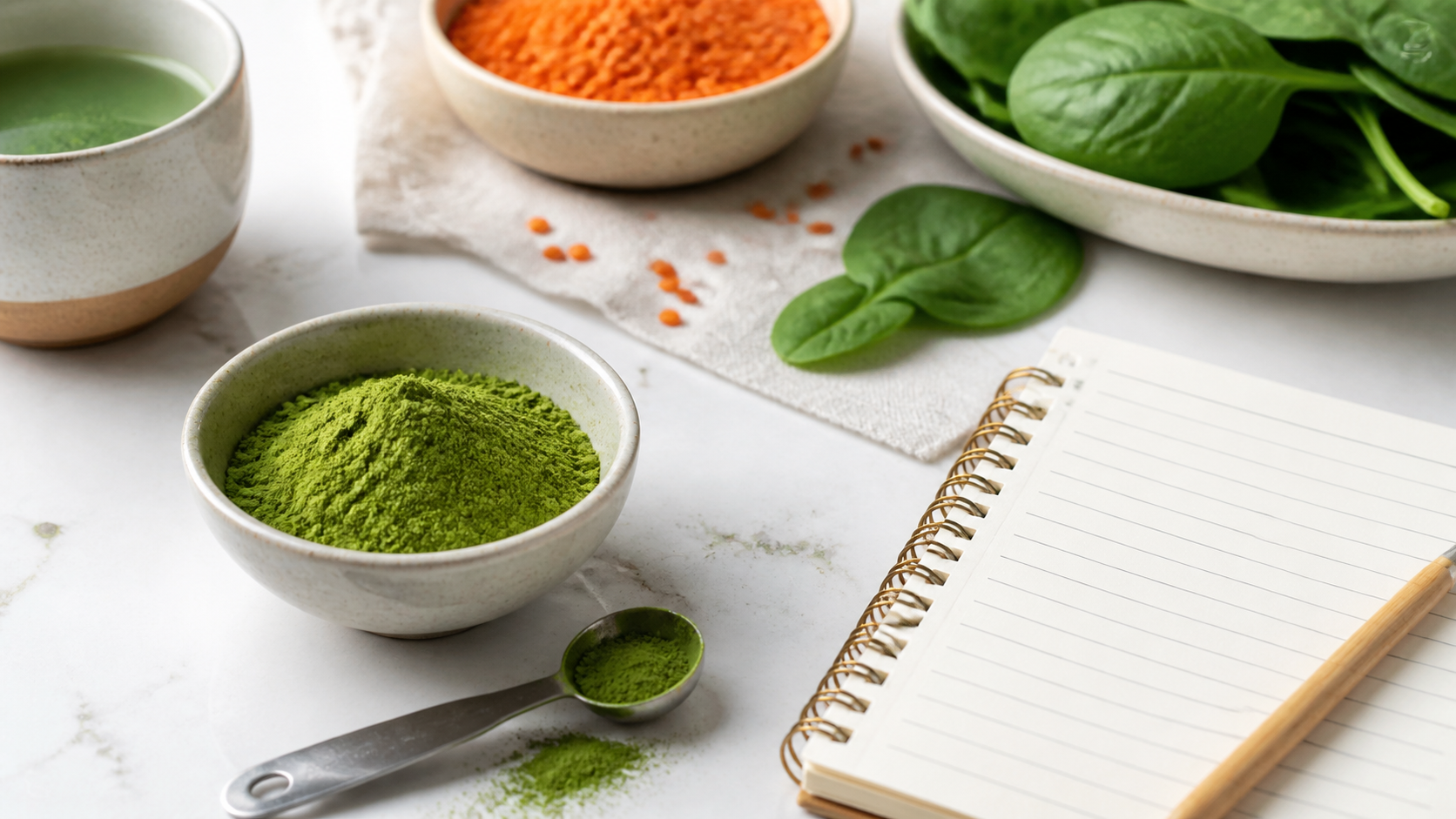
The common mistake is comparing dry powder per 100 g with foods eaten by the bowl or plate. Matcha looks iron-rich on a 100 g table because the powder is concentrated and dry. But most people use only 1.5–3 g of matcha in a drink, so the actual iron amount is small.
How much iron is in matcha?
| Matcha amount | Estimated iron from MEXT value | Approximate FDA %DV | Practical reading |
|---|---|---|---|
| 1.5 g light serving | 0.26 mg | 1% | Contains iron, but nutritionally small. |
| 2 g common straight serving | 0.34 mg | 2% | Not a meaningful iron source for most labels or diets. |
| 3 g strong latte serving | 0.51 mg | 3% | Still low as a Daily Value contribution. |
| 6 g tablespoon-scale amount | 1.02 mg | 6% | More noticeable, but this is a large matcha dose for one drink. |
| 100 g dry powder | 17.0 mg | 94% | Useful for composition tables, not a normal serving. |
The calculation is simple: 17.0 mg ÷ 100 g = 0.17 mg iron per gram of matcha powder. Multiply that by the grams you actually use. FDA says 5% Daily Value or less per serving is considered low and 20% or more is high. By that standard, a normal cup of matcha is low in iron.
Is matcha high in iron?
No, not in the way people usually drink it. A 100 g nutrition table can make matcha look high, but nobody drinks 100 g of matcha powder as a normal serving. Even a strong 3 g drink provides only about 0.51 mg iron, and a tablespoon-scale 6 g amount is still only about 6% DV.
For a consumer label or diet decision, the serving size matters more than the dry-weight headline. If a product is a sweetened matcha latte mix, ready-to-drink bottle or fortified powder, read that product’s Nutrition Facts label instead of using plain matcha powder data. Added milk, protein blends, cocoa, cereal ingredients or fortification can change the iron number.
Does brewed green tea have the same iron?
No. Matcha is different from brewed leaf tea because the powder is consumed. With ordinary brewed green tea, most leaf solids are removed after steeping. With matcha, the fine leaf powder remains suspended in the drink, so dry-powder composition data is more relevant. That still does not make a 2 g serving high in iron.
Can matcha replace iron-rich foods or supplements?
No. Matcha should not be used as an iron supplement. If you are trying to correct low iron or iron-deficiency anemia, follow medical advice and use foods, testing or supplementation appropriate to your situation. A normal matcha serving contributes too little iron to be the main strategy.
There is a separate question about tea polyphenols and non-heme iron absorption. That is not the same as asking whether matcha contains iron. If you are concerned that tea may affect iron absorption around meals, read Sailtik’s separate guide: does matcha lower iron?
When the number on a label may differ
- Serving size: a 1 g stick, 2 g sachet and 6 g tablespoon do not have the same iron amount.
- Rounding rules: Nutrition Facts panels use declared serving sizes and labeling rules, not always raw database math.
- Product type: pure matcha, latte mix and fortified beverage powder are different foods.
- Lot variation: agricultural products can vary by cultivar, soil, processing and test method.
- Preparation: a drink with milk or other ingredients may have iron contributions from those ingredients too.
Bottom line
Matcha does have iron, but the normal serving is small. Using the MEXT value of 17.0 mg iron per 100 g, a 2 g serving has about 0.34 mg iron, around 2% of the U.S. Daily Value. That means matcha can contribute a trace amount, but it should not be described as high in iron or used as an iron-repletion strategy.