
Yes, matcha powder contains protein, but matcha is not a protein food in the way consumers usually mean. A dry-powder table may show substantial protein per 100 g, while a drink typically uses only 1.5–3 g. The serving therefore supplies a small fraction of the 100 g value.
The short answer: present, but serving size matters
Matcha is milled tea leaf, so its dry matter includes protein alongside carbohydrate, fiber, fat and other components. A 2024 peer-reviewed composition study measured 17.3 g protein per 100 g in its matcha sample. That result establishes that protein can be measured in matcha; it does not create a universal specification for every origin, grade or lot.
One Sailtik sample nutrition label supplied for product documentation declares 29.5 g protein per 100 g. That is an example for the labeled product, not a claim for all Sailtik matcha. The relevant label, specification or report must accompany the actual product being evaluated.
Convert the 100 g table to one drink
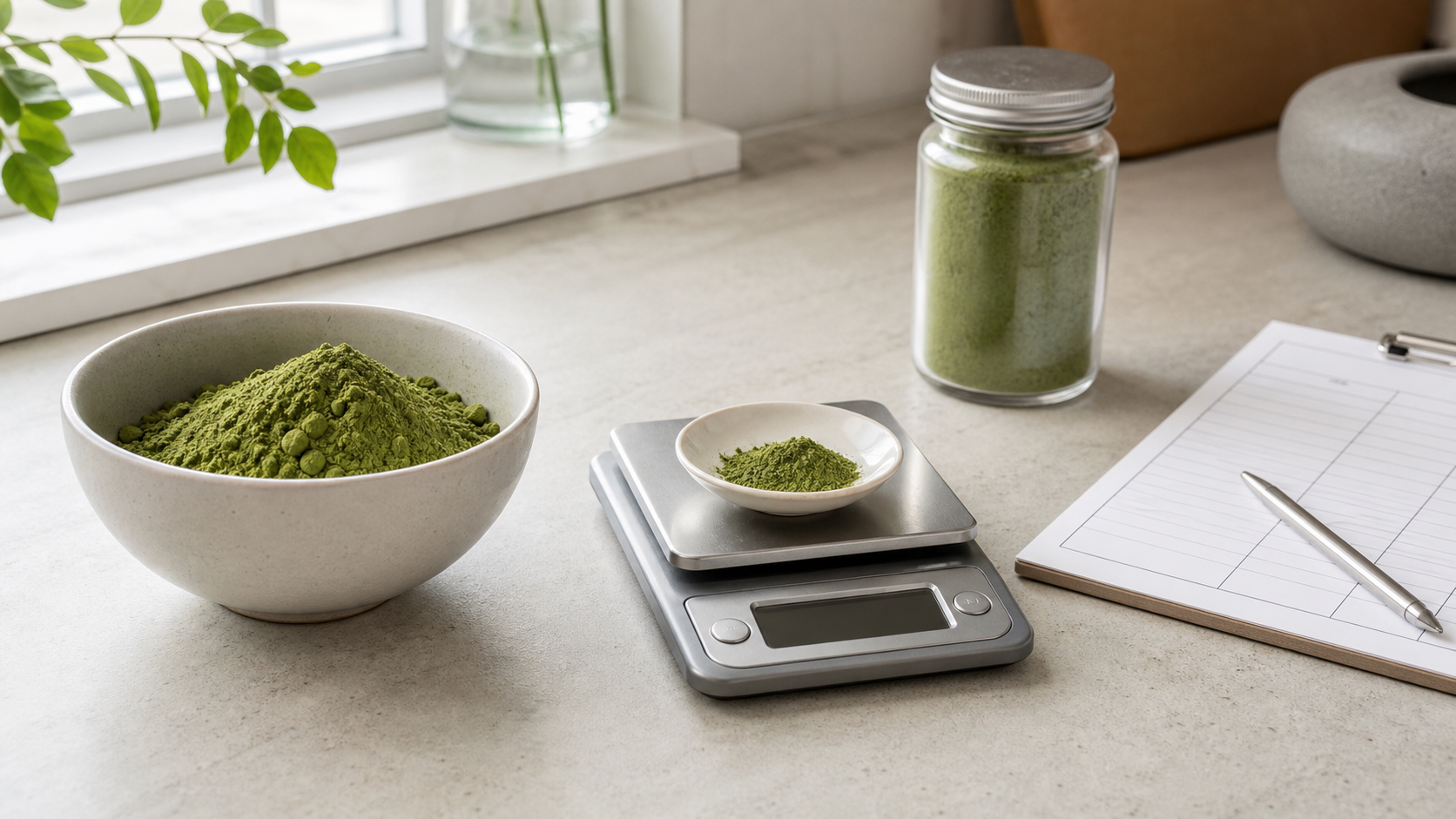
The calculation is simple: protein per drink = protein per 100 g × matcha grams ÷ 100. Using the 29.5 g-per-100 g example only:
| Matcha dose | Calculated protein before label rounding |
|---|---|
| 1.5 g | 0.44 g |
| 2 g | 0.59 g |
| 2.5 g | 0.74 g |
| 3 g | 0.89 g |
Replace 29.5 with the value on the product being used. Product labels can also round nutrients according to local rules, so a small calculated amount may appear differently on a serving panel. For a commercial label or protein claim, use the applicable regulation and qualified review.
Why websites give conflicting answers
- Different denominators: one table reports 100 g of dry powder; another reports a 1–2 g serving.
- Rounding: a small serving may round to zero even though the dry powder contains protein.
- Different products: cultivar, harvest, leaf selection, origin and processing affect composition.
- Pure powder versus latte: milk, soy drink or protein foam can contribute much more protein than matcha.
- Matcha versus blend: “protein matcha” may be a formulated drink containing dairy or added protein powder.
Is matcha itself a protein?
No. Matcha is a food ingredient made from tea leaf; protein is one nutrient within it. Calling matcha “a protein” confuses an ingredient with a macronutrient category. It also risks implying that a normal matcha serving is a meaningful high-protein portion.
The related search “is matcha high in protein?” has been separated because regulated “high protein” wording and nutritional usefulness require a different comparison. The same is true for “how much protein,” which needs its own product- and dose-specific calculator.
Where the protein in a matcha latte comes from
| Latte component | How to count it |
|---|---|
| Matcha | Use its protein per 100 g and the weighed dose. |
| Dairy milk | Use the milk label and actual poured volume. |
| Soy, oat, almond or coconut drink | Use the exact brand and version; values vary widely. |
| Protein powder or protein foam | Use the formulation label and prepared portion. |
| Syrup | Usually contributes carbohydrate rather than meaningful protein, but check the label. |
This is why an official Starbucks Matcha Latte can list several grams of protein even though its matcha portion is small: the current U.S. ingredient list begins with milk. A current branded drink must be assessed from that menu’s standard recipe and customization, not attributed to matcha powder alone.
What a B2B buyer should request
- Confirm whether the product is 100% matcha or a formulated blend.
- Obtain the nutrition declaration for the offered product.
- Record whether values are per 100 g, per serving or per prepared drink.
- Use the intended 1.5–3 g dose to calculate the matcha contribution.
- For a finished latte, add every milk and formulation component.
- Have any front-of-pack protein claim reviewed under the destination market’s rules.
Sailtik can provide available product documentation, including a CoA where applicable, but this page does not claim that every CoA contains protein testing or that every grade shares the example nutrition value. Samples are recommended according to the customer’s business model and should be tested in the intended application.
Frequently asked questions
Does matcha tea have protein?
Matcha powder contains protein. A water-prepared matcha contains the amount contributed by the powder used, subject to the product value and label rounding.
Does green tea have the same protein?
Not necessarily. Brewed leaf tea is an infusion, while matcha powder is consumed as suspended leaf. Do not apply a matcha dry-powder table to brewed green tea.
Can matcha replace protein powder?
Not on the basis of a normal matcha dose. A protein-shake formulation is a separate recipe and nutrition question that should use the added protein ingredient’s declared value.
Sources
- Peer-reviewed analysis of matcha chemical composition and protein
- USDA FoodData Central for product-specific nutrition records
- U.S. FDA: understanding the Nutrition Facts label
Sources and Sailtik’s supplied sample label reviewed August 3, 2026. Values must not be transferred to an unrelated product or lot.