
A cup of matcha can contain roughly 26–132 mg of caffeine when made with 1.5–3 g of powder, using the 17.2–44.1 mg/g range measured in one published sample set. That is an illustrative range, not a universal value for every matcha.
The cup’s volume does not tell you the dose. A 6 oz bowl and a 16 oz iced drink made from the same powder weight start with the same amount of caffeine; the larger drink is simply more diluted.
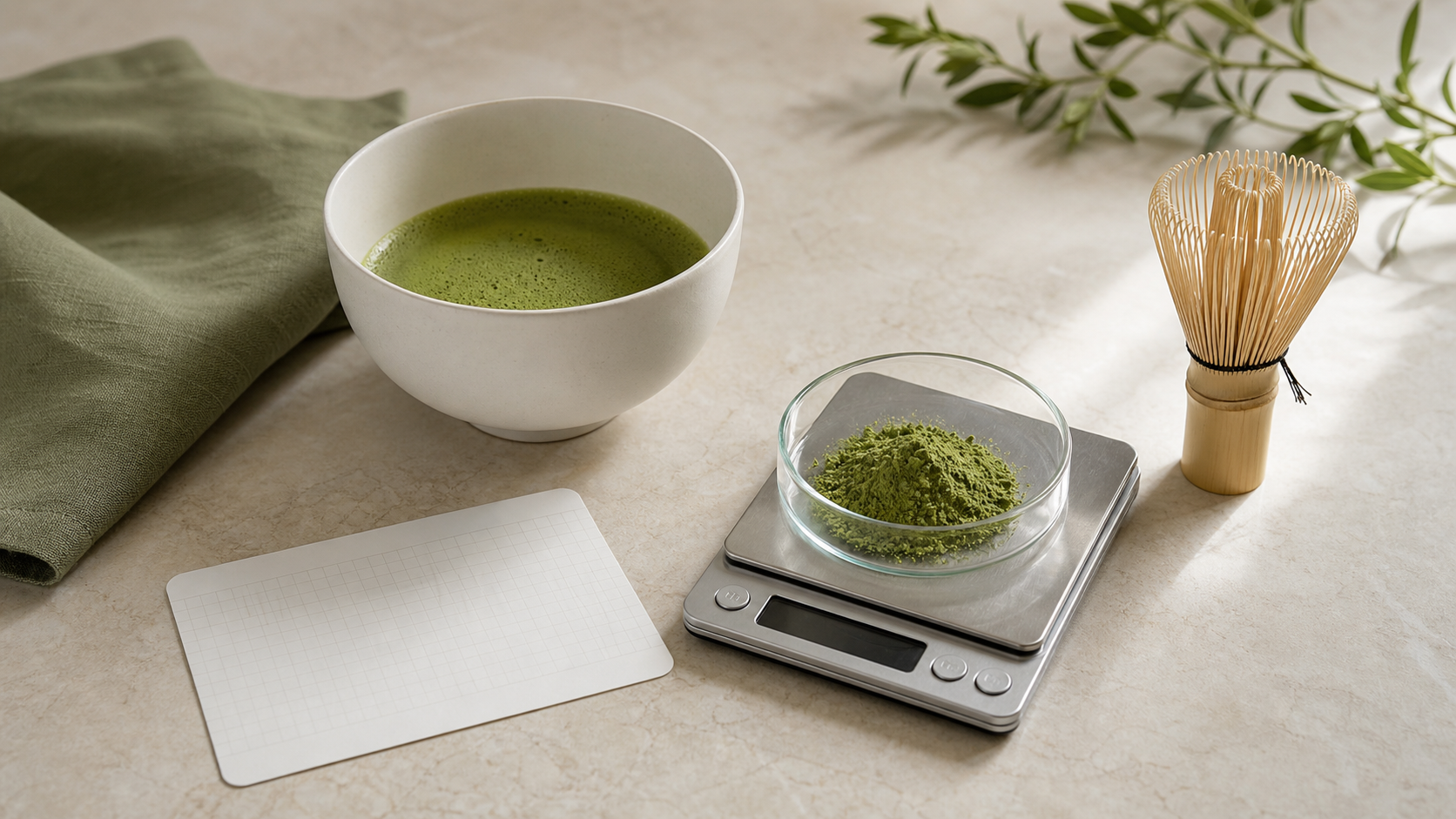
Caffeine estimate by matcha dose
A 2023 analysis of matcha products from several Chinese regions reported caffeine at 1.72%–4.41% of dry powder. Converting percentages to milligrams per gram gives 17.2–44.1 mg/g. Applying that measured study range produces the table below.
| Powder in one cup | At 17.2 mg/g | At 44.1 mg/g |
|---|---|---|
| 1.5 g | 26 mg | 66 mg |
| 2.0 g | 34 mg | 88 mg |
| 2.5 g | 43 mg | 110 mg |
| 3.0 g | 52 mg | 132 mg |
The arithmetic is straightforward: powder grams × caffeine milligrams per gram = caffeine milligrams per cup. For example, 2 g multiplied by 17.2–44.1 mg/g gives about 34–88 mg.
Do not treat the endpoints as a specification for an untested product. The study analyzed a defined sample collection, and natural tea chemistry varies with material and production. A product label, supplier document or lot-specific laboratory result should take priority over a general literature estimate.
Why “one cup” has no single caffeine number
- Powder dose: cafés and home recipes do not all use the same number of grams.
- Product concentration: caffeine is naturally variable, even before serving size is considered.
- Plain matcha versus mix: one gram of a sweetened latte mix is not necessarily one gram of matcha.
- Added espresso: a dirty matcha includes caffeine from both ingredients.
- Volume: water, milk and ice change drink strength per ounce, but they do not remove caffeine already present in the powder.
This is also why comparing scoops can mislead. Scoops vary in shape and packing, while kitchen teaspoons are volume measures. For a dose-based answer, weigh the powder. If you only have a teaspoon, see the separate matcha teaspoon caffeine guide and recognize the extra measurement uncertainty.
Does a matcha latte have the same amount?
It can. A plain matcha and a latte made with the same matcha dose and no other caffeinated ingredient receive the same caffeine contribution from the tea. Milk and syrup change calories, sweetness and concentration, not the amount supplied by that fixed dose.
A café may use a proprietary powder dose or a blended mix, so a homemade calculation cannot establish a branded drink’s value. Use the chain’s current nutrition listing where one exists. For a recipe-level estimate, use the dedicated matcha latte caffeine calculator.
How to get a better answer for your cup
- Confirm whether the ingredient is pure matcha or a premixed powder.
- Weigh the amount used in one finished drink.
- Find a caffeine value reported in mg/g for the same product and preferably the relevant lot.
- Multiply the two numbers, then add any caffeine from espresso or other ingredients.
- Round honestly; a broad input range cannot support false precision.
If there is no product-specific caffeine value, report the result as an estimate and identify the assumption. Color, bitterness, price and labels such as “ceremonial” or “culinary” cannot substitute for analysis.
Caffeine limits require personal context
The U.S. FDA says 400 mg per day is an amount not generally associated with negative effects for most adults, while also emphasizing wide variation in sensitivity and metabolism. That reference is not a personal intake target.
Count coffee, tea, energy drinks, chocolate, supplements and medicines together. People who are pregnant or breastfeeding, taking medication, managing a medical condition or unusually sensitive to caffeine should seek individualized advice from a qualified healthcare professional.
Frequently asked questions
How much caffeine is in a 2 g cup of matcha?
About 34–88 mg when the 17.2–44.1 mg/g range from the cited sample set is used. The actual product may fall elsewhere, so use its own analytical value for an exact claim.
Does adding more water reduce caffeine?
It reduces caffeine concentration per ounce but does not reduce the total caffeine contributed by the powder already in the cup.
Is matcha always lower in caffeine than coffee?
No. Serving sizes overlap. Compare the measured matcha dose with the specific coffee serving, not the category names. The broader matcha caffeine and coffee comparison explains those variables.
For café formulation
Sailtik commonly recommends testing 1.5–3 g per cup for sensory fit. That is a recipe range, not a caffeine specification. A café making a numerical caffeine claim should standardize the powder mass and obtain suitable product- or lot-specific evidence. Contact Carol to discuss sample selection for a café application; internal models are recommended according to the customer’s commercial use and are not publicly represented as having a fixed caffeine value.