
Matcha may contribute to mild, removable surface staining over time, but the size of that risk is not well established in direct clinical studies. Matcha contains green pigments and tea polyphenols that can contact enamel, yet online claims that it either never stains or predictably stains less than coffee go beyond the available matcha-specific evidence.
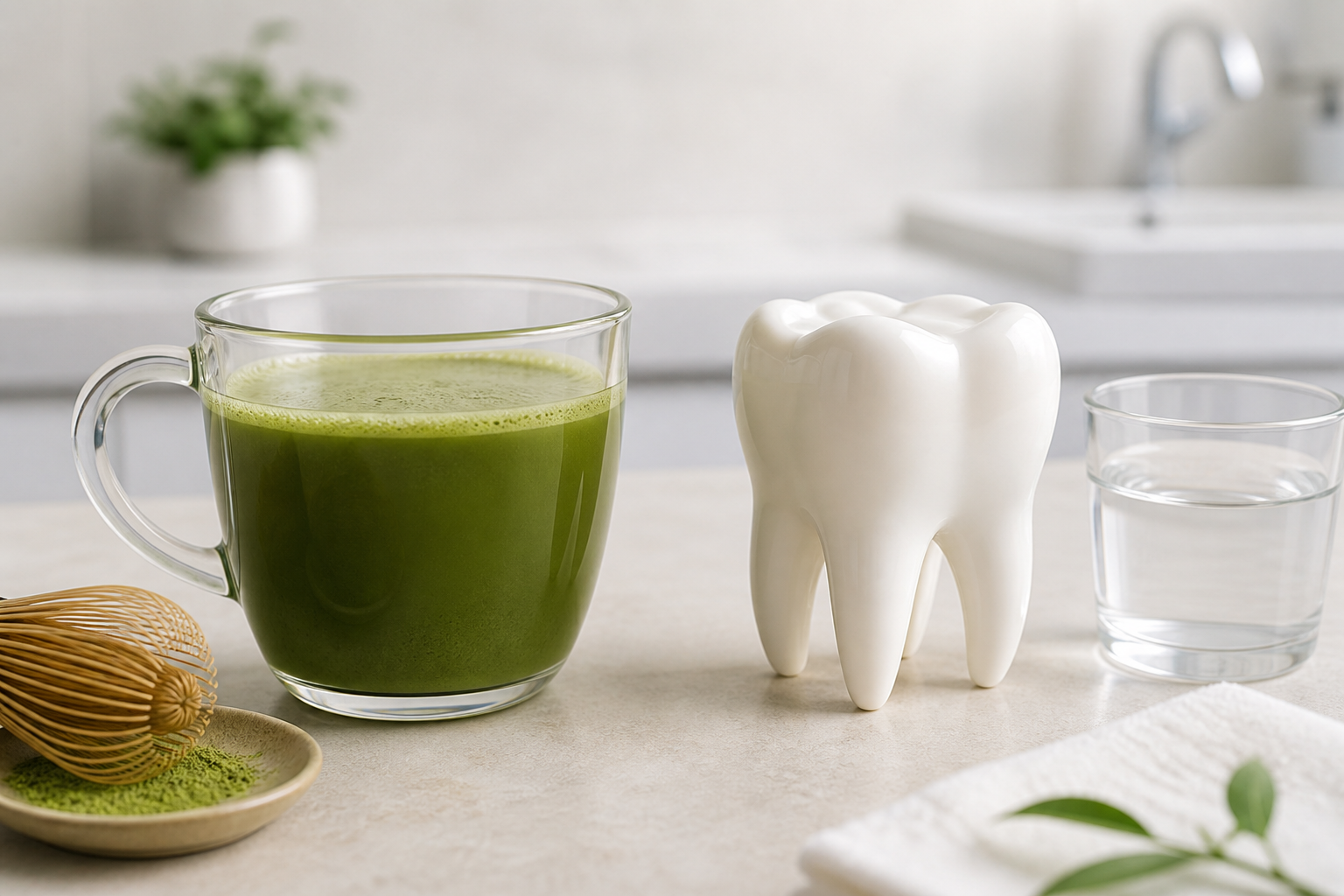
The evidence is mostly about tea, not everyday matcha drinkers
Current first-page answers commonly make one of two confident claims: matcha cannot stain because it is lighter than coffee or black tea, or matcha will stain because it contains tannins and pigment. Neither side has strong long-term human evidence measuring ordinary matcha consumption against tooth color.
Laboratory research shows that tea can produce extrinsic color change on extracted teeth and dental materials. A recent laboratory study found significant discoloration after repeated exposure to green tea, although the immersion conditions do not reproduce normal drinking, saliva, brushing or swallowing. Another extracted-tooth study found that adding milk reduced black-tea staining, apparently through casein. These experiments demonstrate possibility, not a personal forecast.
Surface stain is different from damaged enamel
Extrinsic discoloration sits on the tooth surface or in the surface film and may often be reduced by cleaning or professional polishing. Intrinsic discoloration develops within the tooth and can have very different causes. Dental erosion is also a separate process: it involves loss of tooth structure from acid rather than color deposited by a beverage.
A green or yellow film immediately after drinking may simply be temporary residue, especially when powder has not dispersed well. Persistent brown, gray or uneven color can involve plaque, diet, smoking, medicines, dental materials or conditions unrelated to matcha. A dentist can distinguish these possibilities more reliably than a photograph or product label.
Why matcha could leave color
- Whole suspended powder: unlike brewed tea that is filtered from leaves, prepared matcha keeps fine leaf particles in the drink.
- Natural pigments: chlorophyll and other colored compounds contact the surface while drinking.
- Polyphenols: tea compounds can interact with the acquired film on enamel and with other staining agents.
- Contact pattern: slowly sipping throughout the day creates more repeated exposure than drinking one serving with a meal.
- Plaque and surface roughness: retention can vary with oral hygiene, enamel condition, restorations and dental appliances.
These mechanisms make staining plausible, but they do not establish that every matcha stains equally or that a brighter green powder is safer. Grade, price and the word “ceremonial” are not dental-stain certifications.
Matcha versus coffee and black tea
Coffee and black tea are well-known sources of extrinsic discoloration. It is reasonable to expect their darker chromogens and different polyphenol profiles to behave differently from matcha, but there is no universal clinical percentage showing how much less—or more—matcha stains. Preparation, dose, frequency, milk, sweetener and the individual tooth surface complicate any ranking.
Do not use a color comparison as a health comparison. A pale sweetened latte may look less staining while exposing teeth to added sugar more frequently; a plain dark drink may contain no added sugar. Staining, cavities and erosion are separate outcomes.
Practical ways to limit surface exposure
- Drink water after matcha to help clear visible powder and residue.
- Avoid carrying one sweetened matcha for repeated sipping across many hours.
- Follow routine oral care rather than aggressively scrubbing after every cup.
- Brush twice daily for two minutes with fluoride toothpaste and clean between teeth, consistent with American Dental Association guidance.
- Have persistent discoloration assessed during regular dental care; professional cleaning may address extrinsic stain.
Whitening toothpaste and bleaching products are not risk-free for every person, especially with sensitivity, restorations or gum problems. Ask a dentist before escalating treatment. Guidance immediately after professional whitening is a separate, procedure-specific question and should follow the treating dentist’s instructions.
What businesses should claim
A café or matcha seller should not promise “zero tooth staining,” enamel whitening or dental protection from a product without appropriate evidence. Green color, catechin content and a premium grade do not prove a clinical dental outcome. Likewise, visible powder residue is not proof of harmful enamel damage.
Sailtik supplies China-origin matcha for food and beverage applications; its grades describe recommended commercial uses, not dental effects. Any oral-health statement would require evidence and regulatory review beyond a sensory or composition specification.
Bottom line
Matcha has a plausible potential to produce mild extrinsic staining, particularly with frequent exposure and retained residue. Direct evidence in everyday matcha drinkers is limited, so claims that it definitely stains—or cannot stain—are too strong. Water after drinking, normal fluoride oral care and professional assessment of persistent color are more defensible than product myths.