
There is no single matcha-grams-per-day limit that fits every person. A safer way to think about daily use is to count the matcha in every drink, check its caffeine information and account for coffee, tea, energy drinks, chocolate and medicines that also contain caffeine.
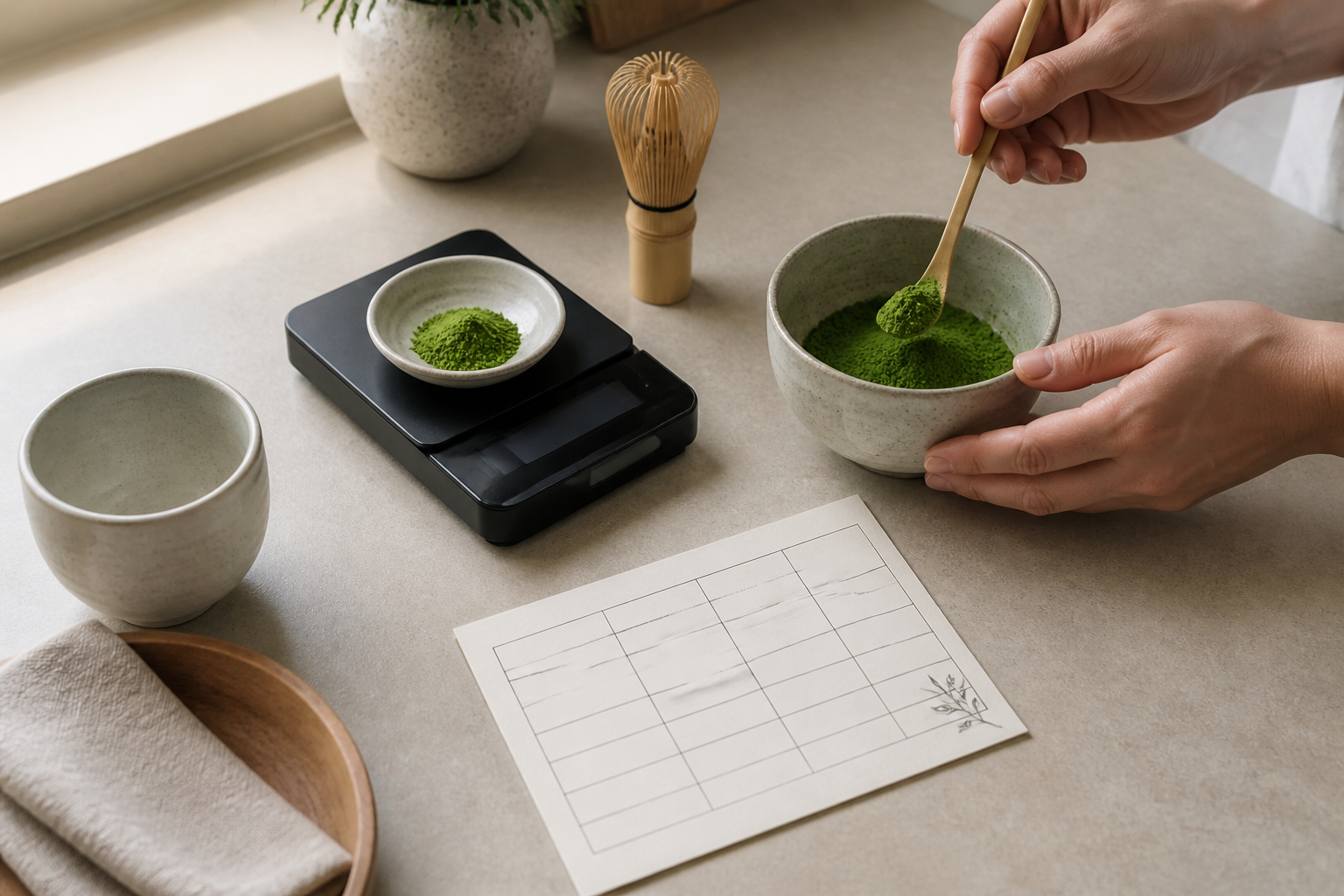
Why grams alone are not enough
Matcha powders vary by leaf material, processing and lot. A café starting range of 1.5–3 g per cup is a recipe guide, not a daily safety recommendation. The caffeine amount per gram can vary, so use a supplier specification or laboratory result when you need a more precise estimate.
- Write down the grams used in each serving.
- Check the powder’s caffeine information if available.
- Add caffeine from coffee, tea, cola, energy drinks, chocolate and medicines.
- Pay attention to sleep, anxiety, palpitations, stomach upset or other symptoms.
- Reduce or stop and seek professional advice if caffeine causes concerning symptoms.
A current caffeine reference
The European Food Safety Authority’s caffeine review says that, for healthy adults in the general population, total caffeine intakes up to 400 mg per day spread across the day do not raise safety concerns, while single doses up to 200 mg generally do not raise safety concerns. EFSA gives a lower reference of 200 mg per day during pregnancy. These are population-level safety references, not a target amount of matcha and not individualized medical advice.
People who are pregnant, under 18, sensitive to caffeine, taking medicines, managing a heart or anxiety condition, or dealing with sleep problems should ask a qualified clinician about their own limit. Caffeine labels and local guidance may differ.
Turning the reference into a practical routine
Suppose a powder’s tested caffeine value is not available. Avoid pretending that a teaspoon conversion is exact. Start with a modest recipe amount, keep the serving time earlier in the day, and observe how you respond. If you need a commercial calculation, obtain a lot-specific caffeine result or use a qualified food-safety professional rather than guessing.
Sailtik can provide product and safety documents for commercial sample evaluation, but the customer should determine whether a powder fits their own formulation and local requirements.
Frequently asked questions
Is two cups of matcha per day safe?
It depends on the grams, the powder’s caffeine concentration and all your other caffeine sources. Count total caffeine instead of assuming every cup is identical.
How many grams of matcha can I have daily?
No universal gram number applies to everyone. Use the product’s specifications, your total caffeine intake and advice from a clinician when relevant.
Should pregnant people avoid matcha?
Pregnancy guidance concerns total caffeine, not matcha alone. EFSA cites up to 200 mg per day from all sources as a population-level reference; discuss your personal situation with your prenatal clinician.
This article provides general information and is not individualized nutrition or medical advice.