
Matcha is tea, not coffee. Matcha comes from tea leaves of Camellia sinensis, while coffee is made from seeds of plants in the genus Coffea. Both can contain caffeine and appear on the same café menu, but those similarities do not make them the same botanical product.
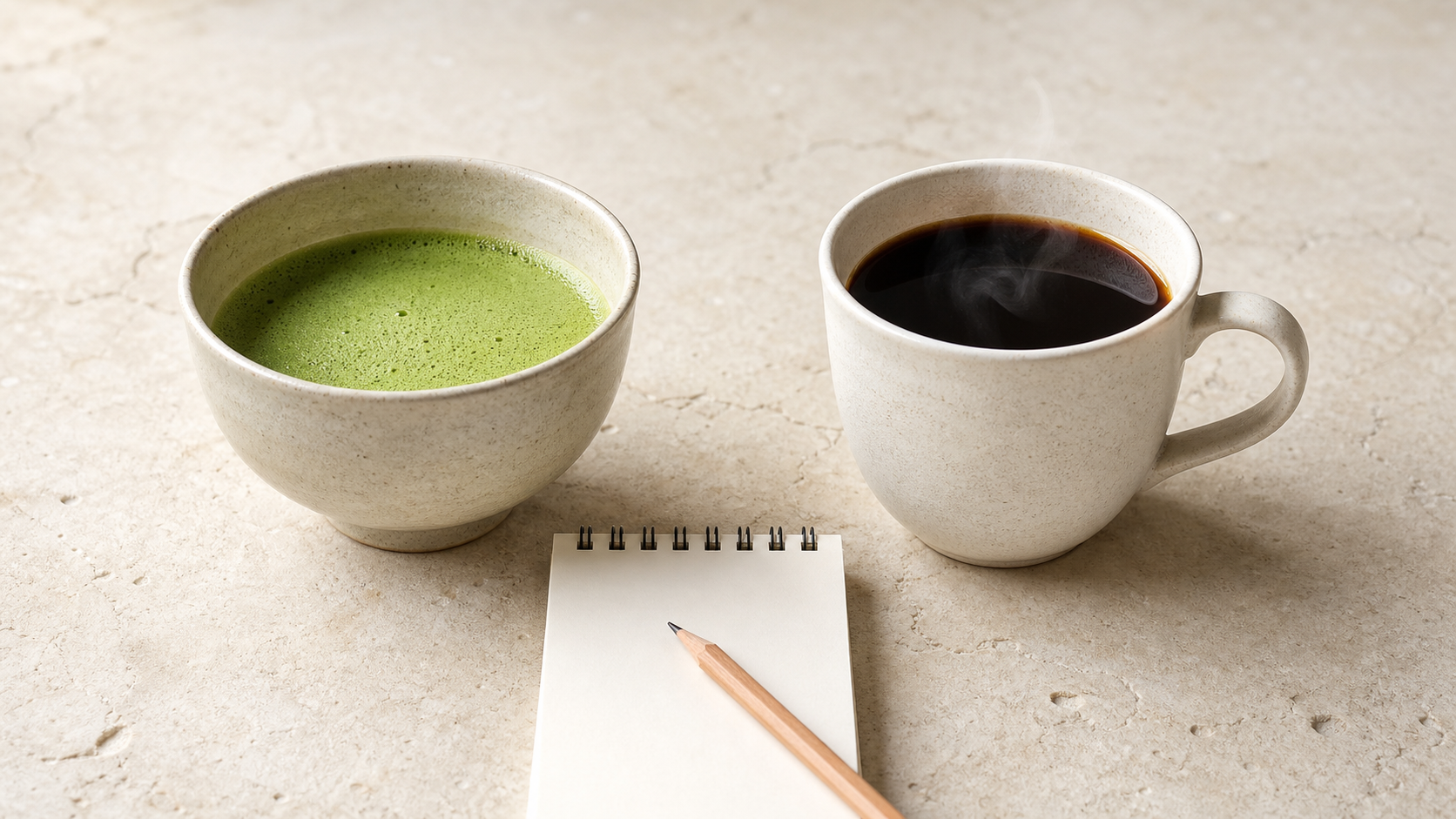
The shortest accurate distinction
| Question | Matcha | Coffee |
|---|---|---|
| Plant source | Camellia sinensis | Coffea species |
| Plant part used | Processed tea leaves | Seeds commonly called coffee beans |
| Basic processing | Tea cultivation and tencha processing followed by fine grinding | Coffee fruit processing, drying and roasting of the seeds |
| Drink category | Tea | Coffee |
The International Organization for Standardization’s matcha technical report defines the product through its tea-plant source, cultivation and production methods. The U.S. National Center for Complementary and Integrative Health likewise identifies green, black, oolong and white tea as products of Camellia sinensis. By contrast, the International Coffee Organization defines coffee in relation to fruits and seeds of Coffea plants, and Kew describes brewed coffee as coming from roasted Coffea seeds.
Why do people mistake matcha for coffee?
- Both are caffeinated drinks. People often choose either one as a morning or afternoon beverage.
- Both are café products. Matcha is commonly sold by coffee shops beside espresso drinks.
- Both can be ground powders. The visible powder invites a superficial comparison, even though one is a processed leaf and the other is normally a roasted seed.
- Both can become lattes. In modern café language, “latte” can describe a milk-based drink even when it contains no espresso.
- Some recipes combine them. A dirty matcha contains matcha and coffee together, which can blur the naming.
Is a matcha latte coffee?
Not by default. A basic matcha latte contains matcha, water and milk or a plant-based alternative, often with sweetener. It does not automatically contain coffee or espresso. The word latte describes the milk-forward format in this context, not a guarantee that coffee is present.
If espresso or brewed coffee is added, the finished beverage contains both tea and coffee. Cafés may call that a dirty matcha, matcha espresso fusion or another house name. Our separate matcha-and-coffee mixing guide covers that combined drink rather than treating it as ordinary matcha.
Is matcha “green coffee”?
No. Green coffee normally refers to unroasted coffee seeds. Matcha is processed tea leaf. The green color of matcha does not place it in the coffee category, just as roasting or grinding does not determine a plant’s botanical identity.
Does matcha taste like coffee?
Usually not. Plain matcha is commonly described through vegetal, umami, sweet and bitter notes, with the balance depending on the material and preparation. Roasted coffee develops a different aroma and flavor family through its seed chemistry and roasting process. Milk and syrup can make café versions of both drinks creamy and sweet, but that is a similarity in the recipe, not in the underlying ingredient.
Does caffeine change the classification?
No. Caffeine occurs in tea as well as coffee. Its presence is not a test for whether a beverage is coffee. Serving size, matcha dose, coffee variety and brewing method can all change the amount, so “tea or coffee?” and “which has more caffeine?” are separate questions. The latter deserves a dose-based comparison rather than a botanical label.
A useful café menu rule
Read the ingredient line instead of inferring from the section heading. A matcha latte listed by a coffee shop may contain no coffee, while a drink named “dirty matcha” or “matcha espresso” normally signals both. Recipes can also include sugar, milk, fruit foam or flavor syrups, none of which changes matcha’s identity as a tea ingredient.
For café operators and packaged-drink sellers, explicit wording reduces customer confusion. “Matcha latte—no espresso” and “dirty matcha—with espresso” communicate more than placing both items under a generic latte heading. Ingredient and allergen statements should still reflect the actual formula.
Bottom line
Matcha is a form of tea made from processed tea leaves; coffee is made from seeds of Coffea plants. They share café space, caffeine and some preparation formats, but they are not interchangeable categories. A matcha drink becomes a tea-and-coffee combination only when coffee or espresso is actually added.