
Yes, matcha and coffee can be mixed. In cafés, a matcha latte with espresso is commonly called a dirty matcha, matcha espresso fusion or matcha coffee latte. The combination works best when matcha, espresso, milk and sweetness are balanced by weight instead of assembled from vague “scoops” and “shots.”
The key commercial challenge is not whether the ingredients are compatible. It is preventing espresso roast and bitterness from overwhelming the matcha while keeping the drink recognizable, repeatable and worth its menu price.
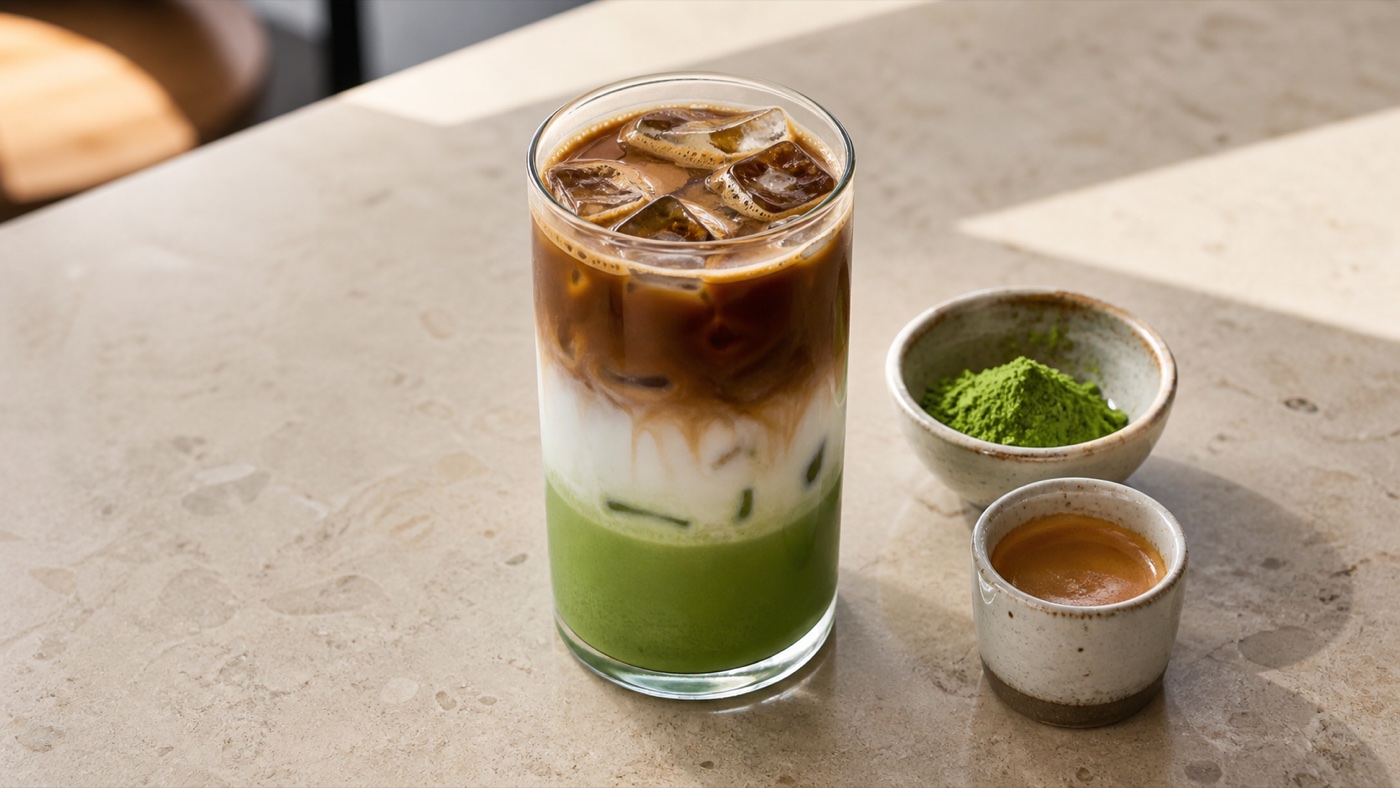
What does matcha coffee taste like?
Matcha contributes green, vegetal, umami, bitter and aromatic notes; espresso contributes roast, acidity, bitterness and coffee aroma. Milk softens both, while sugar or syrup can connect the flavors. A successful dirty matcha tastes intentional. A poor one tastes like two strong drinks competing in the same glass.
| Variable | If increased | Commercial risk |
|---|---|---|
| Matcha dose | Greener color and stronger tea identity | More bitterness, powder cost or texture |
| Espresso dose | More roast and coffee intensity | Matcha disappears |
| Milk | Softer, larger drink | Both matcha and coffee become diluted |
| Sweetener | Bridges bitterness and flavor contrast | Can hide ingredient quality or create a dessert-only profile |
| Ice | Colder drink and visual volume | Melting changes strength and separation |
12 oz iced dirty matcha: starting recipe
- Matcha: 2 g
- Water for matcha: 30 g at approximately 70–80°C / 158–176°F
- Sweetener: 10–15 g syrup, adjusted to concentration
- Milk: 140–160 g
- Espresso: one weighed single or double recipe from your bar
- Ice: enough to reach the defined final cup weight
- Sift the matcha and disperse it fully in the measured water.
- Mix in the syrup if you want even sweetness; keep it separate if the layered appearance is part of service.
- Add milk and ice to the cup.
- Add the matcha base and freshly extracted espresso in the chosen order.
- Record the final weight and serve with instructions to stir.
For a 16 oz drink, do not simply add more milk. Start around 2.5–3 g matcha, then test whether the espresso and sweetener also need adjustment. Sailtik’s general café range is 1.5–3 g matcha per cup.
Hot dirty matcha: starting recipe
- Matcha: 2 g
- Water: 35–45 g
- Sweetener: 8–15 g syrup
- Steamed milk: 160–200 g, depending on cup size
- Espresso: one calibrated bar recipe
Prepare a smooth matcha base, add the espresso, then pour textured milk. Alternatively, put espresso into the milk and finish with matcha for a visible top layer. The final mixed taste matters more than the first photograph.
Which espresso works best with matcha?
There is no universal roast answer. A very dark or smoky espresso can dominate; a bright, acidic espresso can create a sharp contrast. Start with the café’s current house espresso and test a smaller espresso dose before buying another coffee specifically for the drink.
| Espresso profile | What to watch | Possible adjustment |
|---|---|---|
| Dark, roasty, bitter | Matcha identity disappears | Reduce espresso, increase milk slightly or test a stronger café matcha |
| Chocolate/nut-led | Often integrates easily with milk and moderate sweetness | Use as the first benchmark |
| Bright/fruity | Can be lively or clash with vegetal notes | Test lower acidity, different milk or complementary syrup |
| Decaffeinated | Flavor remains possible with less coffee-derived caffeine | Recalibrate extraction rather than assuming the same shot behavior |
Which matcha grade should a café test?
Sailtik 3A is positioned for café drinks and is a sensible cost-focused starting point. Sailtik 4A is positioned for premium café drinks and can be compared when the matcha needs more presence. A 5A option may support a higher-end signature drink, but price and recipe benefit should be tested rather than assumed.
Each grade has three internal Guizhou or Zhejiang origin/model options with different color and sensory characteristics. Internal codes are private. Sailtik recommends selected 10 g samples based on the business and application rather than sending every model automatically.
Run a six-cup dirty matcha test
| Cup | Matcha | Espresso | Sweetener | Question |
|---|---|---|---|---|
| A | 2 g | Lower bar dose | Low | Can both ingredients be identified? |
| B | 2 g | Lower bar dose | Medium | Does sweetness connect the flavors? |
| C | 2 g | Standard bar dose | Low | Does coffee overwhelm matcha? |
| D | 2 g | Standard bar dose | Medium | Is the drink balanced? |
| E | 2.5 g | Standard bar dose | Low | Does extra matcha improve identity? |
| F | 2.5 g | Standard bar dose | Medium | Is the added powder cost justified? |
Keep milk, ice, water and final cup weight constant. Code the cups and score matcha identity, coffee identity, bitterness, sweetness, texture, aftertaste and willingness to buy. Repeat the top two with multiple staff members.
How much caffeine is in matcha coffee?
Both matcha and coffee contribute caffeine, so the finished drink can contain more than either component alone. The exact total varies with the matcha lot and dose, coffee beans, espresso recipe and serving size. Do not publish one fixed caffeine number unless it is supported by reliable product data or finished-drink testing.
Customers who limit caffeine may prefer a smaller matcha dose, a single espresso, decaffeinated espresso or a drink containing only one of the two. Avoid claims that matcha “cancels,” “balances” or guarantees a different physiological response to coffee.
Layered appearance versus operating speed
A layered dirty matcha photographs well, but the layers depend on density, sugar, ice, temperature and pour technique. They begin to mix during service. If the café promises a visual layer, document the order of assembly and final weights; if speed is more important, combine the drink deliberately and sell the flavor rather than the layer.
Calculate dirty matcha ingredient cost
Drink ingredient cost = matcha + espresso + milk + syrup + ice + cup/lid + expected waste
For matcha: landed cost per kg ÷ 1,000 × grams used. For espresso: cost per kilogram ÷ accepted shots per kilogram. For syrup and milk, calculate from actual grams or milliliters dispensed. Then add labor and overhead according to the café’s pricing model.
See Matcha Wholesale Price per kg and How Much Matcha Per Cup? for the underlying calculations.
Frequently asked questions
What is dirty matcha?
It is commonly a matcha latte with one or more espresso shots. The exact recipe is not standardized, so cafés should disclose cup size and control the components by weight.
Can brewed coffee replace espresso?
Yes, but the extra water changes strength and texture. Cold brew concentrate or a strong filter coffee is easier to integrate than a large volume of ordinary brewed coffee. Develop it as a separate recipe.
Does matcha coffee need sugar?
No, but moderate sweetness often helps connect the bitter and roasted elements. Test unsweetened, low and medium levels instead of assuming every customer wants a dessert drink.
Develop the drink before choosing the volume
Contact Carol at Sailtik with your espresso profile, milk, cup size, target matcha dose and expected monthly sales. Selected samples can be recommended for a controlled dirty matcha test before a 1 kg, 5 kg or 10 kg bulk order.