
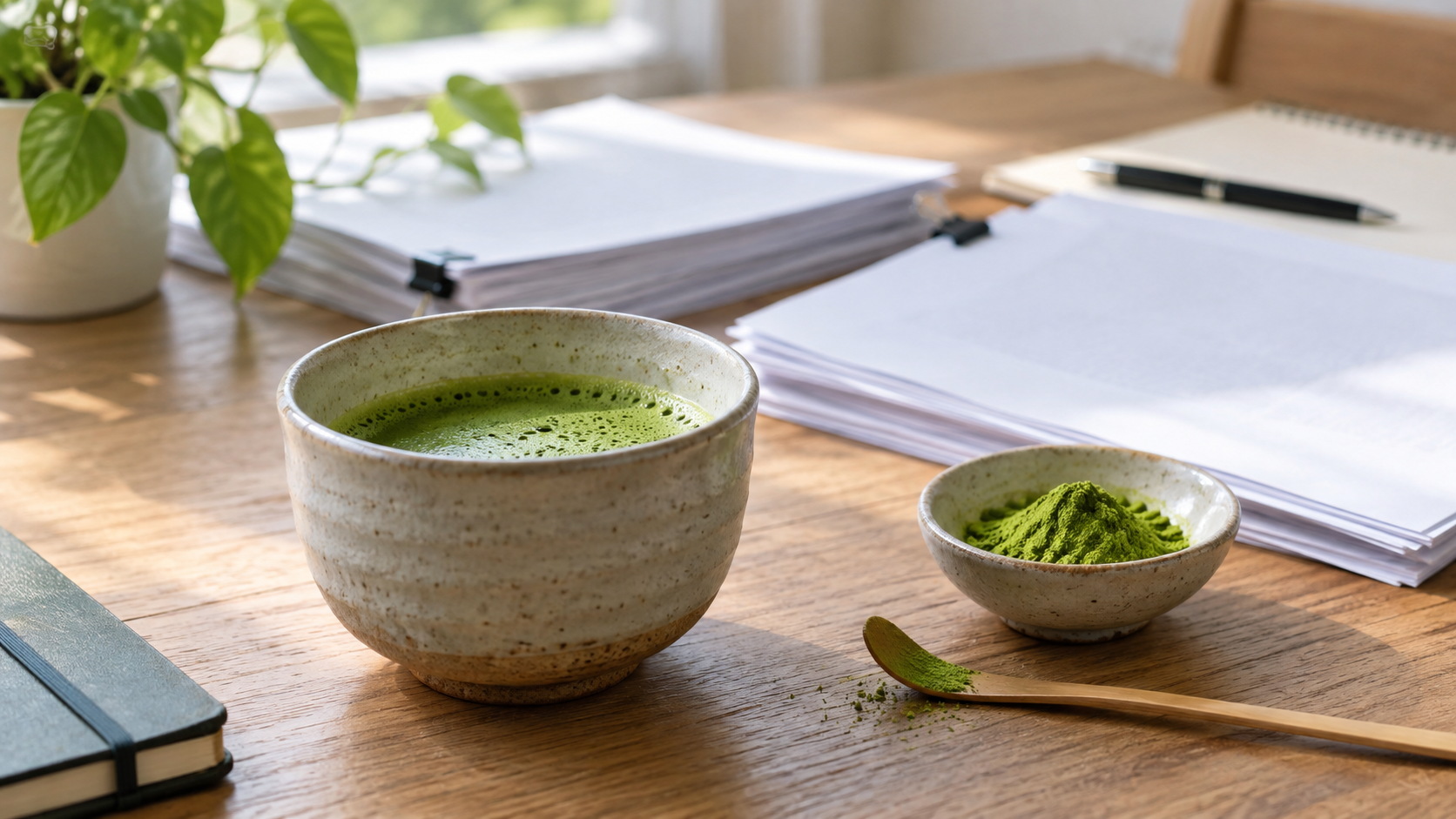
No, matcha green tea should not be used as a treatment for H. pylori. Green tea catechins have been studied against Helicobacter pylori in lab, animal and observational settings, but that is not the same as proving that drinking matcha can eradicate an infection in a person.
The misspelled search “h plori” usually means H. pylori, the stomach bacterium linked with gastritis, ulcers and future stomach-cancer risk. If a test is positive, the practical question is not whether matcha is “good.” It is whether the infection has been properly treated and confirmed gone.
What medical guidance says first
NIDDK says doctors treat H. pylori-related ulcers by treating the cause, usually with two or more antibiotics plus acid-reducing medicine such as a proton pump inhibitor, and sometimes bismuth. The American College of Gastroenterology patient page similarly explains that treatment takes more than one medicine and that follow-up testing is used after treatment.
The 2024 ACG treatment update is even more specific: North American guidance emphasizes optimized bismuth quadruple therapy for many treatment-naïve patients and warns against older clarithromycin-based triple therapy unless susceptibility is known. A cup of matcha is not part of that eradication protocol.
Where green tea research fits
| Evidence type | What it suggests | What it does not prove |
|---|---|---|
| Lab studies | Tea catechins such as EGCG can show anti-H. pylori activity under controlled conditions. | That drinking matcha kills an infection in the stomach. |
| Animal studies | Green tea extracts may affect inflammation or lesions in experimental models. | That the same result happens with normal human beverage intake. |
| Observational human data | Some studies look at green tea habits alongside gastritis or H. pylori status. | That green tea is an eradication treatment. |
| Clinical treatment guidelines | They recommend drug regimens, adherence and test-of-cure. | They do not list matcha as a substitute therapy. |
A review of natural products notes green-tea catechin activity against H. pylori, but also reports that green tea catechins did not show clear-cut in vivo activity in that context. An older Japanese cross-sectional study found high green-tea consumption was associated with lower chronic atrophic gastritis risk after adjustment for H. pylori, but that kind of study cannot tell one infected person to drink matcha instead of taking prescribed therapy.
Can you drink matcha if you have H. pylori?
Many adults can drink moderate green tea as a beverage, but stomach symptoms vary. Matcha contains caffeine and concentrated tea solids. If it worsens nausea, reflux, stomach pain or sleep during treatment, pause it and ask your clinician. Do not take concentrated green-tea extract on an empty stomach, especially if you have liver concerns or medication questions.
Also separate plain matcha from sweet lattes. A sugary milk drink may feel soothing for one person and heavy for another. If your stomach is irritated, a small plain serving is easier to judge than a large sweetened latte.
What not to assume
- Do not assume matcha kills H. pylori in humans.
- Do not delay testing or prescribed treatment.
- Do not stop antibiotics early because symptoms improve.
- Do not use green-tea extract as a home eradication plan.
- Do not confuse lower-risk associations with a treatment claim.
Bottom line
Matcha may be a reasonable beverage for some adults, but it is not an H. pylori treatment. The evidence around green tea catechins is interesting, not strong enough for eradication advice. For a positive H. pylori test, follow medical treatment and complete the recommended test-of-cure.
Sources checked
- NIDDK: peptic ulcer and H. pylori treatment
- American College of Gastroenterology: H. pylori patient information
- ACG: 2024 H. pylori treatment guideline summary
- PMC review: natural products and anti-H. pylori activity
- PubMed: green tea, H. pylori and chronic atrophic gastritis study
- NCCIH: green tea usefulness and safety
- Sailtik: matcha health evidence boundaries
FAQ
Can matcha cure H. pylori?
No. There is not enough clinical evidence to use matcha as an eradication treatment.
Is green tea extract better for H. pylori?
Do not assume that. Extracts can carry higher safety risks and are still not a replacement for guideline-based treatment.
Can I drink matcha during antibiotics?
Ask your clinician or pharmacist, especially if you have stomach irritation, medication timing questions or caffeine sensitivity.
Why do studies mention green tea and H. pylori?
Tea catechins are biologically active, so researchers study them. That does not automatically translate into a reliable human treatment.