
Matcha green tea can be okay when you are mildly sick if you tolerate caffeine and it does not upset your stomach, but it is not a cold or flu treatment. Treat it as a warm drink with caffeine and tea compounds, not as medicine.
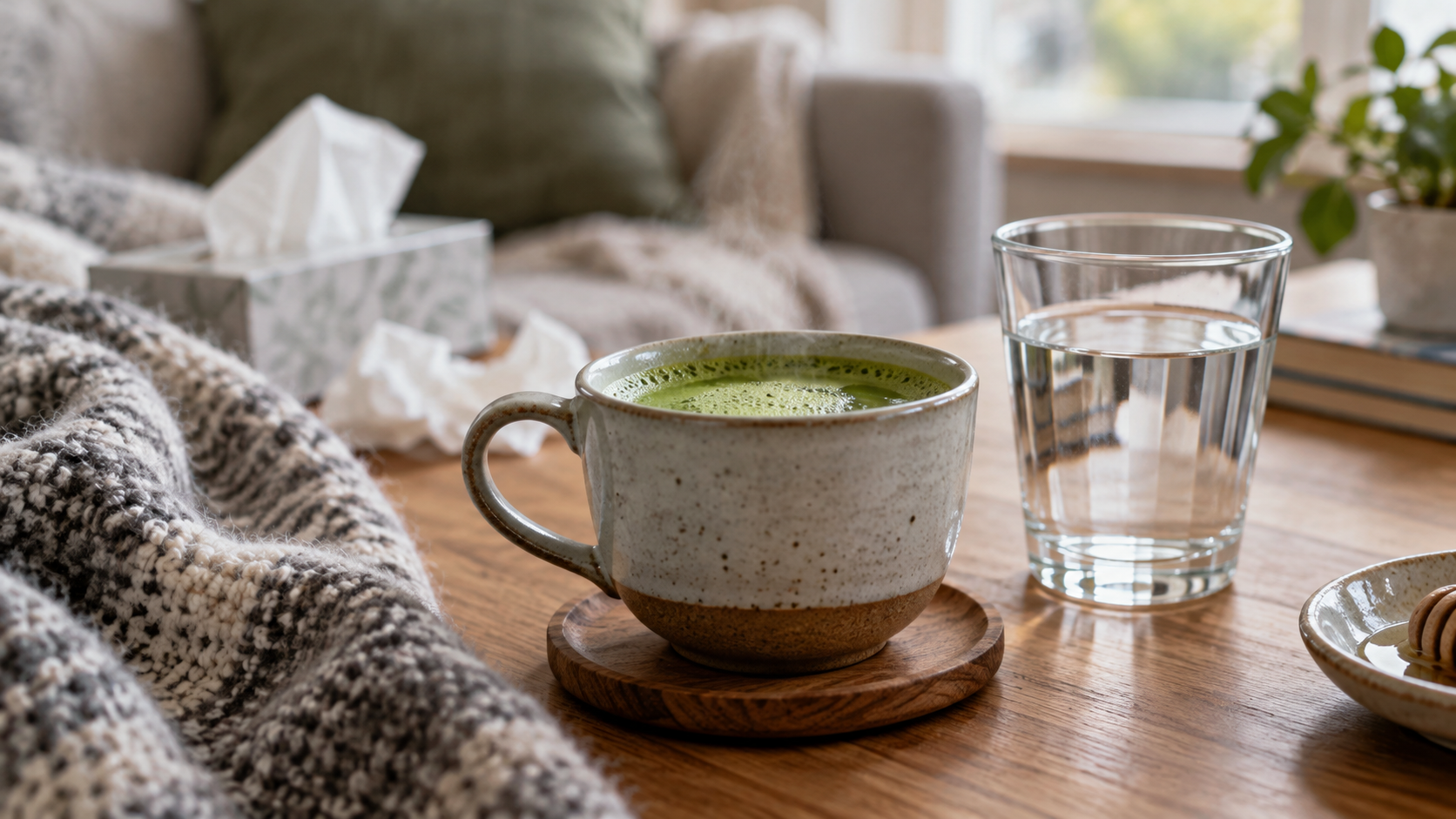
The right answer depends on what “sick” means. A scratchy throat and a low-energy day are different from fever, vomiting, diarrhea, chest symptoms, pregnancy, heart rhythm issues or a medication plan. Matcha may feel soothing in one case and make another case worse.
When matcha may be reasonable
| Situation | Matcha fit | Why |
|---|---|---|
| Mild cold symptoms | Possibly okay | Warm liquid may feel pleasant, and moderate tea beverage intake is generally considered safe for adults. |
| You need sleep | Usually skip it late | Matcha has caffeine, and poor sleep can make recovery feel harder. |
| Nausea, reflux or stomach pain | Be cautious | Caffeine and tea solids can bother some stomachs. |
| Vomiting or diarrhea | Prioritize fluids and medical advice | Hydration matters more than tea preference. |
| Flu risk or severe symptoms | Do not rely on matcha | Use medical guidance rather than a beverage strategy. |
What the evidence says about tea and infections
Tea catechins have been studied for influenza and upper respiratory infections. A 2021 systematic review found possible preventive effects from tea gargling and tea catechin consumption, but also said more investigation is needed. Another review on green tea catechins and influenza/common cold evidence described clinical evidence as not conclusive.
That matters because “may reduce risk in some studies” is not the same as “drink matcha after symptoms start and you will recover faster.” If you are already sick, matcha is mainly a beverage decision: caffeine, warmth, stomach comfort and hydration.
How to drink it more gently
- Make a smaller serving than usual.
- Use warm water, not boiling water, so the flavor stays softer.
- Skip a huge sweet latte if your stomach feels unsettled.
- Drink water alongside it.
- Avoid late-day matcha if you need sleep.
If your throat is sore, a warm matcha latte may feel smoother than straight matcha. If your nose is blocked and taste is dull, do not waste your best powder; you may not taste the difference anyway.
Who should be more careful?
Be more cautious if you are pregnant, sensitive to caffeine, taking medicines with possible tea interactions, dealing with high blood pressure, or using concentrated green-tea extract. NCCIH notes no safety concerns for green tea as a beverage in adults, but it also flags caffeine, supplement side effects and some medicine interactions.
For flu, MedlinePlus emphasizes illness context and medical care for people at higher risk or with concerning symptoms. A matcha drink should not delay care, antiviral discussion, fever management or hydration support.
Bottom line
Matcha can be a reasonable warm drink during a mild cold if it sits well with you. It is not a cure, and it is not automatically the best drink when you are sick. If caffeine, stomach upset or sleep are issues, choose water, broth or a non-caffeinated warm drink instead.
Sources checked
- MedlinePlus: flu overview
- MedlinePlus: common cold overview
- PMC: tea catechins and upper respiratory infections systematic review
- PMC: green tea catechins and influenza review
- NCCIH: green tea usefulness and safety
- Sailtik: matcha caffeine compared with coffee
- Sailtik: matcha health evidence boundaries
FAQ
Is matcha good for a sore throat?
Warm matcha may feel soothing for some people, especially with milk or honey, but it does not treat the cause of a sore throat.
Should I drink matcha with the flu?
Only if you tolerate it and it does not replace fluids, rest or medical advice. Flu can be serious for higher-risk people.
Can matcha make sickness worse?
It can feel worse if caffeine upsets your stomach, worsens jitters or interferes with sleep.
Is decaf tea better when sick?
If sleep or caffeine sensitivity is the issue, a low-caffeine or non-caffeinated warm drink may be easier.