
Plain matcha green tea can fit many intermittent-fasting routines, but matcha lattes usually change the answer. Unsweetened matcha with water has very few calories; milk, sugar, syrups, collagen, MCT oil or creamers make it a fed-window drink for most fasting goals.
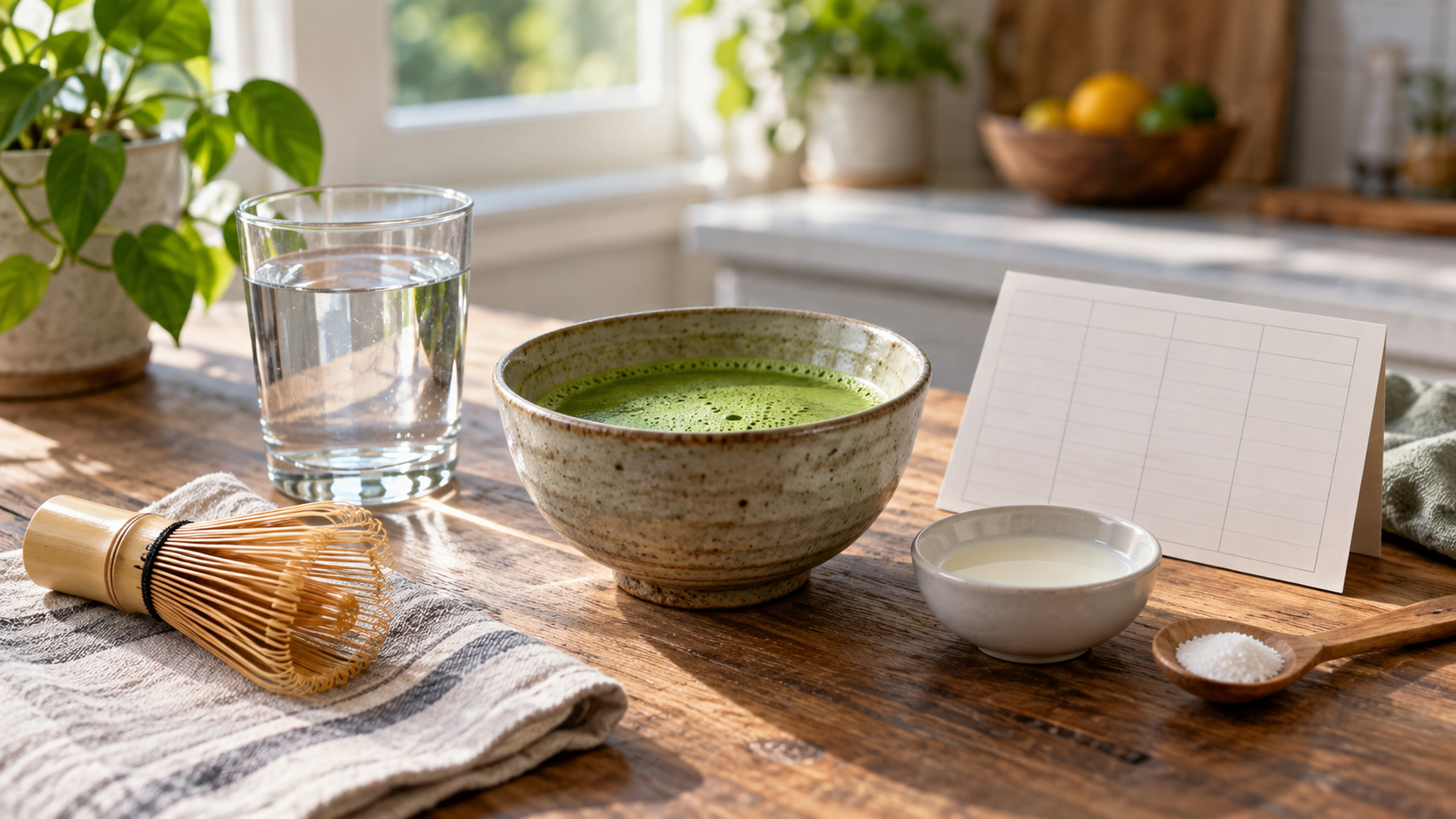
This search is slightly different from “does matcha break a fast.” It asks whether matcha is good for the routine. The answer depends on why you fast: appetite control, calorie reduction, glucose management, religious practice, autophagy claims or simple meal timing.
The fasting-rule table
| Matcha format | Likely fasting fit |
|---|---|
| Plain matcha + water | Usually compatible with calorie-focused fasting. |
| Matcha with milk | Usually breaks a strict fast because it adds calories, protein and carbohydrate. |
| Matcha with sugar or syrup | Breaks most fasting rules. |
| Matcha with MCT oil or butter | Not a clean fast; it adds fat calories. |
| Matcha supplement blend | Check the label. Added sweeteners or nutrients change the answer. |
A PubMed-indexed review in the New England Journal of Medicine discusses intermittent fasting as a metabolic-switching pattern, not as a rule that any green drink automatically improves. Human trials vary by fasting schedule, eating window and participant health status.
Where matcha can help
Matcha may be useful if it replaces a sweet morning drink and makes the fasting window easier to follow. Caffeine can reduce perceived appetite for some people, and a warm or iced ritual can make the first hours of the day feel less bare.
The tradeoff is also real. Caffeine on an empty stomach can cause nausea, jitters, reflux, urgent bowel movements or anxiety in sensitive people. If that happens, a fasting plan built around matcha is not better just because the drink is unsweetened.
Do not overpromise fasting benefits
Intermittent fasting research is still pattern-specific. A 2022 review notes that outcomes depend on the protocol and person. Matcha does not turn a poor diet into a well-designed fasting plan, and it does not prove autophagy in a home routine.
For diabetes medication, pregnancy, eating-disorder history, underweight status, kidney disease, gout or heavy training, fasting itself may need clinical guidance. Matcha is secondary to that decision.
What not to assume
- Do not assume a matcha latte keeps you fasted.
- Do not hide calories inside “keto” or “clean” add-ins.
- Stop the fast rather than pushing through dizziness or shakiness.
- Do not treat caffeine as proof of fat burning.
- Do not use fasting advice for medical conditions without clinician input.
Bottom line
Plain matcha can be a good fit for some intermittent-fasting routines because it is low in calories and caffeinated. The clean rule is simple: water-only matcha is usually the fasting option; milk, sugar, oils and powders belong in the eating window.
Sources checked
- PubMed: effects of intermittent fasting review
- PMC: intermittent fasting, health and clinical considerations
- MedlinePlus: when you feel like changing your diet
- NCCIH: green tea usefulness and safety
- Sailtik: does matcha break a fast?
- Sailtik: matcha nutrition, calories, sugar and carbs
- Sailtik: matcha caffeine compared with coffee
FAQ
Does plain matcha break intermittent fasting?
For most calorie-focused fasting routines, plain matcha with water is usually acceptable.
Does matcha with milk break a fast?
Usually yes. Milk adds calories and nutrients, so it belongs in the eating window for strict fasts.
Is matcha better than coffee while fasting?
Only if you tolerate it better. Both contain caffeine, and neither is required.
Can matcha help fasting weight loss?
It may help if it replaces a higher-calorie drink, but matcha itself is not a weight-loss guarantee.