
Yes, matcha naturally contains caffeine. The amount in a drink depends mainly on the caffeine concentration of the particular powder and how many grams are used. Cup size, green color and the words “ceremonial” or “latte” do not reveal an exact caffeine dose.
A practical literature-based estimate is about 18.9–44.4 mg of caffeine per gram of matcha, a range reported across analyzed products in a scientific review. That would put a drink made with 2 g at roughly 38–89 mg. It is an estimate—not a specification for every brand, grade or Sailtik lot.
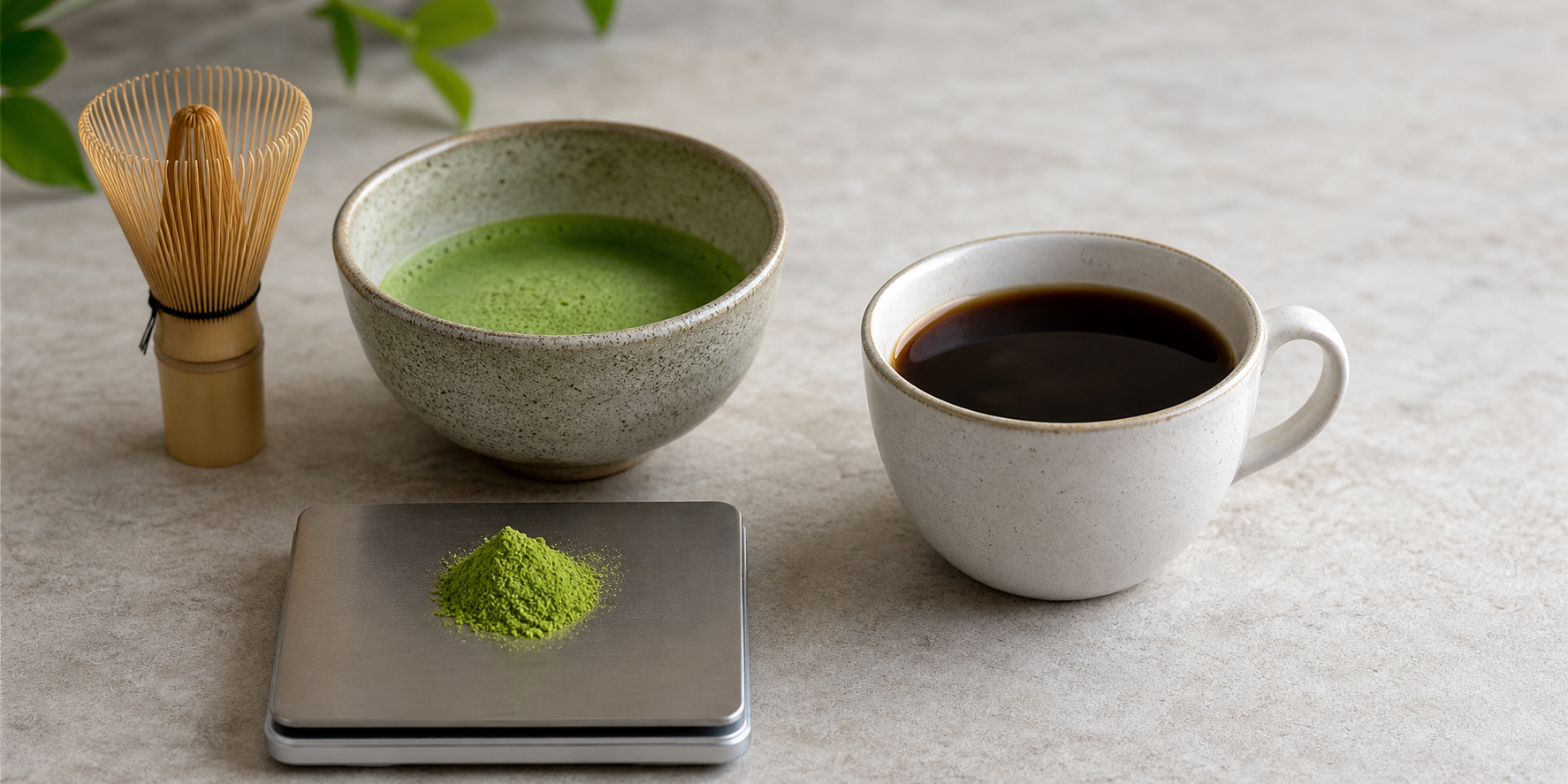
Estimated caffeine by matcha dose
The calculation is:
Estimated caffeine per drink = matcha dose in grams × caffeine in mg per gram
| Matcha per drink | Estimated caffeine at 18.9 mg/g | Estimated caffeine at 44.4 mg/g |
|---|---|---|
| 1.0 g | 19 mg | 44 mg |
| 1.5 g | 28 mg | 67 mg |
| 2.0 g | 38 mg | 89 mg |
| 2.5 g | 47 mg | 111 mg |
| 3.0 g | 57 mg | 133 mg |
| 4.0 g | 76 mg | 178 mg |
The underlying 18.9–44.4 mg/g range comes from published analyses summarized in a review of matcha composition. Other studies show why one universal number is unsafe: a 2024 analysis reported about 2.2 mg/g in the tested sample, while another recent experimental paper quantified approximately 41.8 mg/g. Different products, analytical methods and samples can produce very different results.
One randomized matcha study provides a useful real-product example: its 2 g daily serving contained 66.2 mg caffeine, or about 33.1 mg/g. That number describes the study material, not every matcha on the market.
Matcha versus coffee: which has more caffeine?
Either can have more. You must compare actual servings.
| Drink | Serving basis | Caffeine reference | Why it varies |
|---|---|---|---|
| Matcha | 2 g powder | About 38–89 mg using the literature range above | Powder chemistry and weighed dose |
| Matcha | 3 g powder | About 57–133 mg using the same range | Powder chemistry and weighed dose |
| Regular brewed coffee | 12 fl oz / 355 ml | FDA example range: 113–247 mg | Bean, grind, brew method, strength and serving size |
| Green tea | 12 fl oz / 355 ml | FDA typical value: 37 mg | Leaf, extraction and serving conditions |
The coffee and green-tea reference values are from the FDA’s consumer caffeine guidance. They are category examples, not promises for a specific café drink.
A 2 g matcha can therefore contain less caffeine than a large brewed coffee, but a strong 4 g matcha can overlap with some coffees. An iced matcha latte does not become lower in caffeine because it contains milk and ice; those ingredients dilute concentration per milliliter but do not remove the caffeine contributed by the matcha. A “dirty matcha” also includes the caffeine from any espresso.
Why matcha caffeine varies
- Agricultural material: cultivar, leaf age, harvest and growing conditions can change natural caffeine concentration.
- Product composition: plain matcha, a matcha blend and a sweetened latte mix are not equivalent gram for gram.
- Dose: a heaped teaspoon is not a reliable mass. Weigh the powder.
- Batch variation: tea is an agricultural product; a number from another lot is not automatically transferable.
- Added ingredients: espresso, coffee concentrate, chocolate and added caffeine can change the total.
- Analytical basis: results may be reported per gram of dry powder, per serving or per volume of prepared drink. Those units cannot be swapped.
Does water temperature change matcha caffeine?
With leaf tea, time and temperature affect how much caffeine is extracted before the leaves are removed. Plain matcha is different because the fine leaf powder remains in the drink. Preparation still changes dispersion and sensory quality, but the powder dose is the stronger starting point for caffeine estimation.
Do not assume that cold matcha is decaffeinated or that a quick whisk removes caffeine. If caffeine control matters, use a product-specific result or formulate with a lower weighed dose.
Does matcha provide “calm energy” with no crash?
That is a popular marketing statement, not a guaranteed physiological outcome. Matcha contains caffeine and may contain the amino acid L-theanine, but their concentrations vary. Small human studies have reported limited effects on some attention tasks, while other outcomes—including mood and primary cognitive measures—were not consistently improved.
Individual response depends on dose, tolerance, sleep, food intake, medications and sensitivity. It is safer to say that matcha contains naturally occurring caffeine than to promise “no jitters,” “no crash,” all-day focus or a fixed release pattern.
How much caffeine is too much?
The FDA cites 400 mg per day as an amount not generally associated with negative effects for most adults, while emphasizing wide individual variation. The same guidance lists possible signs of too much caffeine, including sleep disruption, anxiety, jitters, nausea, headache, increased heart rate and palpitations.
This is not an individual intake recommendation. People who are pregnant, trying to become pregnant, breastfeeding, taking medication, managing a medical condition, or especially sensitive to caffeine should consult a qualified healthcare professional. Count caffeine from all sources, not matcha alone.
Café and packaged-product labeling questions
In the United States, FDA notes that added caffeine must appear in the ingredient list, but naturally occurring caffeine in an ingredient such as tea does not necessarily appear as the separate word “caffeine.” FDA also notes that restaurants are not generally required to disclose the caffeine amount in drinks.
A café can still improve transparency by documenting the matcha dose per size, noting that the drink contains caffeine and avoiding an exact milligram claim unless it has appropriate supporting data. A private-label brand planning a quantitative caffeine statement should obtain qualified regulatory advice and product-specific analytical support.
When do you need laboratory testing?
- When printing an exact caffeine amount on packaging or menus.
- When marketing “high caffeine,” “low caffeine” or a comparison with coffee.
- When formulating a multi-ingredient product with other caffeine sources.
- When setting a strict internal caffeine specification.
- When a customer, destination market or retailer requires verified data.
The test method, sample identity, lot and reporting units must match the claim. A result from a scientific paper, another brand or an old batch cannot validate a finished product.
Frequently asked questions
How much caffeine is in a matcha latte?
Estimate it from the grams and caffeine concentration of the matcha, then add caffeine from espresso or other ingredients. Milk, ice and syrup do not remove caffeine. A 2 g plain-matcha dose might be estimated around 38–89 mg using the literature range, but only product-specific data can support an exact value.
Is matcha more caffeinated than green tea?
It commonly provides more caffeine per serving than an ordinary brewed green tea because the powder is consumed and the serving can contain multiple grams of leaf. Actual products and preparation still vary.
Does ceremonial matcha always have more caffeine?
No universal rule makes a marketing grade an exact caffeine specification. Grade names are not standardized across suppliers. Use analytical data when caffeine level is a purchasing criterion.
Does Sailtik publish a caffeine value?
No product-specific Sailtik caffeine value has been confirmed for publication here. Buyers should not apply the educational range as a Sailtik specification. Contact Carol if caffeine testing or a target specification is commercially required.
Control the dose before comparing drinks
Sailtik recommends testing 1.5–3 g matcha per cup. Use the dose and yield guide and the hot and iced latte formulas to standardize the recipe. If an exact caffeine claim matters, add product- and lot-appropriate testing rather than guessing from color or grade.