
Matcha green tea has early evidence for changing gut microbiota, but it has not been proven to heal “leaky gut.” The useful answer starts by separating a real research concept, intestinal permeability, from broad wellness claims about sealing the gut.
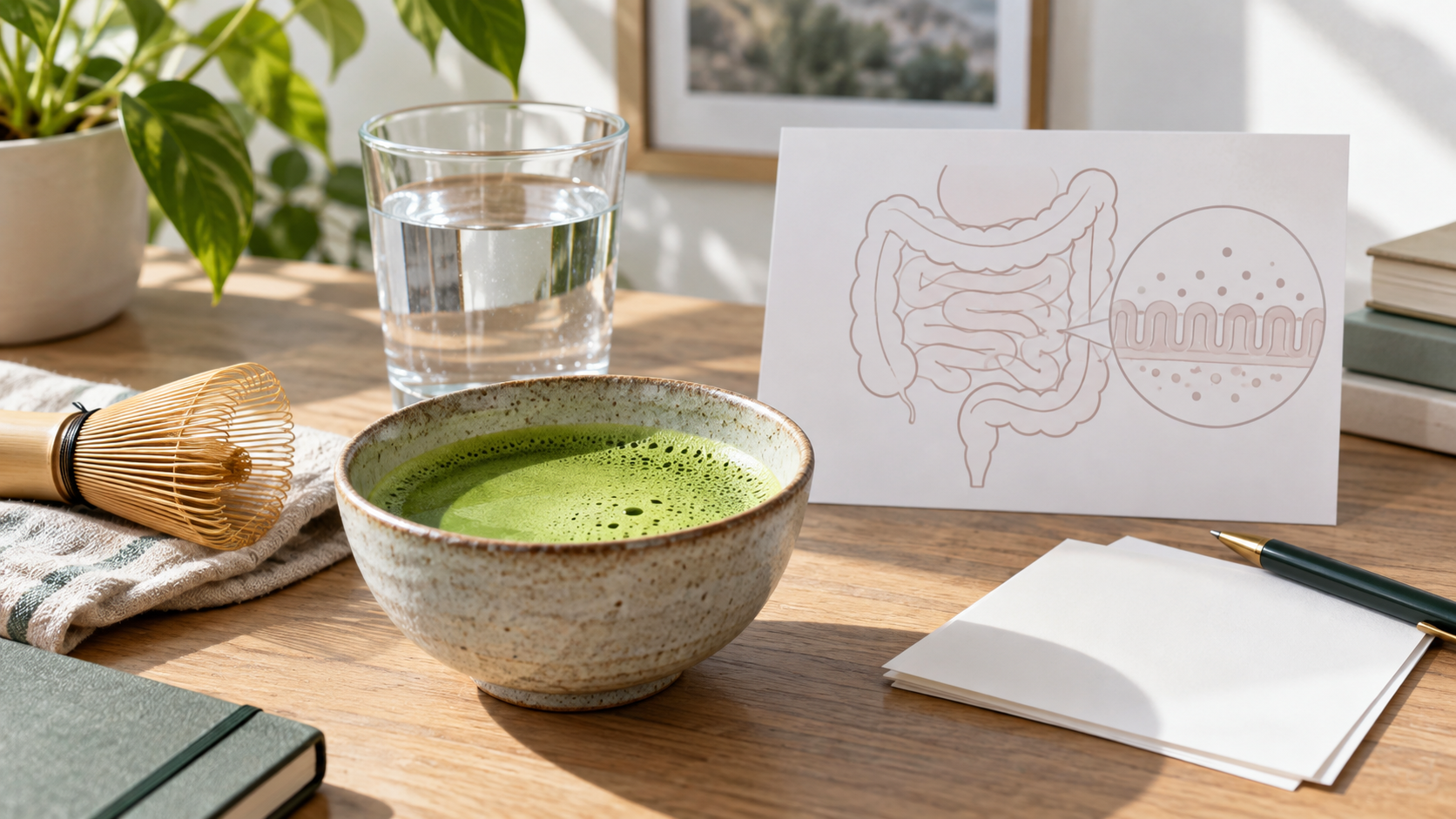
Cleveland Clinic describes leaky gut syndrome as a hypothetical condition, while intestinal permeability itself is a real feature seen in some gastrointestinal diseases. That distinction matters. A drink can be pleasant and still not be a treatment for celiac disease, inflammatory bowel disease, chronic diarrhea or unexplained digestive symptoms.
What matcha research actually shows
A small randomized, double-blind study in healthy Japanese adults found that two weeks of matcha green tea changed fecal microbiota composition compared with placebo. The study included 33 participants, not people diagnosed with leaky gut syndrome, IBD or IBS. It measured bacteria patterns, not direct healing of the intestinal barrier.
That is a useful but narrow result. It supports saying matcha may influence the gut microbiome. It does not support saying matcha repairs permeability, cures bloating or treats a named digestive disease.
The practical boundary
| Claim | Better wording |
|---|---|
| Matcha heals leaky gut. | Not proven. |
| Matcha supports gut health. | Possible, but evidence is early and mostly indirect. |
| Matcha fixes diarrhea or IBS. | No. Caffeine can worsen bowel urgency in some people. |
| Matcha is low risk because it is tea. | Beverage tea is usually different from concentrated extracts; tolerance still varies. |
NIDDK advises people with diarrhea to avoid or limit drinks that worsen symptoms, including caffeinated drinks for some people. NCCIH’s IBS material also notes that treatment is individualized. This is where matcha needs a personal tolerance test rather than a universal claim.
When matcha is worth trying
If symptoms are mild and no clinician has advised a restricted diet, a small plain matcha can be tested like any other caffeinated drink. Use water first, not a sweet milk latte, because lactose, sugar alcohols and large amounts of simple sugar can confuse the result. Keep the serving steady for a few days and watch bloating, urgency, reflux and sleep.
If there is blood in stool, weight loss, persistent diarrhea, severe pain, anemia, celiac disease, IBD or medication-related gut injury, matcha is not the main question. Medical evaluation comes first.
What not to assume
- Do not assume leaky gut syndrome is a confirmed diagnosis.
- Do not turn a small microbiome study into a gut-barrier repair claim.
- Do not use matcha to delay care for persistent digestive symptoms.
- Do not judge plain matcha by a sweet latte recipe.
- Do not treat concentrated green-tea extract as a stronger version of a beverage.
Bottom line
Matcha may be interesting for gut-microbiome research, and some people tolerate it well. It is not proven to heal leaky gut. For digestive symptoms, the more reliable approach is to identify the underlying problem, then test matcha only as one beverage variable.
Sources checked
- Cleveland Clinic: leaky gut syndrome
- PMC: randomized matcha gut microbiota study
- PubMed: matcha green tea and fecal microbiota
- NIDDK: diet and nutrition for diarrhea
- NCCIH: irritable bowel syndrome
- NCCIH: green tea usefulness and safety
- Sailtik: matcha and gut health evidence
FAQ
Does matcha heal leaky gut?
No reliable human evidence proves that matcha heals intestinal permeability.
Is matcha good for gut bacteria?
Early human research suggests it can shift gut microbiota, but the evidence is small and not disease-specific.
Can matcha make gut symptoms worse?
Yes. Caffeine can worsen urgency, reflux or diarrhea in some people.
Is matcha better than probiotics for leaky gut?
They are not interchangeable, and neither should be treated as a guaranteed repair for a suspected gut barrier problem.