
Do not intentionally give matcha to a dog or cat. Matcha is powdered green tea and contains caffeine. The U.S. Food and Drug Administration lists caffeine-containing drinks such as tea among potentially dangerous items for pets, and veterinary poison specialists report that dogs and cats are more sensitive to caffeine than people.
If a pet may have swallowed matcha powder, a matcha drink or a matcha food, contact a veterinarian or veterinary poison-control service promptly. Do not wait for symptoms and do not induce vomiting or give a home remedy unless a veterinary professional specifically directs you.
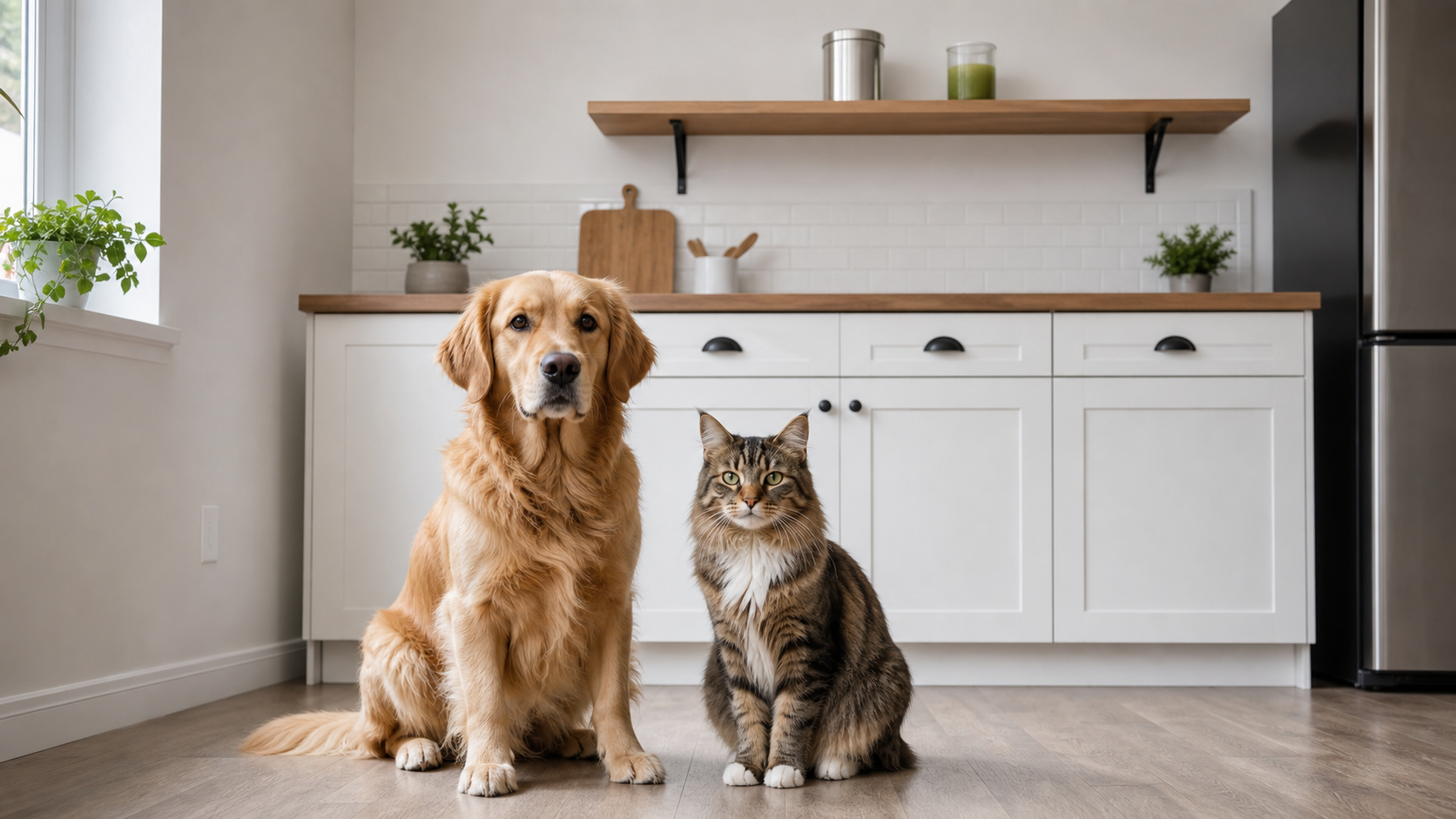
Why matcha is not a pet treat
Caffeine is a methylxanthine stimulant that can affect the central nervous, cardiovascular and gastrointestinal systems. Matcha presents a concentrated exposure because the tea leaf is consumed as powder rather than steeped and removed. Powder can also be easier for an animal to ingest quickly if a bag or canister is torn open.
A scientific review found a broad caffeine range of approximately 18.9–44.4 mg per gram across matcha samples. That range illustrates why a teaspoon, lick or “small amount” is not a dependable safety unit: powder density, product composition, amount swallowed, species, body weight, age and health all change the assessment. An online article cannot calculate safety for an individual animal.
Can dogs have matcha?
No intentional serving is recommended. Dogs may be attracted to milk, sugar, cream or flavorings in a latte or dessert even though the matcha supplies caffeine. Veterinary toxicology sources associate caffeine exposure with restlessness, hyperactivity, vomiting, diarrhea, panting, changes in heart rate or rhythm, elevated blood pressure, tremors and seizures. Severe exposure can be life-threatening.
A large dog and a small dog do not face the same dose per kilogram from the same spill, and individual susceptibility varies. Do not use body size to decide that professional advice is unnecessary. Concentrated powder, tea bags, supplements and highly caffeinated products deserve particular urgency.
Can cats have matcha?
No. Cats should not be offered matcha powder, tea, latte, ice cream or baked products. Cats may take only a few laps of a milk-based drink, but the caffeine concentration and swallowed volume are rarely known accurately. Their smaller body size can make casual comparisons with a human serving especially misleading.
Do not assume a cat “knows what is safe” or that interest proves suitability. Milk, cream or aroma may attract an animal to a drink that contains caffeine or other unsuitable ingredients.
Matcha powder, latte, ice cream and cake are different exposures
| Product | Main concern | Information to collect |
|---|---|---|
| Dry matcha powder | Concentrated caffeine-containing tea leaf and uncertain swallowed mass | Package, estimated grams missing, time and lot/product details |
| Straight matcha tea | Caffeine concentration depends on powder dose and remaining volume | Recipe, cup size, amount left and time |
| Matcha latte | Caffeine plus milk, sugar, syrups or other ingredients | Full ingredient list, matcha dose, drink size and amount consumed |
| Matcha ice cream | Caffeine may be lower or unknown; fat, sugar, dairy and sweeteners also matter | Brand label, ingredient panel and estimated amount |
| Matcha cake, candy or snack | Unknown matcha dose and possible chocolate, xylitol, raisins or other hazards | Keep wrapper or recipe and identify every ingredient |
“Matcha flavored” does not reveal whether a product contains a trace flavor or substantial tea powder. Conversely, a pale color does not prove low caffeine. Product labels and recipes are more useful than appearance.
What to do after possible ingestion
- Move the product away so no more can be consumed.
- Contact the pet’s veterinarian or an emergency veterinary clinic promptly. In the United States, the official ASPCA Animal Poison Control Center and Pet Poison Helpline caffeine resource provide veterinary toxicology assistance; consultation fees may apply.
- Keep the package, label, receipt or recipe. Photograph the remaining amount if that helps establish exposure.
- Report species, breed, body weight, age, health conditions, medicines, product, ingredient list, estimated amount and time of exposure.
- Follow the professional’s directions. Do not give food, milk, activated charcoal, hydrogen peroxide or another treatment unless specifically instructed.
The FDA’s potentially dangerous items for pets page includes caffeine among food-related hazards. Seek urgent veterinary help for concerning behavior or any possible significant exposure.
Signs that require urgent veterinary attention
- Restlessness, agitation or unusual hyperactivity
- Vomiting or diarrhea
- Panting, weakness or loss of coordination
- Rapid, pounding or irregular heartbeat
- Muscle tremors or twitching
- Seizures, collapse or altered responsiveness
This is not a complete diagnostic list, and an apparently normal pet may still need assessment. Veterinary poison guidance notes that effects depend on the source, amount, animal size and individual health. Early professional advice is safer than waiting to see whether signs develop.
Why this page does not give a “safe amount”
Toxicology thresholds are not feeding recommendations. Published dose ranges describe populations and outcomes under specific conditions; they do not establish a safe treat portion for every dog or cat. Matcha composition varies, owners often cannot measure what was swallowed, and finished foods may contain several hazards. A veterinarian can combine the exposure estimate with the animal’s history and current condition.
For the same reason, do not convert a human matcha caffeine estimate into pet advice. The Sailtik caffeine guide is written for human beverage comparison, not veterinary dosing.
Other ingredients may increase the risk
A latte or dessert may contain more than matcha. Chocolate contributes methylxanthines. Some sugar-free products may contain xylitol, which the FDA identifies as dangerous for pets and especially hazardous to dogs. Raisins, macadamia nuts, alcohol and other human-food ingredients can create separate concerns. Dairy, fat and sugar may also cause gastrointestinal upset even when they are not the primary toxin.
Do not focus only on the green powder. Give the veterinarian the complete ingredient list and product name. If a café prepared the drink, ask for the exact syrup, topping and milk used without delaying the call for help.
Preventing exposure at home and in a café
- Keep powder sealed in a closed cabinet or secure high storage area, not at the counter edge.
- Do not leave used cups, foam, ice cream, baked products or recipe-test waste within reach.
- Clean spills immediately, including powder under appliances and milk drinks on floors.
- Keep ingredient bags and waste bins closed; a flexible pouch is not pet-proof.
- Tell staff and visitors not to offer matcha drinks or foods to animals.
- Keep veterinary contact information accessible before an emergency occurs.
A café that welcomes dogs should position water bowls and pet amenities away from drink-preparation waste. “Pet-friendly” premises do not make caffeinated menu products pet-safe.
What can a pet have instead?
Use fresh water and treats formulated for the animal’s species, life stage and health needs. If you want to create a special pet item, ask a veterinarian or qualified veterinary nutrition professional to review the complete recipe. Do not make a green “puppuccino” with matcha for appearance.
Frequently asked questions
Is decaffeinated matcha safe for pets?
Do not assume so. “Decaffeinated” does not necessarily mean caffeine-free, and the product or finished recipe may contain other unsuitable ingredients. Ask a veterinarian before offering any tea product.
My dog or cat only licked a matcha latte. Should I worry?
The risk cannot be determined from “one lick” alone because animal size, lick volume, matcha dose and other ingredients differ. Remove access, collect the recipe or label and contact a veterinarian or veterinary poison service for case-specific advice.
Can matcha kill a dog or cat?
Severe caffeine poisoning can be life-threatening. Do not use that possibility to panic or to calculate treatment online; use it as a reason to obtain prompt veterinary assessment after a suspected significant exposure.
This article is general educational information, not veterinary diagnosis or treatment. For an exposure involving an individual animal, contact a veterinarian or veterinary poison-control service promptly.