
A matcha latte is a tea-based café drink made by dispersing matcha powder in a small amount of water, then adding dairy or plant milk. It may be served hot or iced and may be sweetened, but it does not normally contain espresso or brewed coffee.
The word “latte” describes the milk-forward drink format. In a standard matcha latte, matcha takes the place occupied by espresso in a caffè latte. A version that also contains an espresso shot is commonly called a dirty matcha, which is a separate drink.
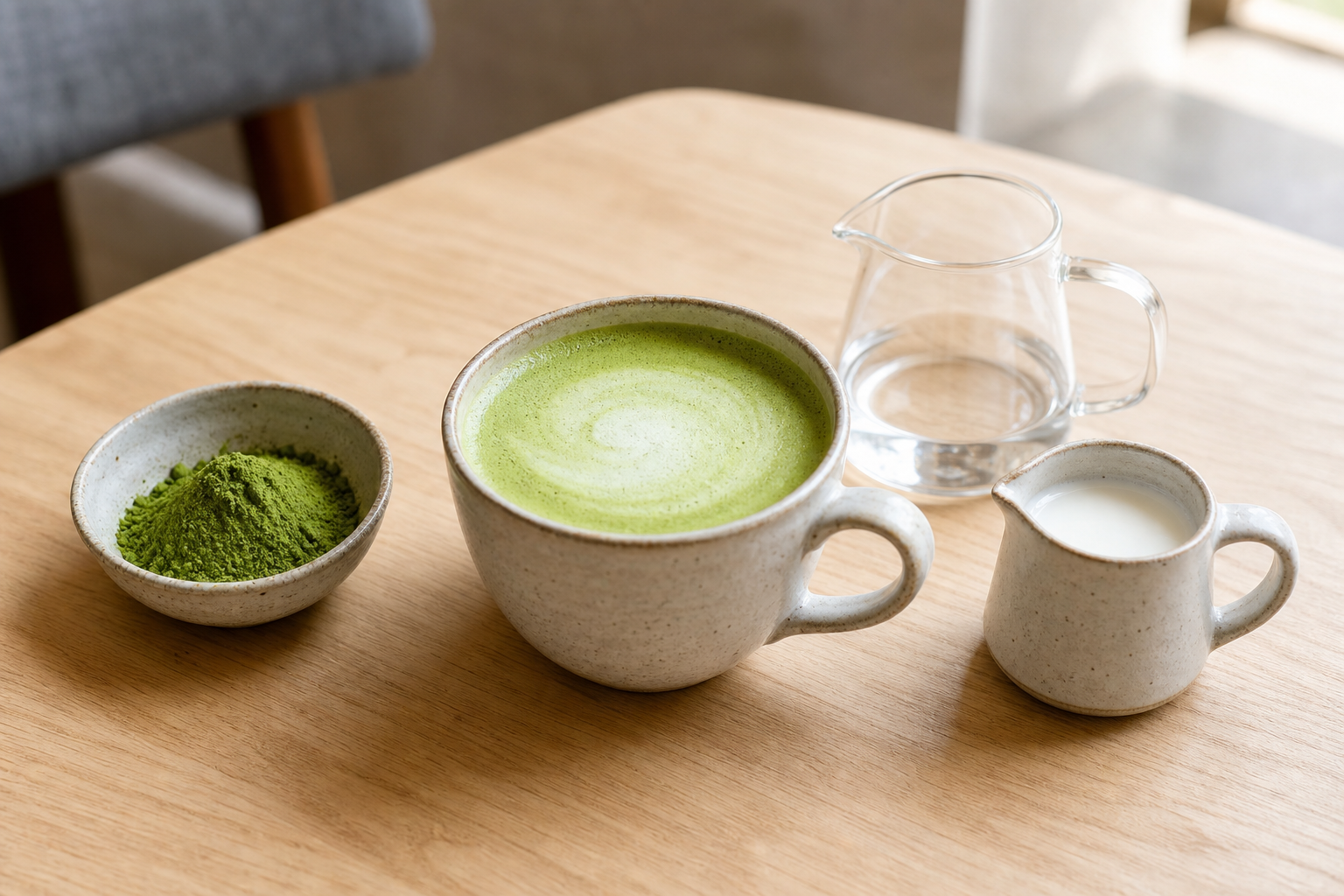
What is in a matcha latte?
| Component | Usual role | Is it required? |
|---|---|---|
| Matcha powder | Provides the tea flavor, green color and naturally occurring caffeine | Yes |
| Water | Helps disperse the powder before milk is added | Normally |
| Dairy or plant milk | Adds volume, body, sweetness and foam | Yes for a latte |
| Sweetener or flavored syrup | Balances bitterness or creates a flavored menu drink | No |
| Ice | Chills and dilutes an iced version | Only for iced service |
| Espresso | Creates a coffee-and-matcha drink | No; that is usually a dirty matcha |
Café recipes are not standardized. One shop may use pure matcha, milk and no sweetener; another may use a sweetened matcha premix, flavored syrup, cold foam or a high milk-to-tea ratio. The menu name alone cannot tell you the exact matcha dose, sugar, calories, allergens or caffeine.
Is a matcha latte the same as matcha tea?
No. Plain matcha is normally whisked with water. A matcha latte adds a much larger milk component and may add sweetener. The milk changes the drink’s flavor, texture, color, nutrition and allergen profile.
Matcha itself is a finely milled form of green tea. Unlike an ordinary brewed green tea, where leaves are steeped and removed, matcha powder is dispersed in the beverage and consumed. Japan’s Ministry of Agriculture, Forestry and Fisheries describes matcha as finely ground tea associated with tencha production, while the Japan National Tourism Organization’s tea-ceremony guide describes traditional chanoyu as the preparation and presentation of matcha powdered green tea.
A modern milk-based matcha latte should therefore not be presented as identical to ceremonial matcha preparation. It can be inspired by matcha traditions while remaining a contemporary café beverage.
Does a matcha latte contain coffee?
Not by default. The base is matcha rather than espresso. This is one reason matcha latte appears beside coffee drinks on many menus even though it is tea-based. Always check a named recipe, because “dirty matcha,” coffee-matcha blends and branded specialty drinks intentionally add espresso or coffee.
What does a matcha latte taste like?
A plain matcha latte usually combines vegetal tea notes, umami, mild bitterness and astringency with the sweetness and body of milk. The balance varies substantially:
- More matcha: stronger tea aroma, deeper color and potentially more bitterness or astringency.
- More milk: softer tea intensity, lighter color and a creamier impression.
- Added syrup: greater sweetness and a flavor that may mask subtle matcha differences.
- Plant milk: oat, soy, almond and coconut products each contribute their own sweetness, aroma, fat and texture.
- Ice: chills the drink but also adds dilution as it melts.
A green color alone does not prove quality. Matcha source, age, storage, dose, milk, lighting and other colored ingredients can all change appearance. Taste the finished formula rather than judging dry powder in isolation.
Is a matcha latte sweet?
It can be, but sweetness is not part of the minimum definition. Milk contributes naturally occurring sugars, and many cafés add syrup or use a pre-sweetened powder. An unsweetened latte made with pure matcha and milk will taste different from a chain drink or instant latte mix. Ask for the ingredient list or customization options if sweetness matters to you.
Does a matcha latte have caffeine?
Yes, when it contains real matcha. Matcha naturally contains caffeine, but there is no universal caffeine value for every latte. The result depends on the powder’s caffeine concentration and the number of grams used. Adding milk does not remove caffeine; adding espresso increases the total.
Do not estimate a café drink from color or cup size alone. Use the shop’s published nutrition data where available, or ask how much matcha is used. For dose-based estimates and limitations, see the matcha caffeine calculator and coffee comparison.
Is a matcha latte healthy?
“Healthy” is not a property established by the word matcha. Evaluate the whole drink: matcha dose, milk, added sugar, serving size, caffeine, allergens and how often it is consumed. A plain unsweetened latte and a large flavored drink with syrup and cold foam are nutritionally different.
Matcha contains plant compounds studied in health research, but their presence does not prove that a latte prevents disease, causes weight loss or “detoxes” the body. The matcha health-evidence review separates matcha-specific human findings from animal, cell and general green-tea evidence.
Hot versus iced matcha latte
| Feature | Hot | Iced |
|---|---|---|
| Milk | Heated, often textured or foamed | Cold, normally poured over ice |
| Dilution | Mainly from the water used for dispersion | Also changes as ice melts |
| Texture | Warm and foam-forward | Cold, lighter and affected by ice |
| Method | Matcha concentrate combined with warm milk | Matcha concentrate combined with cold milk and ice |
Both are matcha lattes. “Frozen matcha latte” usually indicates a blended or machine-frozen format and needs a separate recipe definition; it should not be treated as a spelling variant of an iced latte.
How a matcha latte is made
- Sift or otherwise de-clump a measured amount of matcha.
- Disperse it in a small amount of warm water using a whisk, frother or suitable mixer.
- Add measured sweetener if the recipe uses one.
- Combine with warm textured milk, or cold milk and a controlled amount of ice.
- Stir before drinking so suspended powder and additions are distributed.
For tested quantities, temperatures and café-scale versions, use the separate hot and iced matcha latte recipe guide. That page answers preparation intent; this page answers definition and ingredient intent.
Frequently asked questions
Is a green tea matcha latte different from a matcha latte?
Usually the phrases describe the same basic drink because matcha is green tea. Check the ingredients, however: some products called “green tea latte” use a blend, flavoring or instant premix rather than pure matcha as the only tea ingredient.
Is a matcha latte dairy-free?
Only if it is made with a suitable non-dairy beverage and handled according to the customer’s allergen needs. The name alone does not identify the milk or rule out cross-contact.
Why does matcha settle in a latte?
Matcha is a suspension of fine leaf particles rather than a fully dissolved ingredient. Some settling over time is normal. Proper sifting, dispersion and stirring improve uniformity but do not turn the powder into a true solution.
Which matcha is best for a latte?
Choose by performance in the actual milk, dose, sweetness and price target. Supplier grade names are not standardized. For commercial testing, compare coded samples in one fixed recipe and select the lowest practical dose that meets the desired color, flavor and cost.
This is a general drink definition. Recipe, nutrition, caffeine and allergen details vary by product and café.