
A matcha latte can fit a healthy diet, but it is not automatically healthy because it contains matcha. The full recipe determines calories, added sugar, saturated fat, protein, allergens and caffeine. An unsweetened latte made with pure matcha and milk is nutritionally different from a large drink made with sweetened powder, syrup and cold foam.
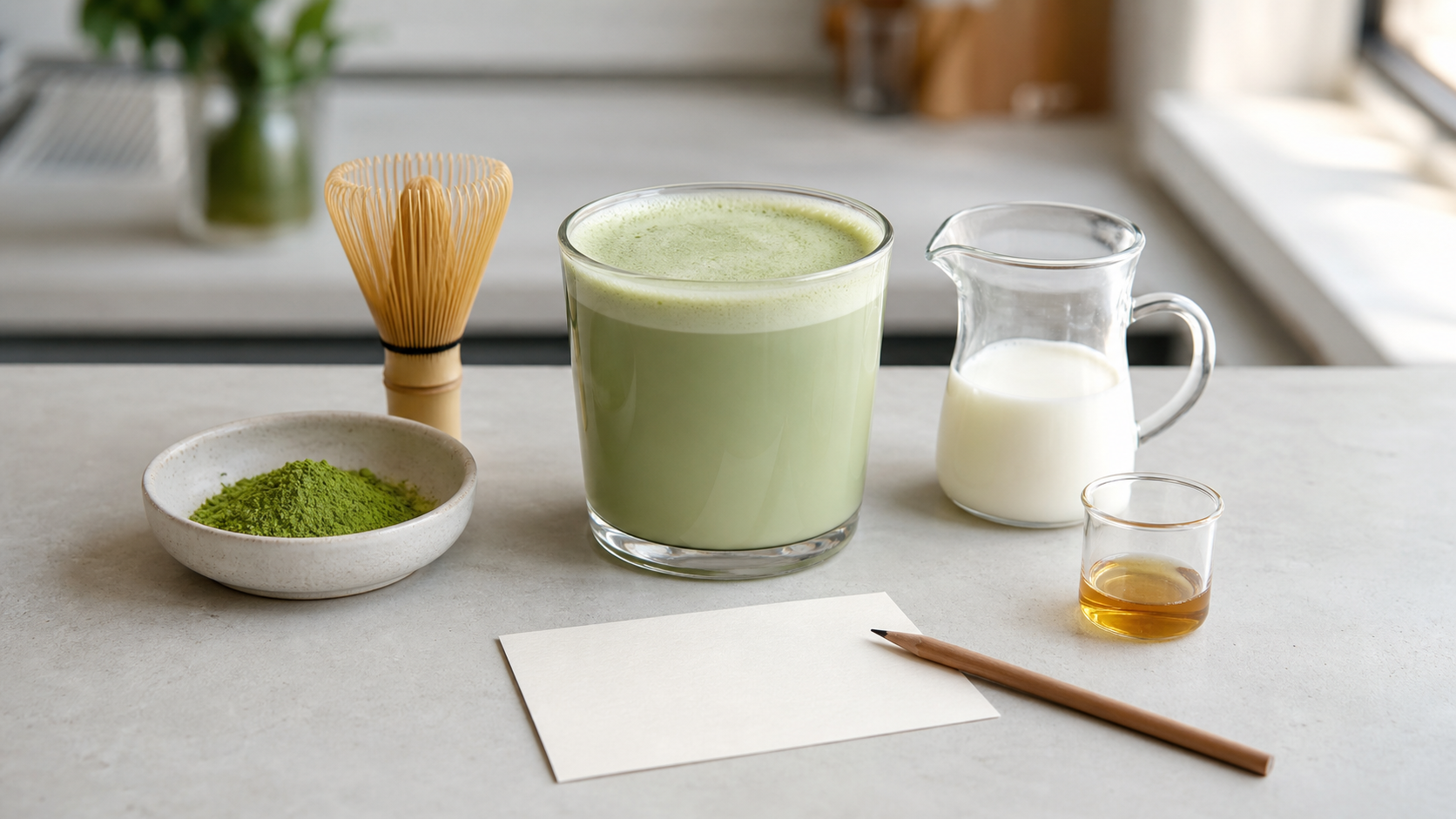
The short answer
| Recipe factor | Why it matters | What to check |
|---|---|---|
| Matcha | Provides tea flavor, caffeine and characteristic tea compounds | Pure powder or sweetened mix; grams used |
| Milk or plant beverage | Can provide energy, protein, fat, carbohydrate and micronutrients | Product, portion, fortification and allergens |
| Sweetener | May contribute substantial added sugar | Premix, syrup, honey, foam and topping amounts |
| Serving size | Scales nearly every ingredient | Finished ounces and number of servings |
| Caffeine | Affects sleep and individual tolerance | Matcha dose and any added espresso |
What is actually in the latte?
A basic matcha latte contains matcha dispersed in water plus dairy or plant milk. Sweetener is optional. A café version may also use a presweetened matcha blend, flavored syrup, fruit puree, cream, cold foam or toppings. “Matcha latte” is therefore a drink format, not one standardized nutrition profile.
Start with the ingredient list. Pure matcha should be tea leaf powder. A latte mix can contain sugar, milk powder, flavors or carriers, sometimes with relatively little matcha. If sugar is already present in the powder, ordering “no syrup” does not necessarily make the finished drink unsweetened. See what a matcha latte contains for the definition and ingredient distinctions.
Added sugar is often the biggest variable
Plain matcha contains no added sugar. Milk contains naturally occurring sugar, while syrups, honey, sweetened powder and flavored toppings may contribute added sugar. The U.S. Food and Drug Administration explains that “total sugars” include both naturally present and added sugars, while the Added Sugars line identifies sugars added during processing or preparation. The FDA’s added-sugars guidance can help interpret packaged ingredients.
Do not estimate sugar from color or taste alone. A pale drink can be heavily sweetened, and a bitter one can still contain sugar. For a chain drink, check the current nutrition page for the selected size and standard recipe. For a homemade or independent-café drink, total the exact grams from the premix, syrup, milk and toppings.
Calories depend mostly on the complete formula
A normal matcha powder dose contributes relatively little energy compared with a large portion of milk, sweetener or cream. That does not make every matcha latte low-calorie. The FDA notes that calories reflect energy from carbohydrate, fat, protein and alcohol and that serving size matters when interpreting a label.
Changing the milk can change energy, protein, saturated fat and carbohydrate, but “plant-based” does not automatically mean lower calorie or lower sugar. Formulas vary among oat, soy, almond, coconut and other beverages, including whether they are sweetened or fortified. Compare the actual product label and measured portion.
A matcha latte still contains caffeine
Milk does not remove matcha’s caffeine. The amount depends on the powder’s composition and grams used; adding espresso increases the total. A scientific review reported about 18.9–44.4 mg caffeine per gram of matcha, a wide range that makes fixed “one latte” claims unreliable.
The FDA cites 400 mg per day as an amount not generally associated with negative effects for most adults, while emphasizing that individual sensitivity varies and that pregnancy, medicines and health conditions may change appropriate intake. Use the dose-based matcha caffeine guide rather than judging from cup color or café size.
Do matcha compounds make the latte healthy?
Matcha contains catechins, caffeine and amino acids including L-theanine. Their presence does not prove that a particular latte prevents disease, causes weight loss, detoxifies the body or produces guaranteed “calm energy.” A 2023 critical review found promising areas but also emphasized limitations in matcha-specific human research and the need for stronger clinical studies.
Evidence from green-tea extracts, isolated compounds, cells or animals cannot automatically be applied to a café drink. Milk, sugar and serving size do not erase the tea compounds, but neither do those compounds cancel the rest of the recipe. The broader matcha health-evidence review separates direct human evidence from inference.
How to evaluate your matcha latte
- Identify whether the powder is pure matcha or a sweetened latte mix.
- Record matcha grams rather than assuming every scoop is equal.
- Record the exact milk or plant beverage and its measured volume.
- Add syrup, honey, puree, foam and toppings to the calculation.
- Use the finished serving size, including whether one container represents more than one serving.
- Check caffeine from matcha plus espresso, coffee or other sources.
- Review allergens and cross-contact separately from general nutrition.
- Compare the drink with the realistic alternative, not with an imaginary “perfect” beverage.
Ways to adjust the recipe
- Use pure matcha so sweetness can be controlled separately.
- Reduce syrup pumps or choose an unsweetened version if added sugar is the concern.
- Select a milk that fits personal nutrition and allergen needs based on its label, not its marketing category.
- Use a smaller finished size rather than diluting a large sweet formula with more ice.
- Measure the matcha dose if caffeine sensitivity matters.
- Skip optional foam and toppings when they do not add enough value for the customer.
These are recipe choices, not medical prescriptions. People managing diabetes, gastrointestinal disease, PCOS, pregnancy or another condition need condition-specific advice; those questions should not be answered by a generic “matcha latte is healthy” statement.
What is a matcha latte good for?
It can be an enjoyable tea-based milk drink and a practical way to serve matcha in a café. Depending on the milk, it may provide protein or fortified nutrients, but the exact amounts belong to the product and recipe. It should not be sold as a treatment or a shortcut to a health outcome.
For someone choosing between beverages, the relevant advantages may be taste, a measured caffeine level, customization and how the drink fits the rest of the diet. “Good for you” is not a laboratory property of the green color.
For cafés developing a healthier-positioned latte
Write one controlled formula and calculate it ingredient by ingredient. Keep pure matcha separate from sweetener, disclose the milk and allergens, offer a genuinely unsweetened option, and avoid disease or detox claims. Test whether the tea remains recognizable at a reasonable sugar level instead of masking a weak powder with syrup.
Sailtik supplies Chinese-origin matcha from Guizhou or Zhejiang and generally recommends testing 1.5–3 g per cup. Ten-gram samples are selected from suitable internal models after the recipe, target taste, color, cost and expected volume are understood; not every model is sent automatically. Contact Carol with the complete intended formula for a focused sample recommendation.
Frequently asked questions
Is an unsweetened matcha latte healthy?
It can fit a healthy diet, but the answer still depends on serving size, milk, caffeine, allergens and the individual. “Unsweetened” should also be verified because a premix may already contain sugar.
Is a matcha latte healthier than coffee?
Not automatically. Compare the actual matcha latte with the actual coffee recipe. Black coffee and a sweetened milk drink are not equivalent products. See the evidence-based matcha versus coffee comparison.
Is a matcha latte good for weight loss?
No matcha latte should be promised to cause weight loss. Total dietary pattern and energy balance matter, and a sweetened latte can contribute substantial energy. Matcha-specific weight-loss evidence does not support guaranteed results.
This article is general nutrition education, not individualized medical advice.