
Yes. Matcha naturally contains L-theanine, an amino acid found in tea leaves. The useful qualification is that “contains L-theanine” is not the same as “contains a fixed amount.” Cultivar, shading, harvest maturity, growing conditions and processing all influence the composition of a particular powder.
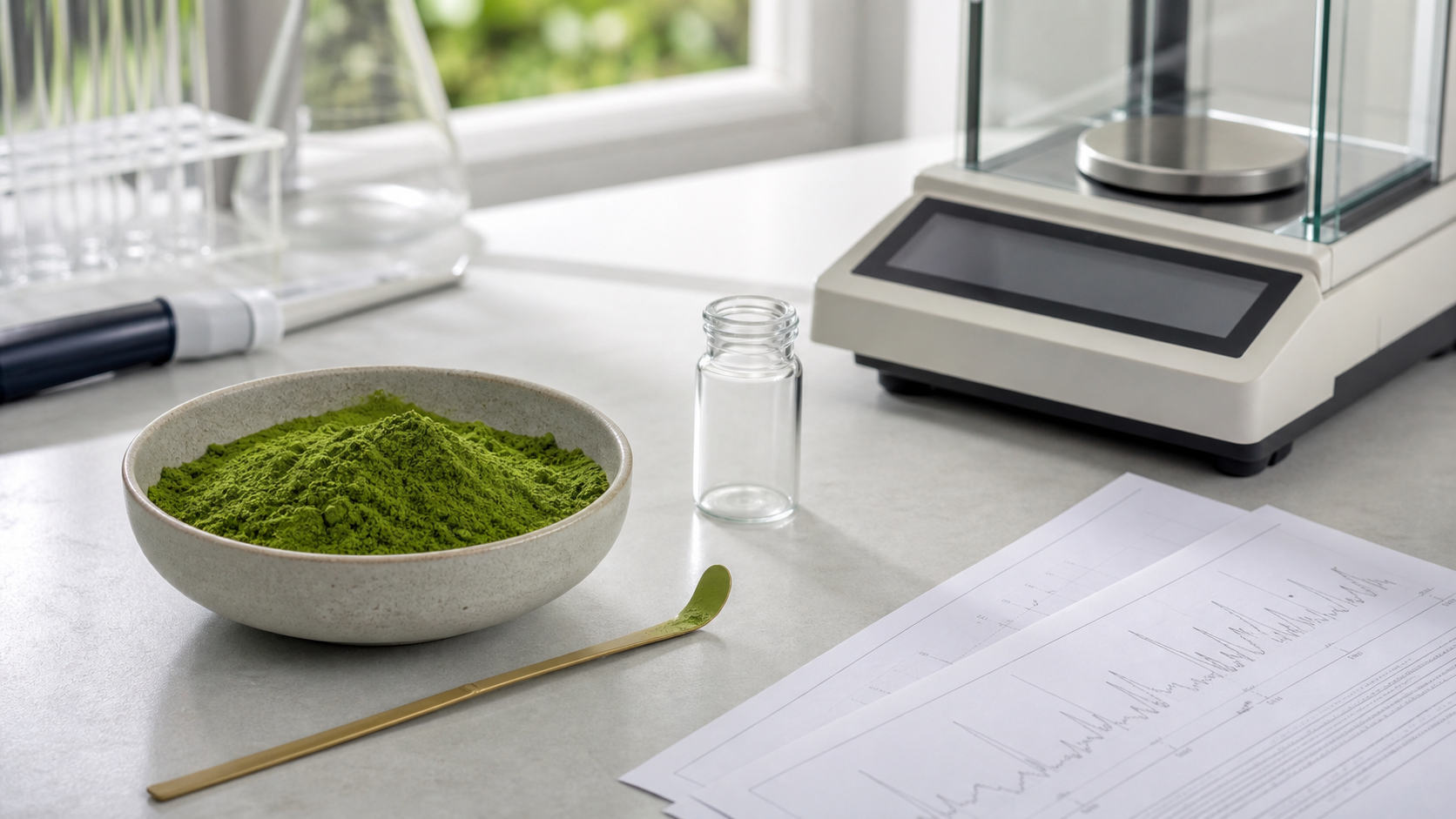
What L-theanine is
L-theanine is commonly described in the scientific literature as a non-protein amino acid characteristic of tea. It contributes to the savory, mellow side of tea flavor. It should not be confused with caffeine: they are different compounds, and matcha normally contains both.
Because matcha is milled tea leaf consumed as a suspension, the powder’s composition matters directly. A statement that matcha contains L-theanine is a compositional fact; claims about relaxation, attention, sleep or treatment are separate health questions that require their own human evidence and cannot be inferred from color or grade language.
What analytical studies have found
A 2023 analysis of matcha products from multiple Chinese regions detected L-theanine in every matcha sample reported in its main comparison table. The measured values differed substantially among samples. That variation is the important result: the study supports the presence of L-theanine in matcha, but not a universal concentration for every product.
A Japanese study comparing tencha-derived matcha and other powdered green teas also used theanine as one of several chemical components. Its tea-ceremony-grade samples exceeded a stated dry-weight threshold, while most industrial-grade samples were lower. The researchers cautioned that the measured parameters alone could not cleanly distinguish every industrial matcha from other powdered green tea.
| Question | Evidence-based answer | What is still unknown |
|---|---|---|
| Is L-theanine present in matcha? | Yes, analytical studies identify it in matcha. | The exact amount in an untested lot. |
| Does every matcha contain the same amount? | No. Published samples vary. | How much variation exists within one supplier or harvest. |
| Can color reveal the concentration? | No validated conversion turns color into an L-theanine result. | A laboratory measurement for that lot. |
| Does “ceremonial grade” guarantee a number? | No universal grade label establishes a fixed concentration. | The specification and method behind a seller’s claim. |
Why the amount varies
- Cultivar and field conditions: tea genetics, nutrition and climate affect leaf chemistry.
- Shading: the pre-harvest light regime associated with matcha production changes amino-acid and catechin metabolism.
- Leaf maturity and harvest: bud-to-leaf composition and season are not identical.
- Processing and storage: raw material selection, heat exposure, moisture, oxygen and time can alter quality.
- Sampling and method: a result belongs to the sampled lot and analytical procedure, including extraction and reporting basis.
This is why an internet average should not be copied into a specification sheet. A study result describes its samples. A supplier’s result describes the identified sample or lot covered by that document. Neither automatically proves the value for an unrelated pouch.
How to verify L-theanine in a matcha you may buy
- Ask whether L-theanine is part of the routine specification or only a research value.
- Request the result, unit and analytical method, not just a marketing adjective.
- Confirm whether the report identifies the same lot offered for purchase.
- Check whether the value is reported per gram, per 100 grams, on an as-is basis or dry-weight basis.
- For a contractual minimum, agree on sampling, laboratory, method and acceptance rule before ordering.
Sailtik can provide the available documentation for a recommended sample, including a CoA where applicable, but this page does not claim that every CoA includes L-theanine or that every Sailtik grade meets an unpublished L-theanine minimum. Buyers needing a defined value should state it during qualification so the suitable product and testing route can be reviewed.
Taste is useful, but it is not an assay
Umami, sweetness, bitterness, astringency, aroma and milk performance help a café decide whether a sample works in its menu. Those sensory observations reflect multiple compounds and recipe conditions. They cannot isolate L-theanine or replace chromatography.
For sourcing, separate two decisions: first, whether the powder makes the drink you want; second, whether a chemical requirement is documented. Sailtik normally recommends selected 10 g samples based on the customer’s business model rather than sending every internal model. The customer then judges color and flavor in the intended recipe.
Frequently asked questions
Does all matcha contain L-theanine?
Authentic matcha is made from tea leaf and analytical literature consistently treats theanine as a matcha component. However, “all” should not be turned into a guaranteed minimum without testing the product and lot in question.
Is L-theanine added to matcha?
It occurs naturally in tea. A plain matcha ingredient should not need added L-theanine to contain it. For blends or supplements, read the full ingredient declaration because the formulation may be different.
How much L-theanine is in one cup?
That is a separate quantity question. It requires the powder’s measured concentration and the grams used in the drink; a universal cup value would be misleading. See the dedicated L-theanine amount review when published.
Sources
- Frontiers in Nutrition: regional variation in main quality components of matcha
- Journal of Cookery Science of Japan: chemical components of matcha and powdered green tea
- Critical review of matcha composition and research
Evidence reviewed August 2, 2026. This article describes composition, not a guaranteed value for an untested lot or a medical effect.