
Starbucks does not publicly name a consumer retail brand or supplier for the matcha powder used in its current U.S. drinks. Its own pages identify matcha or ground green tea, while a February 2026 corporate article describes the powder as shade-grown, milled green tea sourced from established tea growers.
That is enough to describe the ingredient at a high level. It is not enough to verify a named manufacturer, farm, cultivar, grade or one-country origin.
What Starbucks currently confirms
| Question | Publicly confirmed answer |
|---|---|
| What is the ingredient? | The current U.S. Matcha Latte page lists matcha as ground green tea. |
| How is the powder described? | Starbucks says it is made from shade-grown, milled green tea. |
| Is it presweetened? | Starbucks says its core U.S. matcha became unsweetened in January 2025; sweetness is now added separately in recipes. |
| What brand or supplier is it? | No retail brand or supplier is named in the cited public sources. |
| What exact farm, cultivar or grade is it? | Not disclosed in the cited public sources. |
The evidence comes from Starbucks itself. The current U.S. Matcha Latte listing provides the menu ingredient wording. A February 25, 2026 corporate article supplies the shade-grown and milled description and explains the unsweetened change.
Menus and sourcing can change. The answer above is a dated U.S. snapshot checked in August 2026, not a permanent statement about every Starbucks market.
Why the “brand” may not appear in stores
A large café chain can buy a proprietary foodservice specification rather than a retail tin available to consumers. The ingredient may be packed for chain operations, supplied through approved distributors and formulated to work with the chain’s recipes. Therefore, “which supermarket brand is it?” may have no public retail answer even when the ingredient description is known.
A social post, marketplace listing or copycat recipe does not establish chain procurement. To verify a named source, look for an on-record Starbucks statement, a current official ingredient document or documentation from an authorized supplier that can substantiate the relationship.
What cannot be inferred from color or taste
- Origin: a vivid green color cannot prove a country, region or farm.
- Grade: “ceremonial” and “latte grade” are not universal regulatory specifications across suppliers.
- Cultivar: sensory similarity cannot establish a named tea cultivar.
- Supplier: two powders can perform similarly in milk without coming from the same producer.
- Recipe: the finished drink also reflects powder dose, milk, syrup, ice and preparation.
These boundaries matter because internet answers often convert a plausible guess into a claimed fact. “Made from shade-grown, milled green tea” is supportable from the current corporate source; a specific retail brand is not.
How to choose a powder for a Starbucks-style use case
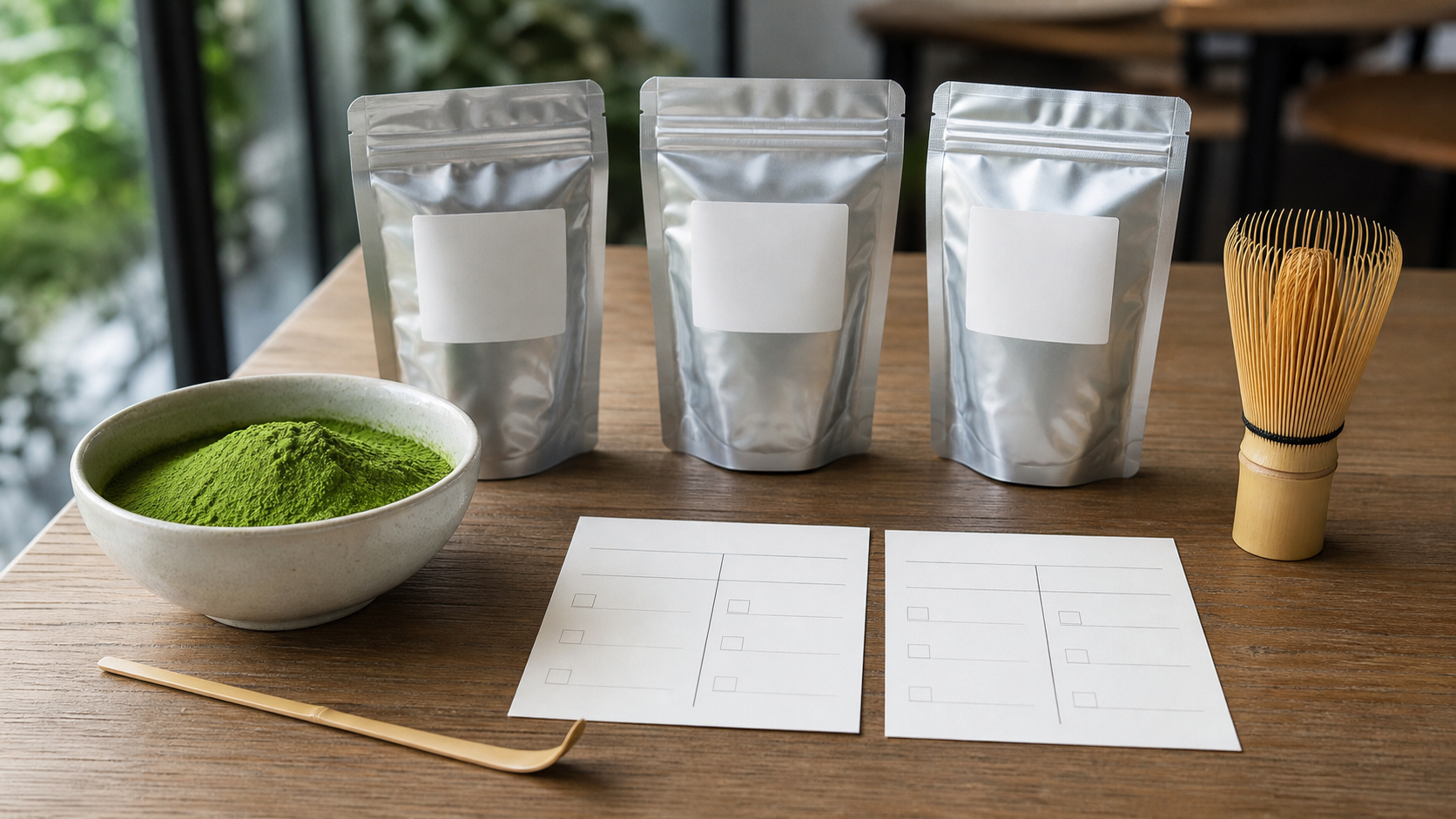
If your goal is a similar café application rather than the undisclosed exact powder, define the finished drink you want and test candidates in that recipe. Start with the current flavor and visual characteristics you value, but treat them as your own benchmark—not proof of identity.
- Standardize the formula. Hold powder grams, milk, syrup, ice and finished volume constant.
- Test milk performance. Score color after dilution, aroma, umami, bitterness, astringency and aftertaste.
- Check dispersion. Compare whisking or shaker behavior, sediment and holding stability under your real workflow.
- Blind the samples. Use codes so brand expectations do not determine the result.
- Review documents. Match food-safety, allergen, residue and destination-market requirements to the actual commercial use.
- Repeat the winner. Confirm performance in a second test before purchasing at scale.
For a home version, the separate Starbucks-style matcha latte recipe focuses on technique and adjustable sweetness. It does not claim to reproduce a proprietary Starbucks ingredient.
Frequently asked questions
Does Starbucks use sweetened matcha powder?
For the current core U.S. matcha, Starbucks says it moved to an unsweetened formulation in January 2025. Finished beverages may still contain syrup or other sweetened ingredients, so “unsweetened powder” does not mean every menu drink is sugar-free.
Does Starbucks say its matcha is ceremonial grade?
The cited current U.S. ingredient and corporate pages do not identify a ceremonial grade. Starbucks instead describes shade-grown, milled green tea and discusses a sensory profile.
Can I buy the exact Starbucks matcha powder?
No exact retail product is identified in the public sources reviewed here. A product marketed online as a “Starbucks matcha dupe” should be evaluated as that seller’s product, not assumed to be the chain’s supply.
Is Sailtik the Starbucks supplier?
No. Sailtik does not claim to supply, represent or be endorsed by Starbucks. Starbucks is a trademark of its owner and is referenced here only to answer a sourcing question objectively.
For café and private-label buyers
Sailtik can recommend Chinese-origin matcha samples according to a buyer’s café or brand use, but does not present them as Starbucks’ formula. Café testing can start with 10 g samples selected for the intended drink; ordinary bulk packaging is available in 1 kg, 5 kg and 10 kg foil bags. Private-label projects usually focus on 5A–7A and have separate packaging minimums. Contact Carol with the drink recipe, target color, taste, monthly volume and packaging plan so the sample set can be narrowed honestly.