
Matcha powder is not simply ordinary green tea blended in a kitchen. Commercial matcha is made by processing tea leaves for powder, removing coarse material and milling the prepared leaf very finely so it can be suspended in water.
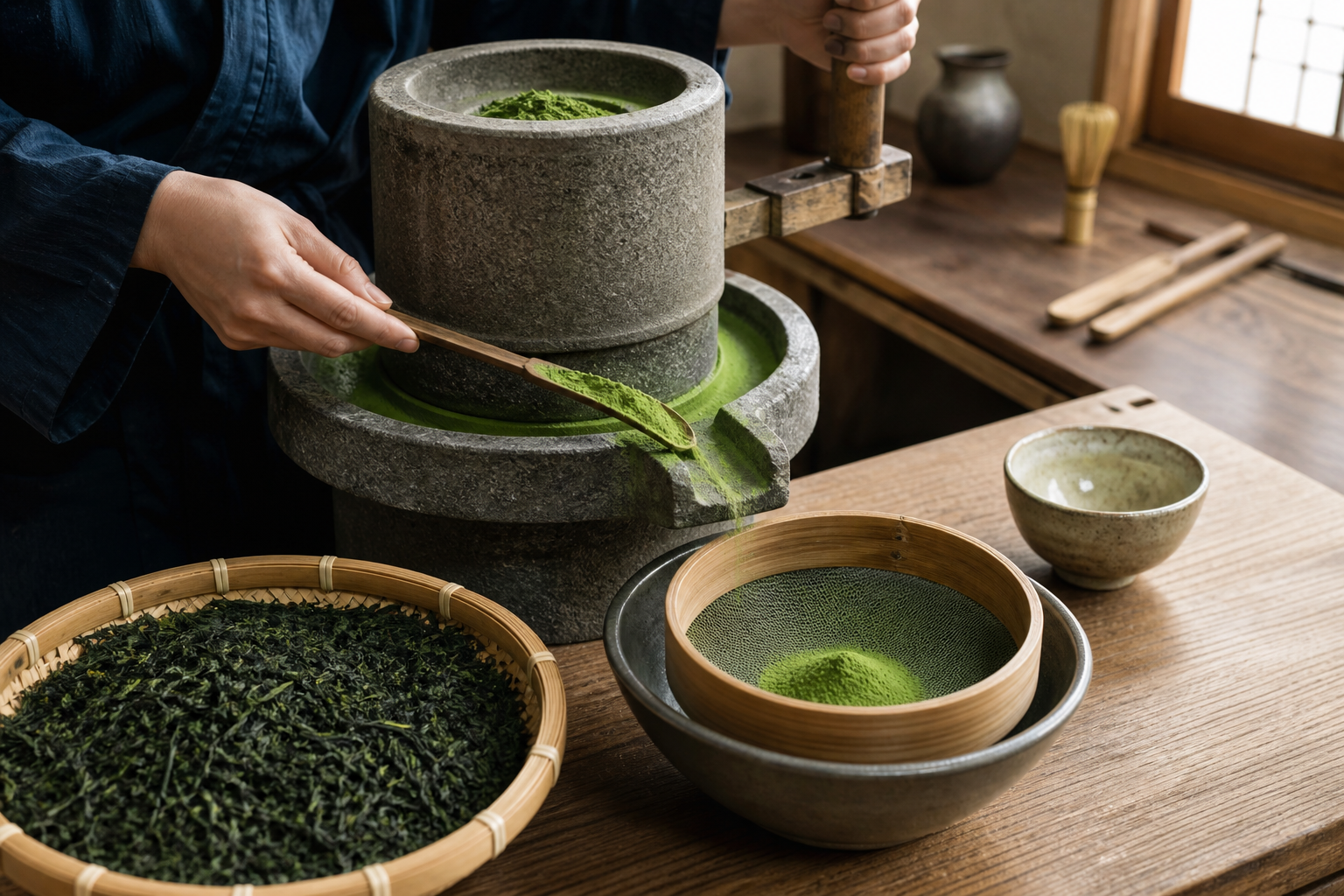
The commercial process in brief
- Grow and shade the crop where the production method calls for it. Shading changes leaf growth and the eventual color and flavor profile.
- Harvest suitable leaves. The material selected for matcha is handled differently from leaves intended for ordinary rolled green tea.
- Steam or heat-fix the fresh leaf. This limits oxidation and stabilizes the green character.
- Dry and prepare the leaf as tencha. Stems and veins are removed or separated so the powder is less fibrous.
- Mill and sift. The prepared leaf is ground gradually and screened to produce a fine, even powder.
Can you make matcha powder at home?
You can pulverize dried green tea leaves in a spice grinder or blender, but that does not reproduce commercial matcha automatically. Ordinary tea may contain rolled leaf, stems or veins, and a home appliance usually leaves a coarser, grittier powder. It may be useful as a cooking experiment, but it should be described as powdered tea rather than assumed to have the texture or flavor of true matcha.
A stone mill or purpose-built mill works slowly because excessive heat and friction can affect aroma. Industrial producers also control sieving, hygiene, moisture, lot identification and packaging—steps that a household blender cannot validate.
Why powder fineness matters
Fine particles disperse more evenly when whisked, while coarse fragments settle quickly and can feel sandy. Fineness is only one quality factor: leaf material, color, aroma, storage, microbiological controls and residue testing also matter for a commercial buyer.
When comparing suppliers, request the lot’s technical documents and test a sample in the intended use. Sailtik can discuss matcha from Guizhou or Zhejiang and provide documents such as a CoA, allergen declaration, pesticide or mycotoxin residue report, heavy-metals report, Halal certificate and SDS when applicable. A sample evaluation should still be made by the customer.
Frequently asked questions
Can I make matcha powder from tea leaves?
You can grind dried leaves, but ordinary tea leaves will usually be coarser and more astringent than powder made from properly prepared tencha.
How long does it take to make matcha powder?
The full crop-to-powder process spans growing, shading, harvesting, processing, drying, sorting, milling and packing. Home grinding may take minutes, but it does not represent the complete production process.
Does a blender make real matcha?
It can make a green tea powder, but particle size, stems, heat and oxidation may differ from commercial matcha. Check the texture and flavor before using it in a drink.
This article explains tea processing and is not a guarantee of any supplier, origin or finished-product specification.