
The most reliable places to buy matcha in Japan are official tea-company shops, staffed department-store tea counters, tea-region shops in Kyoto and Uji, and the brand’s own online store when it accepts your delivery address. Do not assume every souvenir shop, convenience store or café tin is the same product: in 2026, popular matcha can sell out, brands may limit business or proxy purchases, and some “matcha” items in Japan are sweets, lattes, salt or cosmetics rather than plain tea powder.
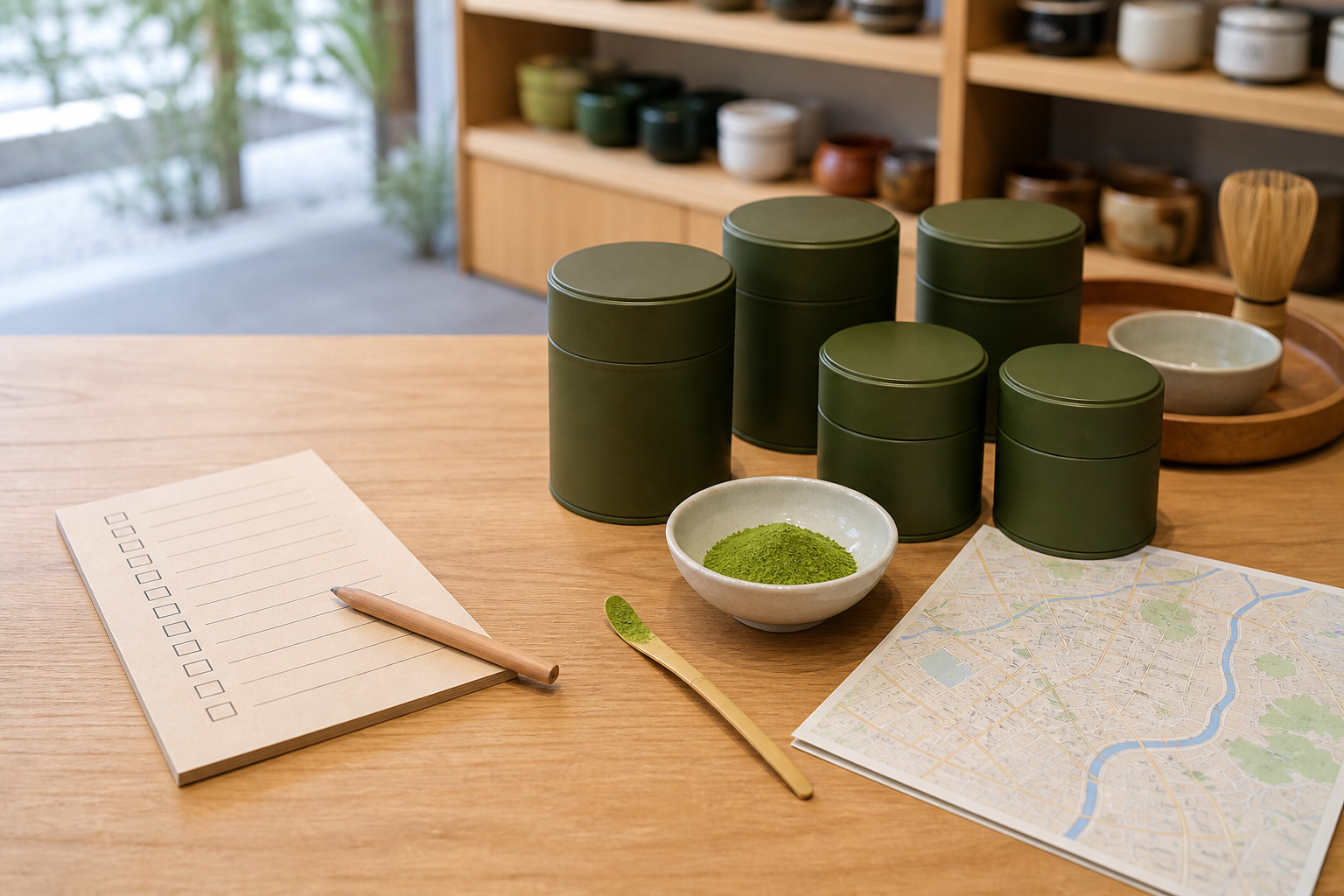
This guide is a current buyer checklist for Japan travel and domestic Japan shopping, checked in August 2026. It is independent; store hours, stock, restock rules and export policies can change quickly, so treat brand pages as the final source before making a special trip.
Best buying route by situation
| If you are in Japan and need… | Start here | Why this route is safer |
|---|---|---|
| A serious drinking matcha tin | Official tea-company shop or staffed tea counter | You can confirm grade, use case, freshness, storage and whether the powder is meant for whisking. |
| A Kyoto or Uji souvenir | Kyoto/Uji tea shops, brand flagships, department-store food halls | You are more likely to find regional tea makers and gift packaging than in a generic tourist store. |
| A famous brand such as Ippodo, Marukyu Koyamaen, Nakamura Tokichi, Fukujuen or Horii Shichimeien | The brand’s official shop locator, store page or online store | It avoids reseller markups, counterfeits and out-of-date stock claims. |
| A whisk, scoop or bowl | Tea shops, tea-utensil floors, department stores and specialist cookware shops | Utensils vary by hand feel and size; physical inspection helps more than a generic souvenir rack. |
| Bulk, café or resale stock | Business-facing supplier route, not a tourist counter | Retail shops may reject proxy, group-buying or business-use purchases, especially during tight supply. |
| Matcha candy, latte mix, salt or face mask | Confirm the category first: food hall, grocery, cosmetics store or souvenir shop | These are different products. A matcha-flavored item is not a tin of plain tea powder. |
Kyoto and Uji: strongest for tea-shop buying
Kyoto and Uji are usually the first places travelers think of because many established Japanese tea companies either began there, maintain flagship shops there, or sell Uji tea through official retail channels. Ippodo lists a Kyoto main store and Tokyo locations through its official store information. Nakamura Tokichi lists Uji, Kyoto, Osaka and Tokyo stores, including Uji main-store and Byodoin-area options. Fukujuen’s tourism shopping pages list Kyoto and Uji tea-shopping locations. Horii Shichimeien publishes company and online-shop information connected to Uji retail and matcha products.
The practical advantage is not just romance. In a staffed tea shop, you can ask whether a tin is suited to usucha, koicha, latte, baking, gifting or daily practice. That distinction matters more than a generic “ceremonial” label. A powder that tastes good in milk may not be the best thin-tea bowl, and a high-priced limited tin may be wasted in a sweet latte.
Tokyo: convenient, but check the exact counter
Tokyo can be easier than Kyoto if you are passing through major stations or department stores. Ippodo’s official pages list Tokyo shops; Nakamura Tokichi lists Tokyo stores such as Ginza and Azabudai; department-store food floors often host tea counters or brand concessions. The tradeoff is that tourist demand can be heavy and department-store counters may follow the facility’s opening hours, not the brand’s standalone-shop schedule.
If you have only one free hour, search the official brand locator first, then confirm the store’s current opening day and whether the location is a tea shop, café, takeout counter, pop-up or department-store concession. Do not rely on a travel blog’s old map screenshot for a high-demand matcha run.
Stock and purchase-limit checks are now part of buying matcha
Current matcha shopping is more volatile than older travel guides suggest. Marukyu Koyamaen’s international online shop, for example, has posted current notices saying it does not announce a restock schedule, that matcha restocks may happen randomly during Japan business hours, and that not every product or size will be available each time. The same official page also states that the international shop is for customers outside Japan and says domestic Japan delivery should use the Japanese online shop.
That is useful even if you are shopping in person: it shows why a famous brand appearing on a first-page list does not mean every tin is waiting on a shelf. For scarce or expensive matcha, check whether the brand has purchase limits, temporary suspension notices, business-use restrictions, anti-resale notices or separate domestic and international storefronts.
How to read a matcha shelf in Japan
- Look for product form. Plain matcha powder, sweetened matcha mix, latte base, confectionery powder and culinary powder are not interchangeable.
- Check the package size. Serious drinking tins are often small. A cheap large bag may be intended for baking, food service or milk drinks.
- Ask the use case. If the staff can tell you “thin tea,” “thick tea,” “latte,” “sweets” or “cooking,” you are getting more useful information than a vague premium label.
- Check freshness and storage. Matcha is sensitive to light, heat, oxygen and humidity. Buy from shops with fast turnover and sealed stock.
- Confirm tax-free and export rules separately. Tourist tax-free processing is not the same thing as commercial import compliance.
- Keep receipts and product labels. They help if you later need to identify the exact grade, brand or lot for reorder or customs questions.
What not to assume from the word “Japan”
A matcha product bought in Japan is not automatically a single-origin Uji ceremonial powder. It may be a blend, a culinary product, a sweetened drink base, a confectionery ingredient or a private-label souvenir. A famous region on a sign also does not prove the exact origin of every ingredient in every product sold nearby. When origin matters, look for a specific statement from the maker and keep the package.
If you want to understand origin claims before shopping, read Sailtik’s guide to where matcha comes from. If your real task is a U.S. commercial shipment, use the matcha import checklist instead of treating a retail shop visit as a sourcing plan. For quality cues that apply in any market, see where to buy good matcha.
If you meant Horii Shichimeien, matcha salt or a matcha mask
Search data around this topic includes several adjacent questions. If you meant Horii Shichimeien, start with the official Horii Shichimeien site and its product or company pages, then verify whether the item is available and whether you need the Japan, English or overseas storefront. If you meant matcha salt, confirm whether the product is a seasoning rather than tea powder. If you meant a matcha mud mask, treat it as cosmetics: check the cosmetics retailer, ingredient list and skin-use warnings, not a tea-shop shelf.
Bottom line
For most travelers, the safest matcha-buying plan in Japan is simple: choose two or three official tea shops or staffed department-store counters near your route, check current hours and stock notices the same week, decide whether you need drinking matcha or a flavored product, and buy sealed tins with labels you can understand later. The famous-shop list is only the starting point; the real work is confirming stock, product type and intended use.
Sources
- Ippodo Tea Global shop locations
- Ippodo Tea North America locations page with Japan store details
- Marukyu Koyamaen international online shop and current restock notices
- Nakamura Tokichi official store information
- Fukujuen shopping locations
- Horii Shichimeien official site
- Horii Shichimeien online product collection
- Horii Shichimeien company and retail information