
You can drink matcha on an empty stomach if you tolerate caffeine and plain tea well, but it is not the best default for everyone. If empty-stomach matcha gives you nausea, reflux, stomach discomfort, jitters, anxiety, a racing heartbeat or urgent bowel movements, move it after food, reduce the serving, or choose a gentler drink format.
This article is general education, not medical advice. Empty-stomach symptoms can come from caffeine, concentration, reflux, anxiety, medicines, pregnancy, illness, dehydration, skipped meals or unrelated digestive conditions. If symptoms are severe, recurring or new, use a clinician’s advice rather than a tea timing rule.
The practical answer
| Situation | Better matcha choice | Reason |
|---|---|---|
| You drink coffee or tea before food with no problem | A normal matcha serving may be fine | Your caffeine tolerance is probably higher, but still count total daily caffeine. |
| You get nausea or stomach burning | Have matcha after breakfast or with a small snack | Food can make a concentrated caffeinated drink feel less harsh. |
| You feel shaky or anxious | Use less powder, drink it later, or avoid stacking caffeine | MedlinePlus lists nervousness, restlessness, fast heartbeat and sleep issues among caffeine effects. |
| You are pregnant, breastfeeding or caffeine-restricted | Follow your personal caffeine limit | The timing question matters less than total caffeine exposure. |
| You are taking iron or treating low iron | Separate matcha from the iron plan unless advised otherwise | Tea timing can matter around iron-focused meals or supplements. |
| You are using green tea extract capsules | Do not treat them like a cup of matcha | Concentrated extracts are a different exposure from ordinary tea beverages. |
Why empty-stomach matcha bothers some people
Matcha is powdered green tea, so you consume suspended leaf particles rather than steeping and removing the leaves. A small bowl can also be concentrated: the caffeine, tea polyphenols and fine particles arrive without much food buffer. That does not make matcha inherently unsafe on an empty stomach, but it explains why some people feel it more strongly than a diluted tea or a milk-based latte.
Caffeine is the first variable to check. The FDA says about 400 mg of caffeine per day is not generally associated with dangerous negative effects for most adults, while also emphasizing individual sensitivity. MedlinePlus lists possible caffeine effects such as restlessness, shakiness, insomnia, headaches, dizziness, fast heart rhythm and dehydration-related concerns. If those happen after matcha before breakfast, the schedule and dose need changing.
A safer test if you are unsure
- Use a measured serving. Do not test tolerance with a heaping spoon. Start with the serving size you normally use or a smaller amount.
- Keep the drink plain for the first test. Heavy sweetener, milk, collagen, protein powder or other add-ins can confuse the result.
- Try it after food on another day. If the same matcha feels fine after breakfast but not before food, timing is probably part of the issue.
- Record the symptom and timing. Note nausea, reflux, bowel urgency, jitters, headache, hunger or sleep effects.
- Stop testing if symptoms are strong. Repeated discomfort is information, not a challenge to push through.
What to do if matcha makes you nauseous
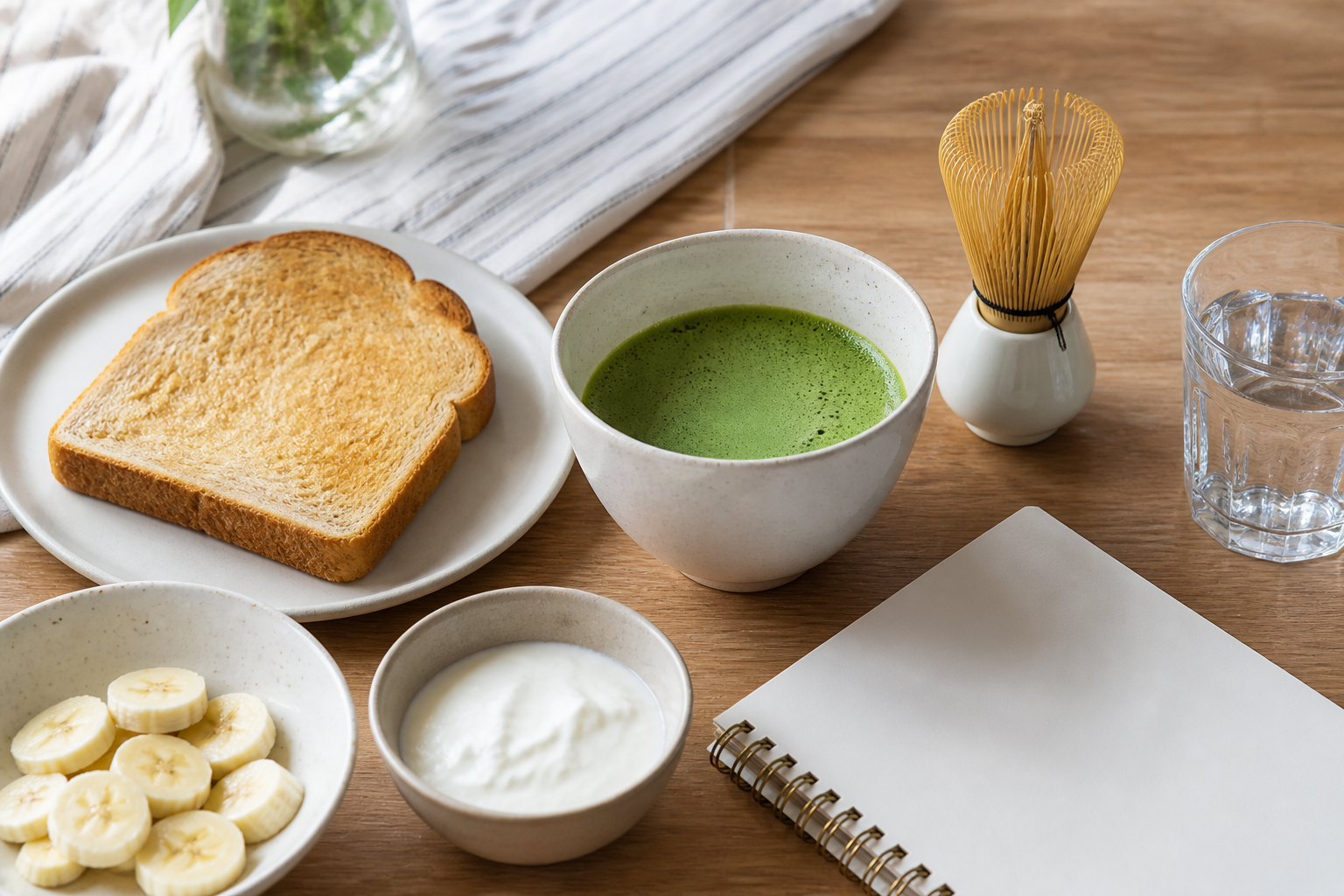
First, move matcha after a small meal. Toast, oats, yogurt, banana or another simple breakfast can be enough for many people. Second, reduce concentration: use less powder or make a larger, gentler drink after food. Third, check water temperature and preparation. Very hot, concentrated or clumpy matcha can feel harsher than a smooth preparation.
If nausea happens only with lattes, look beyond matcha. Milk, sweetener, syrups, gums, protein powders or a very large drink can be the trigger. If nausea happens with coffee, energy drinks and matcha, caffeine sensitivity is more likely than a matcha-specific problem.
Empty stomach versus fasting
Search results often mix “empty stomach” with fasting. Those are not identical. An empty stomach may mean you simply have not eaten breakfast yet. Fasting may involve a strict calorie rule, a medical test, religious practice or a time-restricted eating plan. A plain unsweetened matcha may fit some fasting routines, while a latte with milk or sweetener does not. For medical tests or procedures, follow the fasting instructions you were given rather than an online matcha answer.
When you should avoid empty-stomach matcha
- If caffeine reliably worsens anxiety, palpitations, reflux or nausea.
- If you are already near your daily caffeine limit from coffee, energy drinks or medicines.
- If you are pregnant, breastfeeding or under a clinician’s caffeine restriction and have not counted the serving.
- If you are taking iron or building an iron-focused meal plan and have not separated tea timing.
- If you are using concentrated green tea extract products; NCCIH notes safety concerns for some green tea extracts, especially liver-related concerns, and those products should not be treated like ordinary matcha drinks.
Bottom line
Empty-stomach matcha is optional, not required. If you tolerate it, a normal measured serving can be fine. If it bothers your stomach or nervous system, take it after food, lower the dose, avoid late-day caffeine, and count total caffeine from every source. The best timing is the one that gives you the drink you want without stomach symptoms or sleep disruption.