
Pure matcha is normally vegan as an ingredient because it is powdered tea leaf, not a dairy, egg, honey, gelatin or animal-derived product. The answer changes when matcha is used in a latte, candy, collagen blend, Frappuccino, bottled drink or flavored mix. For those products, check every ingredient and do not treat the word “matcha” as a vegan certification.
This page answers the generic matcha question. It does not answer every named brand or snack query. Matcha Kit Kats, matcha Oreos, Pocky, café Frappuccinos, collagen products and liqueurs each need their own current label or official ingredient check.
The practical vegan test
| Product | Likely vegan answer | What to verify |
|---|---|---|
| Plain matcha powder | Usually vegan by ingredient logic. | Ingredient list should be only tea leaf / green tea / matcha; certification is separate. |
| Traditional matcha with water | Vegan if the powder is plain. | No milk, honey or animal-derived add-ins. |
| Matcha latte | Depends on the milk and additions. | Dairy milk, whipped cream, cold foam and some sauces make it non-vegan. |
| Vegan matcha latte | Possible. | Use plant milk and check sweeteners, powders, syrups and toppings. |
| Matcha collagen | Often not vegan unless specifically plant-based. | Collagen is commonly animal-derived; verify the source. |
| Matcha candy or biscuits | Cannot be inferred. | Milk powder, whey, gelatin, shellac, honey, butter oil or confectionery glaze can appear. |
Why pure matcha is different from a finished drink
Matcha is made from the tea plant, Camellia sinensis. In a plain powder, the relevant question is simple: is the ingredient just tea leaf? If yes, there is no intentional animal ingredient in the powder itself. That is why plain matcha and water are generally compatible with a vegan diet.
A finished drink is a formula, not just a tea ingredient. Dairy milk, whipped cream, sweet cream cold foam, honey, some caramel-style sauces, collagen powders and dessert toppings can change the vegan answer. A plant milk substitution solves only the milk part; it does not automatically verify every syrup, foam or topping.
Certification is a higher bar than “looks vegan”
There is a difference between “no animal ingredient is apparent” and “certified vegan.” Vegan certification programs review a product against defined standards and documentation. A small tea seller may offer plain matcha that appears vegan from the ingredient list without carrying a formal vegan logo. That does not make the tea non-vegan; it means the claim has a different evidence level.
If you are buying for a vegan retail claim, café menu, private label line or strict consumer audience, ask for supplier documentation instead of relying on color or category. Useful questions include whether the powder has any carrier, creamer, flavor, anti-caking agent, processing aid or shared-line disclosure, and whether the supplier can support the exact claim you plan to put on packaging or a menu.
How to make vegan matcha
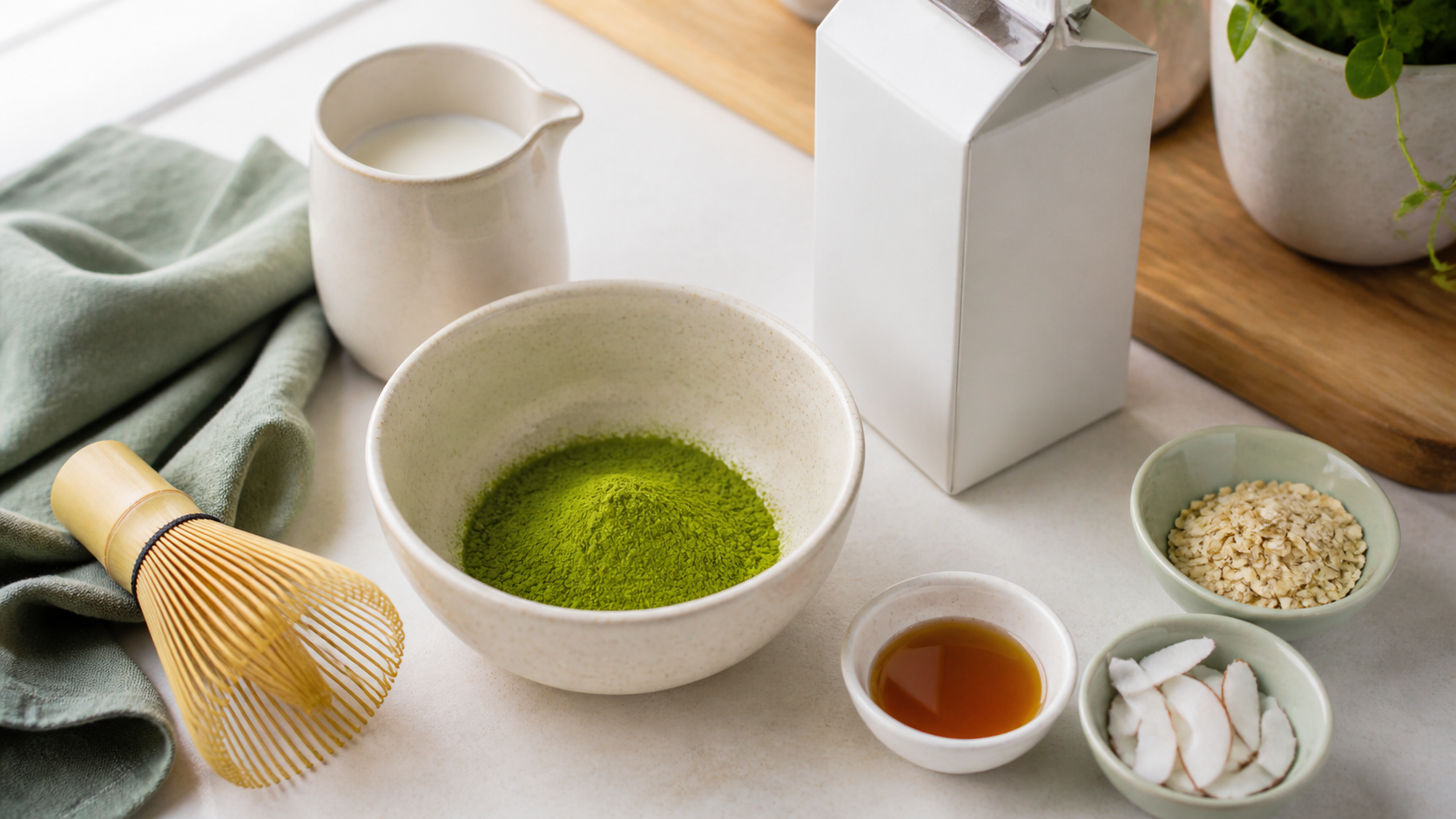
- Start with plain matcha powder whose ingredient list is only green tea or matcha.
- Whisk it with water first so the powder disperses before milk is added.
- Use oat, soy, almond, coconut or another plant beverage if you want a latte.
- Choose a vegan sweetener if you sweeten it. Sugar, maple syrup and many simple syrups may work; honey does not.
- Skip dairy whipped cream, sweet cream foam, milk chocolate toppings and collagen unless the label specifically verifies a vegan formulation.
Common mistakes
- Assuming “green tea” answers every product: plain tea is one thing; matcha ice cream, candy or bottled drinks are different formulas.
- Assuming plant milk makes a chain drink vegan: sauces, powders, foams and toppings still matter.
- Assuming “dairy-free” means vegan: some dairy-free products still contain honey, collagen or other animal-derived ingredients.
- Assuming “vegan” means allergen-free: vegan status does not answer gluten, nut, soy or cross-contact questions.
Bottom line
Pure matcha powder is generally vegan because it is powdered tea leaf. Matcha drinks and snacks are not automatically vegan. For a real-world purchase, read the full ingredient list and check milk, honey, collagen, cream, foams, coatings and toppings. For a formal vegan claim, look for certification or supplier documentation rather than making the claim from the matcha ingredient alone.
For broader diet details, see Sailtik’s matcha nutrition guide. If your concern is gluten rather than vegan status, use the dedicated guide to whether matcha is gluten-free. If you are checking a chain drink, start with the current matcha chain menu snapshot.