
As of July 25, 2026, Starbucks and Dunkin publicly list matcha drinks on their U.S. menus. Dutch Bros still publishes matcha information, but its current national web menu does not display a matcha category; local availability must be checked in the app or with the shop.
This is a dated, independent review of public official sources—not an endorsement or affiliation. Menus, recipes, prices, availability, nutrition and allergens change by date, market, store and customization. Check the selected location’s current official listing before ordering or making a business decision.
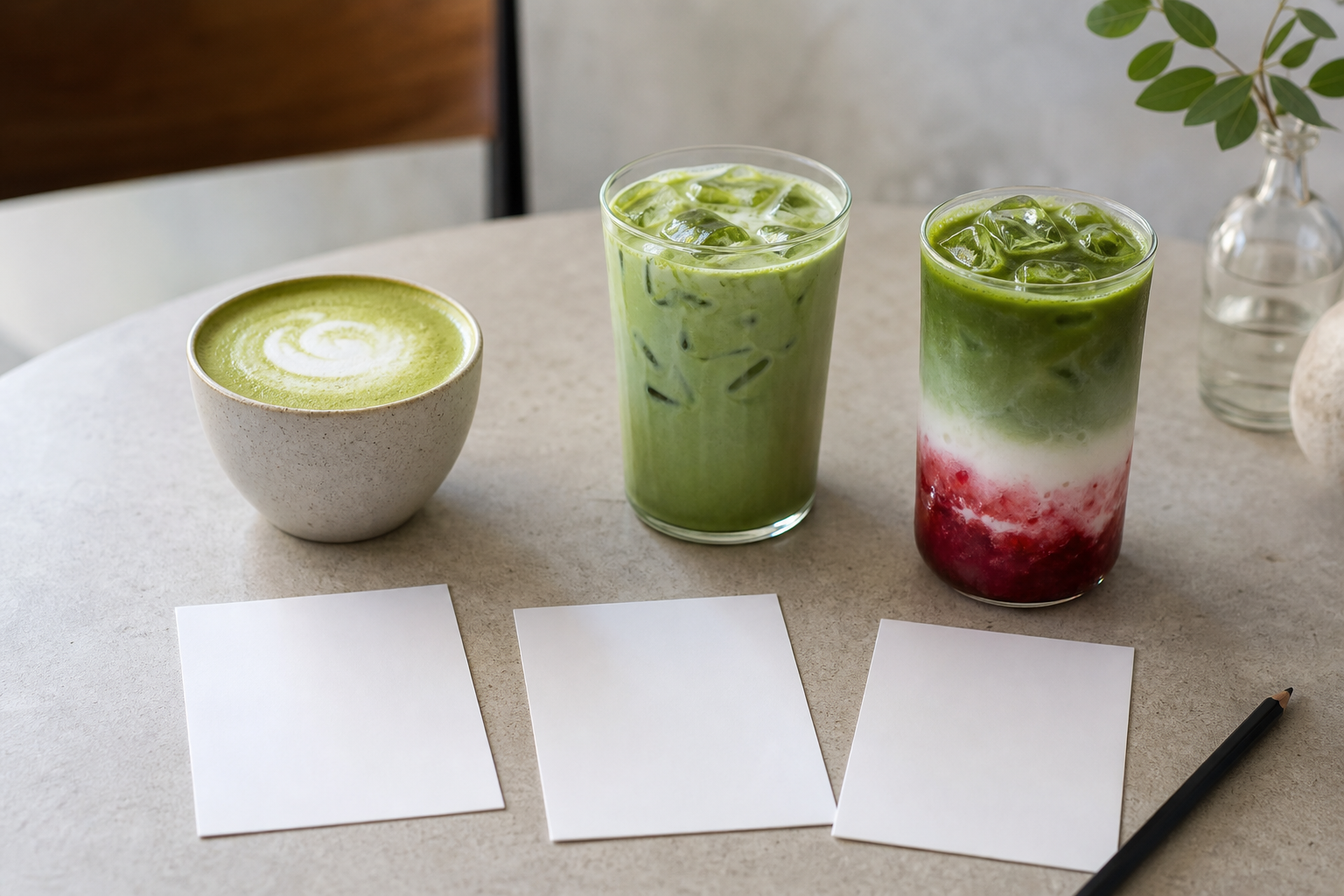
Current menu snapshot
| Chain | What official U.S. sources showed on July 25, 2026 | Availability caution |
|---|---|---|
| Starbucks | Hot and iced Matcha Latte, Matcha Crème Frappuccino, plus several specialty iced matcha drinks on the matcha hub | Specialty drinks can be seasonal or participation-dependent |
| Dunkin | Hot and iced Matcha Latte and Frozen Matcha Latte on core menu pages; current 2026 promotions also referenced Matcha Lemonade, Strawberry Cloud Matcha and OREO Matcha | Seasonal products and participation vary |
| Dutch Bros | A matcha support article remained live, but the national web menu did not display matcha; the 2025 launch included classic and flavored matcha drinks | The original launch said “while supplies last”; confirm locally |
Starbucks U.S. matcha menu
The official Starbucks matcha menu hub displayed three “Classic Matcha” formats: Iced Matcha Latte, Matcha Latte and Matcha Crème Frappuccino Blended Beverage. It also displayed specialty choices including Iced Dubai Chocolate Matcha, Iced Blue Coconut Matcha, Iced Mango Cream Matcha and Iced Lavender Cream Matcha.
The specialty list should be treated as a current snapshot, not a permanent catalog. Starbucks’ 2026 announcements introduced or returned several of these drinks on seasonal schedules. Store participation and ingredient availability can differ.
Which Starbucks matcha drink is best?
There is no universal “best” Starbucks matcha drink. The useful choice depends on whether you want a simple latte, a blended dessert texture or a seasonal flavor. For a first comparison, the standard hot or iced Matcha Latte is the clearest baseline because matcha, milk and classic syrup remain easy to recognize and customize.
| If you want… | Best starting point from the current menu | Why |
|---|---|---|
| A straightforward matcha-and-milk drink | Hot Matcha Latte | Warm, milk-forward and simpler than a topped specialty drink |
| A cold everyday baseline | Iced Matcha Latte | Easy to compare across milk and syrup customizations |
| A thick, dessert-style drink | Matcha Crème Frappuccino | Blended texture and a sweeter café-dessert format |
| Fruit, coconut, cold foam or layered flavor | A specialty iced matcha currently shown in the app | More flavor contrast, but availability and nutrition are product-specific |
If sweetness is the deciding factor, start with the standard latte and review the current classic-syrup customization in the Starbucks app. Do not assume that every seasonal foam, sauce or topping can be reduced in the same way. This is an independent selection framework, not a claim that one recipe is objectively superior.
What is in the standard Starbucks Matcha Latte?
On the current U.S. nutrition pages, the standard hot Matcha Latte listed milk, classic syrup and matcha described as ground green tea. The iced version listed the same components plus ice. That answers an important search question: the beverage contains genuine ground-green-tea matcha, but the finished standard recipe also contains milk and sweetening syrup.
| Standard Grande example | Hot Matcha Latte | Iced Matcha Latte |
|---|---|---|
| Serving | 16 fl oz | 16 fl oz |
| Calories | 220 | 190 |
| Total sugars | 29 g | 25 g |
| Caffeine | Approximately 65 mg | Approximately 65 mg |
Those values came from the official hot and iced standard-recipe pages accessed for this review. Starbucks states that caffeine is approximate and customization can change nutrition. Do not apply a Grande value to another size or a specialty drink.
What brand or origin of matcha does Starbucks use?
The current U.S. menu pages identify the ingredient as matcha or ground green tea. A February 25, 2026 Starbucks statement describes its powder as shade-grown, milled green tea sourced from some of the oldest tea growers in the world. Neither source names a retail matcha brand, supplier company, farm or cultivar.
Associated Press reporting in 2025 stated that Starbucks told the outlet it sourced matcha from China, Japan and South Korea. That attributed country-level statement does not show which origin is in a particular store bag or drink, whether the origins are blended, or which supplier produced it. It also does not turn any consumer powder into “the Starbucks brand.”
The current standard U.S. recipe lists matcha separately from classic syrup, reflecting Starbucks’ removal of sugar from the matcha powder itself. Claims that Starbucks uses a named consumer brand, a specific farm, one cultivar, only Japanese matcha, or an exact marketplace product should not be repeated without a current product-specific Starbucks disclosure.
Dunkin U.S. matcha menu
Dunkin’s official Teas & More menu listed Matcha Latte and Iced Matcha Latte. Its Frozen Drinks page listed a Frozen Matcha Latte. The standard format therefore spans hot, iced and frozen preparation.
Current 2026 official promotional sources add a more changeable layer:
- OREO Matcha: appeared on the summer menu as sweetened matcha with milk and vanilla flavors, Marshmallow Cold Foam and cookie pieces.
- Strawberry Cloud Matcha: appeared in June and July official releases with whole milk, vanilla flavor and Strawberry Cold Foam.
- Matcha Lemonade: appeared in Dunkin’s July 8, 2026 national menu announcement.
These are limited-time or promotional items, so today’s app and selected store are the controlling availability sources.
Is Dunkin matcha sweetened?
Yes, based on the current official ingredient guide reviewed on July 25, 2026. Dunkin’s standard matcha blend was listed as cane sugar and matcha tea or matcha green tea. Milk and flavor additions contribute separately. This is different from starting with unsweetened pure matcha and adding a measured syrup at the bar.
The ingredient order and nutrition of a branded recipe can change. Check Dunkin’s latest downloadable guide for the exact drink, size, milk and flavor. The current documents also warn about shared equipment and regional or assembly variation.
What brand of matcha does Dunkin use?
The official material reviewed describes the blend’s ingredients but does not identify a consumer retail brand, farm or origin. “Dunkin-style” recipe tutorials are recreations, not proof of the chain’s supplier.
Does Dutch Bros have matcha?
Dutch Bros officially launched matcha in May 2025. The announcement said customers could keep it classic or choose Lavender Matcha Latte, Raspberry Matcha Latte and Paradise Matcha Lemonade with mango, lemonade and strawberry fruit. It also said availability was “while supplies last.”
On July 25, 2026, the public national Dutch Bros menu did not show a matcha category, even though the company’s “What is matcha?” support article remained online. That is insufficient evidence to promise nationwide current availability. Check the app after choosing a location or ask the local shop.
This distinction matters for SEO content: an old launch page proves a product existed at that time, not that it is permanently sold. A support page can remain live after menu participation changes.
Are chain matcha drinks healthy?
“Healthy” cannot be answered from the word matcha alone. Evaluate the actual drink’s serving size, milk, sweetener, topping, calories, total and added sugars, caffeine, allergens and the consumer’s dietary context. Matcha does not neutralize syrup or make a dessert-style beverage equivalent to plain tea.
Use the matcha nutrition and sugar guide to separate plain powder from a finished latte. Health conditions, pregnancy and childhood require additional context; see the caffeine guidance for pregnancy, breastfeeding and children.
Starbucks caffeine guides by exact product or question
Starbucks matcha caffeine questions now have separate, product-specific guides. This menu overview keeps only the routing summary so the standard latte, caffeine-free request and blended Frappuccino intent do not compete with one another.
- Does Starbucks matcha have caffeine? — current Tall and Grande standard Matcha Latte values, hot versus iced and the unverified Venti gap.
- Does Starbucks have caffeine-free matcha? — why unsweetened and sugar-free do not mean decaf, and what a modified order can and cannot prove.
- Does the Matcha Crème Frappuccino have caffeine? — current Grande caffeine and nutrition, coffee versus caffeine, and product-specific customization limits.
For an unbranded café recipe, use the generic matcha latte caffeine calculator based on weighed powder dose. Do not transfer a Starbucks value to another product.
Does the Starbucks Iced Dubai Chocolate Matcha have caffeine?
Yes. Starbucks’ current U.S. nutrition page lists approximately 60 mg caffeine for the standard Grande, 16 fl oz Iced Dubai Chocolate Matcha. The listed build combines milk, ice, chocolate cold foam, pistachio sauce, ground-green-tea matcha and a salted brown-buttery topping.
That 60 mg value belongs to the standard Grande recipe reviewed on July 26, 2026. It should not be transferred to Tall, Venti, a homemade “Dubai matcha” or another market’s product. Starbucks labels caffeine approximate and says customization can change nutrition. The product page also describes the drink as limited-time, so verify current availability and the selected size in the official app.
Does the Starbucks Strawberry Matcha Loaf have caffeine?
The current Starbucks ingredient statement lists matcha tea powder in the Strawberry Matcha Loaf, but its U.S. nutrition page does not publish a caffeine amount. The official evidence therefore does not support an exact milligram claim or a “caffeine-free” label for the loaf.
If caffeine avoidance matters medically or personally, do not treat an omitted number as zero. Ask Starbucks for current product-specific guidance or choose an item whose ingredient and caffeine information meets your needs. The loaf is also a bakery product, so drink caffeine values and matcha-scoop estimates do not apply.
Allergen and dietary checks
- Milk: standard dairy builds contain milk; substitutions change ingredients but not necessarily shared-equipment exposure.
- Soy and tree nuts: cold foams, toppings and plant beverages may introduce these allergens.
- Wheat: cookie toppings such as OREO Matcha can add wheat even when plain tea leaf does not.
- Gluten-free: never infer a finished-chain claim solely from the tea ingredient.
- Vegan: choose and verify every milk, foam, syrup and topping; “plant milk” alone is not the entire drink.
All three chains warn or provide context about customization, shared equipment, participation or ingredient variation. A consumer with a serious allergy should review the current official allergen source and speak with the store before ordering.
What independent cafés can learn from the menus
| Observed menu pattern | Independent-café opportunity |
|---|---|
| Hot, iced and frozen core formats | Build one controlled concentrate that performs across documented recipes |
| Seasonal fruit, floral, coconut and dessert layers | Test visual contrast and flavor balance without copying trademarked names |
| Sweetness built into blend or syrup | Offer a transparent sweetness scale and an unsweetened-powder option |
| Frequent limited-time launches | Create a small modular seasonal calendar rather than many permanent SKUs |
| Published nutrition and allergen information | Maintain version-controlled recipes and current ingredient documentation |
| App/location-dependent availability | Keep the local menu and website synchronized |
The defensible competitive gap is not “the same chain drink for less.” It is a clearer product: weighed matcha dose, optional sweetness, a choice of milk, documented allergens, stable preparation and a flavor selected for the café’s customers.
Sailtik’s role
Sailtik is not affiliated with Starbucks, Dunkin or Dutch Bros and does not claim to supply their matcha. Brand names are used only to describe current public menu information. Sailtik matcha originates in Guizhou or Zhejiang, China; it must not be marketed as the chains’ powder, Japanese matcha or Uji matcha without truthful product-specific evidence.
For an independent café, Sailtik can recommend grades based on the intended drink and send selected 10 g samples for testing. Café drink applications generally start in the 3A–5A area depending on color, milk strength and price target, while the final selection remains a sensory and commercial decision. Contact Carol with the cup size, powder dose, milk, sweetness and expected monthly volume.
Frequently asked questions
Can I buy Starbucks or Dunkin matcha powder from Sailtik?
No such affiliation or identical-supplier claim is made. Sailtik can help test an independent Chinese-origin matcha for a buyer’s own recipe and positioning.
Which chain has unsweetened matcha?
Do not rely on an old comparison. Starbucks’ current standard recipe uses ground-green-tea matcha plus separately listed classic syrup; Dunkin’s current matcha blend lists cane sugar. Dutch Bros’ current national availability and exact local build require verification. Customization options and recipes can change.
How much does a matcha latte cost?
Prices vary by size, location, delivery channel, tax and customization, so this article does not publish a national price that will quickly become wrong. Check the official app after selecting a store.