
Matcha is green because it is finely powdered green tea leaf, not because green coloring is normally added to plain matcha. The base color comes from plant pigments in Camellia sinensis leaves, especially chlorophyll. The shade-growing, steaming, drying, milling and storage steps then decide whether the powder looks vivid green, soft green, olive, yellow-green or dull brown-green.
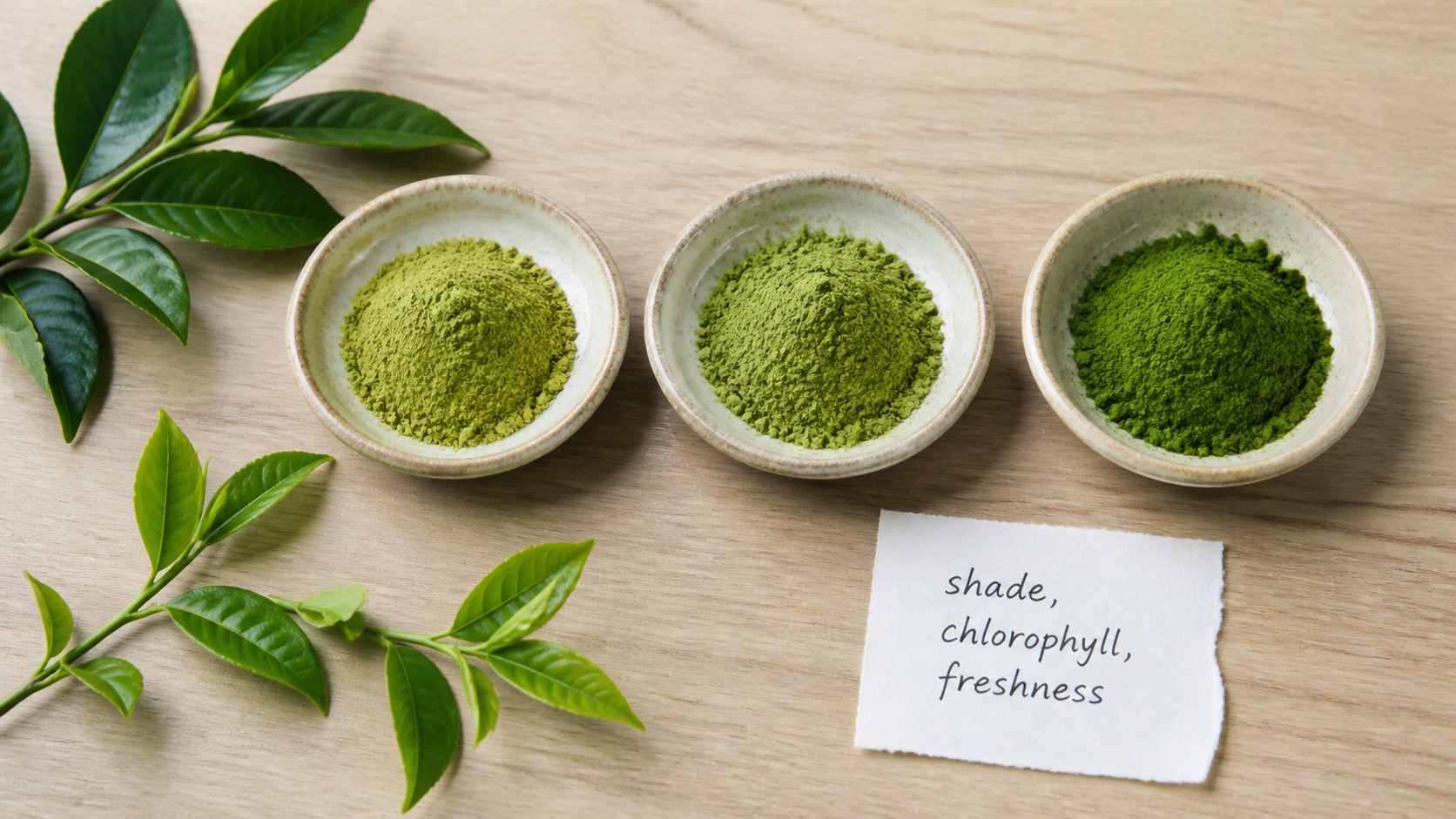
The short answer
Matcha is made from tea leaves that remain in the drink as powder. Because the whole leaf is milled and consumed, the leaf’s natural green pigments are visible in the cup. In the classical Japanese description, matcha is made from tencha: tea leaf that is shaded before harvest, steamed, dried without the rolling used for sencha, refined and ground. The Japan Matcha Association describes matcha as powdered tencha, which helps explain why matcha color is tied to both cultivation and processing rather than only to the final powder.
Why shade matters
Pre-harvest shading is one reason good matcha often looks greener than ordinary powdered green tea. Shading changes how the tea plant grows and how leaf compounds develop before harvest. In practical buying terms, shaded leaf can support a deeper green color, more umami and less harshness, while unshaded or older leaf material may look more yellow, coarse or flat.
That does not mean “the brightest powder in a photo is always the best powder.” Camera white balance, screen settings, lighting, powder density, particle size and editing can all exaggerate color. A buyer should evaluate the actual lot, ingredient statement, aroma, taste, grind, microbiological and heavy-metal documents when relevant, and performance in the intended recipe.
What changes the color of matcha powder?
| Factor | How it affects green color | What not to assume |
|---|---|---|
| Leaf material | Younger, well-handled leaf generally supports a fresher green appearance than coarse or older material. | Leaf age cannot be proven from one online image. |
| Shading | Shade management can increase the green, umami-oriented profile expected in tencha-style production. | “Shade-grown” still needs supplier evidence; it is not proven by color alone. |
| Steaming and drying | Prompt heat treatment helps stop enzymatic oxidation that would brown the leaf. | A green powder is not proof that every process parameter was optimal. |
| Milling | Fine milling exposes a large surface area and changes how light reflects from the powder. | Very bright color does not automatically mean the grind is smooth in water or milk. |
| Storage | Heat, oxygen, light and moisture can dull color and flatten aroma over time. | A dull color does not identify one exact storage mistake without lot history. |
| Recipe dilution | Milk, ice, sugar, fruit, cocoa or baking heat can hide or change the perceived green. | The same powder will not look identical in a bowl, latte, cake and ice cream. |
How green should matcha be?
Plain drinking matcha is usually expected to look green rather than tan or brown. For a bowl of straight matcha, a fresh, natural green is generally more promising than a stale olive-brown cast. For baking, ice cream or sweetened café drinks, buyers may accept a stronger, more cost-efficient powder that is less visually delicate but still performs well after milk, sugar, fat or heat.
The useful question is not only “how green is it?” Ask: green in what lighting, after what storage, at what dose, in which recipe and against which specification? A powder that looks excellent dry but turns muddy in a latte may be wrong for a café. A powder that looks less vivid dry may still be suitable for cookies or industrial blending if flavor, documentation and cost match the application.
When green color is a warning sign
- Neon green: unusually fluorescent color can be a photography issue, but it also deserves an ingredient-label check. Plain matcha should be tea leaf, not a colored drink mix.
- Brown or khaki powder: this may point to age, oxidation, heat exposure, coarse leaf, an unsuitable grade for drinking, or simply poor lighting. Smell and taste the lot before deciding.
- Patchy color: uneven color can come from clumping, moisture exposure, blending inconsistency or a photo taken after the powder was disturbed.
- Green drink but unclear powder: syrup, milk, fruit, spirulina or other ingredients can change the drink color, so finished beverages do not prove the color of the matcha ingredient.
Color is evidence, not a certificate
Color should be part of a matcha review, but it should not carry the whole decision. Scientific and industry literature on matcha composition and storage supports the basic point that cultivation, processing, temperature, light and time influence quality-related compounds. Those studies do not turn a product photo into a certificate of origin, grade, freshness or safety.
For a consumer, the practical check is simple: buy from a seller with a clear ingredient statement and reasonable storage guidance, then judge aroma, taste and texture soon after opening. For a café or private-label buyer, compare retained samples under the same lighting, prepare each lot at the same dose, test the final recipe, and request documents appropriate to the order size.
Related matcha color and quality guides
For the production sequence behind color, see how matcha is grown and made. For why market labels such as ceremonial, café and culinary are not universal regulated grades, see matcha grades explained. If you are comparing flavor as well as color, read the matcha taste and quality guide.
FAQ
Is matcha supposed to be green?
Yes. Plain matcha is powdered green tea leaf, so it should look green. The exact shade can range from vivid green to softer yellow-green depending on the leaf, process, storage, lighting and intended use.
Why is some matcha bright green?
Bright green matcha is often associated with shaded leaf, careful steaming and drying, fine milling and fresh storage. It is a useful signal, but it is not enough by itself to prove grade, origin or safety.
Why does matcha turn brown?
Browning or dull olive color can come from age, oxygen, heat, light, moisture, coarse leaf material or recipe processing. If the powder smells flat, hay-like or stale, color is only one part of the freshness problem.
Can matcha have food coloring?
Plain matcha should not need added coloring; it should be tea leaf. Some drink mixes, latte powders and flavored blends may contain other ingredients, so check the ingredient list instead of relying on the word “matcha” alone.