
Yes, matcha can cause or worsen anxiety-like symptoms in some people because it contains caffeine. The risk is higher if you are caffeine-sensitive, drink a strong serving, have matcha on an empty stomach, combine it with coffee or energy drinks, use it late in the day, or already have anxiety or panic symptoms. Matcha also contains L-theanine, but that does not guarantee a calm response for every person.
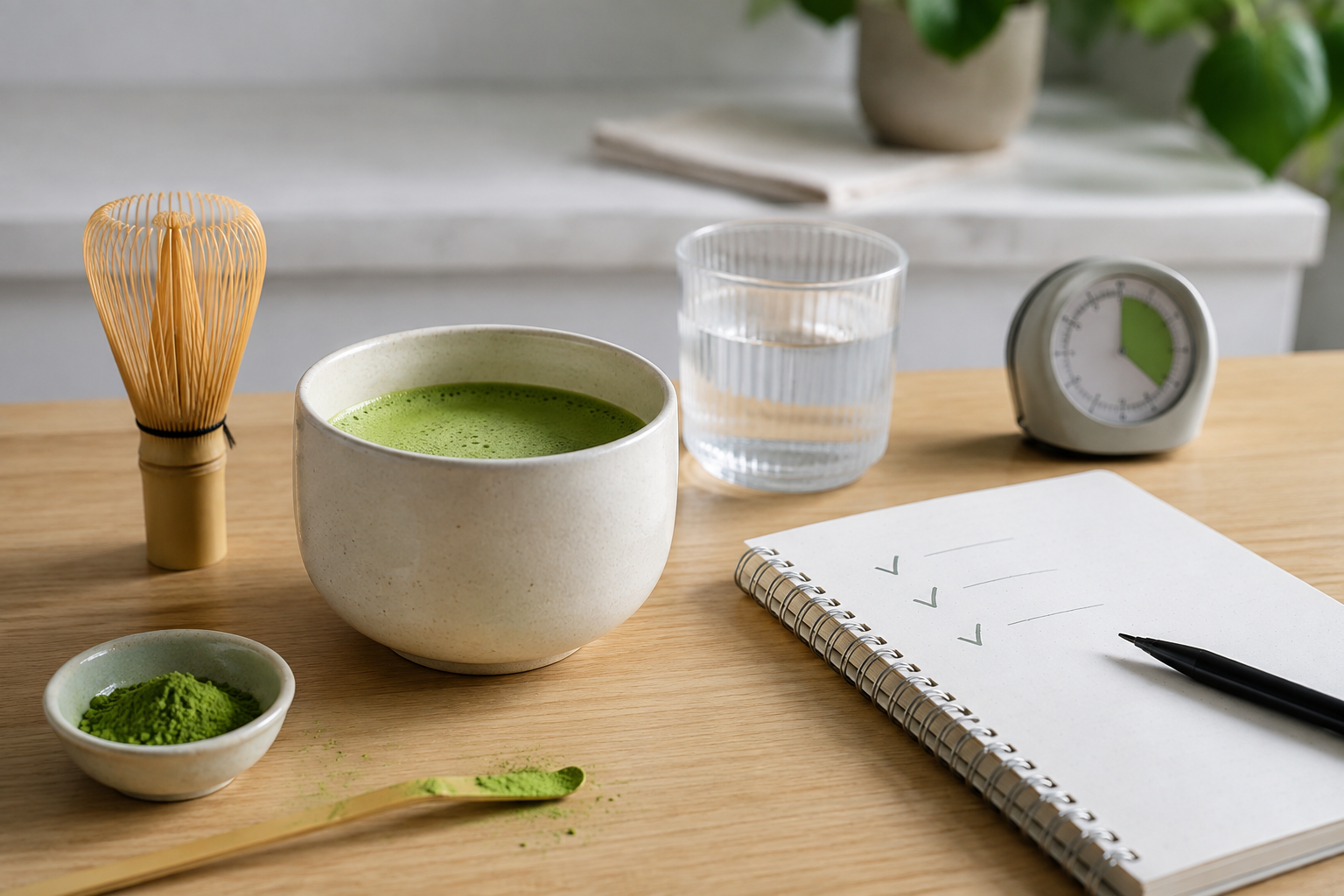
How matcha can feel like anxiety
Caffeine stimulates the central nervous system. For some people, that stimulation feels useful: alertness, focus and less sleepiness. For others, the same stimulation can feel like anxiety. The symptoms can overlap with worry or panic even when the trigger is physiological.
| Symptom after matcha | Possible caffeine-related explanation | What to check first |
|---|---|---|
| Jittery hands or inner restlessness | Dose is too high for your tolerance. | Measure grams of powder and reduce the next serving. |
| Racing heart or chest flutter | Caffeine sensitivity, other stimulants or baseline anxiety can amplify the feeling. | Stop the test and seek medical advice if symptoms are severe, new or chest-pain related. |
| Nausea plus nervousness | Empty-stomach caffeine and tannins may be irritating. | Try matcha with food or a smaller serving. |
| Sleep trouble then next-day anxiety | Late caffeine timing can reduce sleep quality. | Move matcha earlier and track bedtime. |
| Anxious only with café drinks | The serving may include more powder, sugar or another caffeine source than expected. | Compare a measured homemade cup with the café drink. |
The main variable is dose
Most anxiety questions about matcha are really dose questions. A small bowl made with 1 gram of powder is not the same as a large iced latte, a double-strength drink, a smoothie with extra scoops or a dessert drink. Because matcha is powdered tea leaf, you consume the suspended leaf powder rather than removing leaves after steeping. The caffeine amount depends on the powder dose and recipe.
If you do not know your dose, do not guess from color alone. Some bright drinks are weak, and some pale drinks are strong because of milk dilution. Use a small scale while testing. For caffeine ranges and comparisons, use does matcha have caffeine? and the related calculators instead of relying on cup size.
Why L-theanine does not make anxiety impossible
Matcha contains L-theanine, an amino acid often discussed for relaxation and attention. That is one reason many people describe matcha as smoother than coffee. But smoother is not the same as a guarantee against anxiety. If your caffeine threshold is low, if you drink a large amount, or if you are already stressed or sleep-deprived, caffeine can still cause unwanted symptoms.
This is where many simple online answers overreach. They say matcha is calming because of L-theanine, or they say matcha causes anxiety because of caffeine. Both can be true in different people. The useful question is not whether matcha is universally calming or universally risky. It is whether your dose, timing and context are a fit for your nervous system.
Timing is part of that context. Caffeine does not disappear as soon as the cup is empty, and some people feel alerting effects for hours. If your anxiety is worse in the evening or after a poor night of sleep, treat late matcha as a serious suspect. The guide to how long matcha caffeine lasts explains why half-life and personal metabolism matter more than a fixed cutoff that works for everyone.
A practical retest plan
- Pause if symptoms are strong. Do not keep testing caffeine when you have severe palpitations, chest pain, faintness, panic symptoms or a medical condition that needs care.
- Start with half your usual powder. If you usually use 2 grams, test 1 gram. Keep water, milk and sweetener simple.
- Drink it with food. Empty-stomach matcha can feel stronger and may add nausea or shakiness for some people.
- Remove other caffeine that day. Coffee, pre-workout, energy drinks, cola, chocolate and some medications can change the total load.
- Move it earlier. Test before noon if sleep is part of the problem. See when to have matcha for timing context.
- Track the result for two or three trials. Write down powder grams, time, food, sleep and symptoms. One bad day may not prove the cause.
Who should be more cautious?
- People with panic disorder, generalized anxiety, insomnia or strong caffeine sensitivity.
- People taking stimulant medication or using pre-workout supplements.
- People who already drink coffee and add matcha on top.
- Pregnant or breastfeeding people who are managing total daily caffeine.
- People with heart rhythm symptoms or medical conditions affected by stimulants.
- Anyone who notices anxiety after café drinks but does not know the recipe dose.
For broader daily-use boundaries, read is it okay to drink matcha every day?. If empty-stomach symptoms are part of the pattern, read can you drink matcha on an empty stomach?.
When to stop and ask a clinician
Stop using matcha and ask a qualified clinician if you have chest pain, fainting, severe palpitations, panic attacks, worsening anxiety, insomnia that affects daily function, or symptoms that continue after caffeine is removed. Also ask before using concentrated green-tea extracts if you take medications, have liver disease, are pregnant or have a condition where caffeine needs to be limited. Ordinary matcha drinks and concentrated extracts are not the same exposure.
MedlinePlus lists caffeine as a stimulant and describes unwanted effects such as restlessness, shakiness, insomnia and rapid heart rhythm in some situations. NCCIH notes safety considerations for green tea and green-tea extracts. PubMed-indexed clinical literature also supports the basic point that caffeine can provoke anxiety-related effects in susceptible people. That does not mean everyone must avoid matcha. It means symptoms deserve dose control rather than slogans.
How to keep matcha if you still want it
If matcha only causes mild symptoms at higher doses, you may be able to keep it by changing the routine. Use less powder, avoid drinking it quickly, pair it with breakfast, choose smaller café sizes, avoid adding coffee shots, and keep it earlier in the day. If symptoms return even with a small measured serving, matcha may not be worth it for you. The goal is not to force a healthy image onto a drink your body dislikes.
Bottom line
Matcha can cause anxiety-like symptoms in caffeine-sensitive people, especially when the dose is high, timing is late, sleep is poor or other stimulants are involved. L-theanine may soften the experience for some drinkers, but it does not cancel caffeine for everyone. If anxiety is a pattern, reduce the dose, control the test conditions and use medical advice when symptoms are significant.
Sources checked
- MedlinePlus: caffeine overview
- NCCIH: green tea
- PubMed-indexed literature on caffeine and anxiety sensitivity
FAQ
Can one cup of matcha cause anxiety?
Yes, in a caffeine-sensitive person. In many people one measured serving is fine, but tolerance varies.
Is matcha better than coffee for anxiety?
It depends on dose and the person. Matcha may feel smoother for some drinkers, but it still contains caffeine.
Can matcha cause panic attacks?
Caffeine can provoke panic-like symptoms in susceptible people. If this happens, stop testing caffeine and speak with a clinician.
Should I drink matcha if I have anxiety?
Use a cautious trial only if your symptoms are mild and your clinician has not told you to avoid caffeine. Start small, drink it with food and avoid other caffeine that day.