
For many adults, drinking matcha every day can be okay, but it depends on the serving, total caffeine, personal sensitivity and what else is in the drink. A small cup of plain matcha is not the same decision as several large sweetened lattes, a matcha-plus-coffee drink, or a concentrated green-tea extract supplement.
The short safety answer
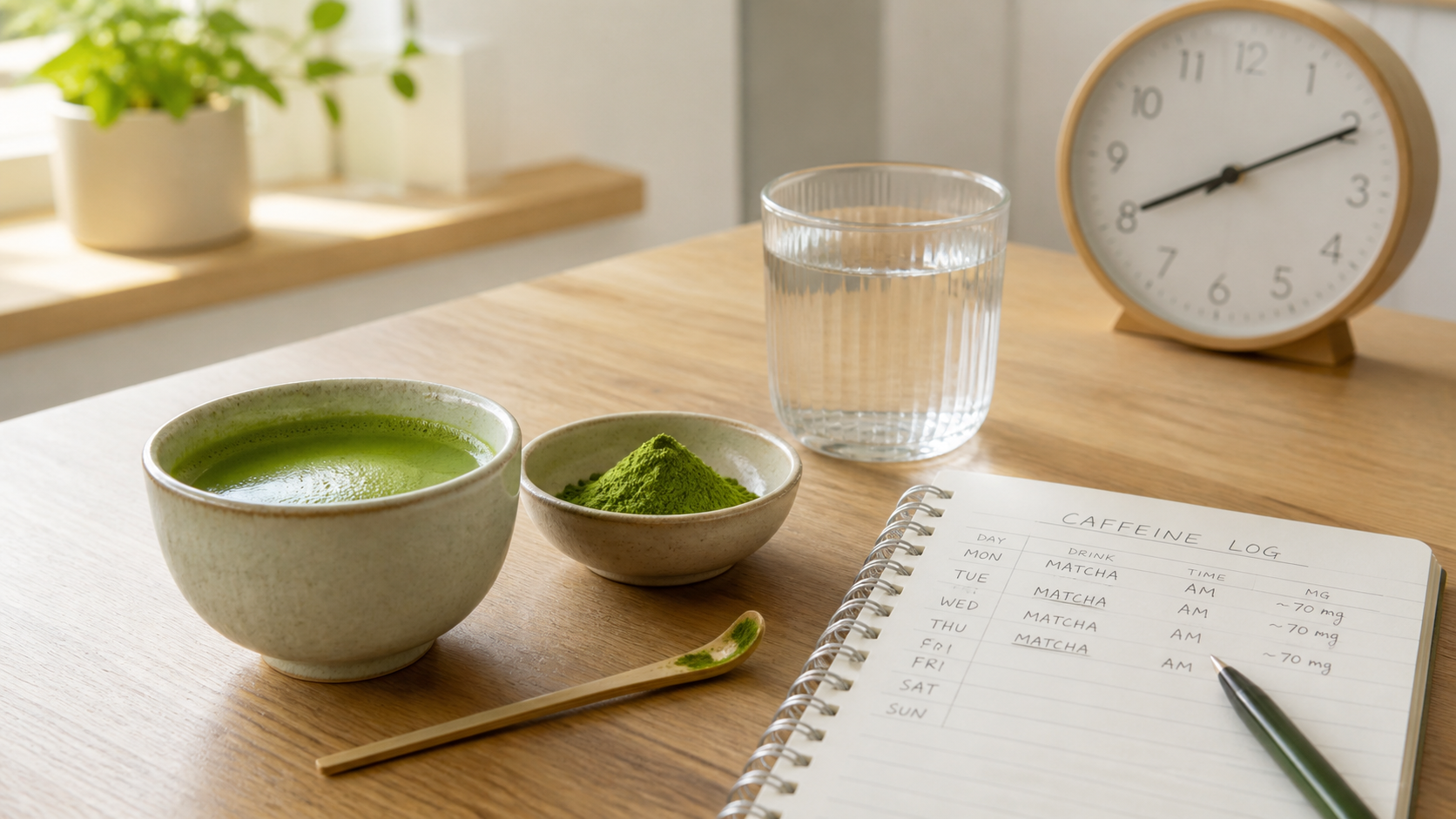
Daily matcha is usually a caffeine-planning question before it is a “superfood” question. Matcha is powdered green tea, so a prepared drink naturally contributes caffeine. The amount varies by powder and dose. If you tolerate caffeine, use a measured serving, avoid late-day sleep disruption and count other caffeine sources, daily matcha may fit your routine. If you are pregnant, unusually sensitive to caffeine, taking relevant medicines or managing a health condition, use individualized medical guidance.
A daily-use checklist
| Question | Why it matters | Practical action |
|---|---|---|
| How many grams of matcha are in one serving? | Caffeine follows the powder dose more than the cup size. | Weigh or use a consistent measured scoop. |
| How much caffeine is in the rest of your day? | Coffee, tea, energy drinks, cola, chocolate and some medicines add up. | Track total caffeine, not matcha alone. |
| Do you feel symptoms? | Jitters, palpitations, anxiety, nausea or insomnia can mean the amount is wrong for you. | Reduce, stop or ask a clinician if symptoms occur. |
| Is it plain matcha or a sweetened drink? | Syrups, sweetened powders and flavored milks change calories and sugar. | Read ingredients or ask the café how it is made. |
| When do you drink it? | Caffeine later in the day can affect sleep in sensitive people. | Move it earlier or use a smaller serving if sleep changes. |
| Are pregnancy, breastfeeding, age or medicines relevant? | General adult caffeine advice may not apply. | Follow clinician, pharmacist or pregnancy-specific guidance. |
How much caffeine is too much?
The U.S. FDA says that for most adults, 400 mg of caffeine per day is an amount not generally associated with dangerous negative effects, while also emphasizing that sensitivity varies. That is not a recommendation to drink 400 mg and not a matcha-specific prescription. It is a ceiling-style reference for many healthy adults.
Matcha caffeine estimates should start with powder weight. One Sailtik dose table uses a published matcha range of 17.2–44.1 mg caffeine per gram. Under that assumption, a 2 g serving is roughly 34–88 mg and a 3 g serving is roughly 52–132 mg. Product-specific testing or a supplier value should take priority over a general literature range.
Pregnancy and daily matcha
ACOG pregnancy nutrition guidance says pregnant people should generally keep caffeine under 200 mg per day. That total includes coffee, tea, matcha, cola, energy drinks, chocolate and other caffeine sources. Because matcha dose and sensitivity vary, pregnancy is not the place to rely on a generic “one or two cups is fine” rule. Ask your clinician how matcha fits your total caffeine plan.
Plain matcha is different from sweetened matcha drinks
Plain matcha powder contributes tea flavor and caffeine. A sweetened café drink can add milk, syrup, sweetened powder, whipped cream, cold foam or fruit sauce. A daily sweetened latte should be counted as a regular nutrition habit, not treated as plain tea. If your goal is a daily routine with fewer variables, use plain matcha and add milk or sweetener intentionally.
Do not confuse matcha drinks with green-tea extract supplements
Ordinary matcha drinks and concentrated green-tea extract supplements are different exposure scenarios. NCCIH notes that green tea as a beverage is generally believed to be safe when consumed in moderate amounts, while concentrated extracts have been linked with liver problems in some cases. This page is about matcha as a drink or food ingredient, not supplement dosing.
When daily matcha may not be okay
- You notice insomnia, anxiety, fast heartbeat, nausea or stomach discomfort after drinking it.
- You already consume a lot of caffeine from coffee, energy drinks or other teas.
- You are pregnant, breastfeeding, under 18, taking medicines or managing a condition affected by caffeine.
- You are using matcha as a substitute for medical care, weight-loss treatment or a disease-prevention plan.
- Your daily drink is actually a large sweetened latte and the sugar or calories do not fit your nutrition goals.
A safer daily routine
- Start with a modest measured serving, such as 1.5–2 g of plain matcha, if the product label does not specify another serving.
- Drink it earlier in the day until you know how your sleep responds.
- Count all caffeine sources for the day.
- Keep sweetener, milk and toppings measurable.
- Stop or reduce the serving if symptoms appear.
- Use professional advice for pregnancy, medication interactions or diagnosed conditions.
Bottom line
It can be okay to drink matcha every day when the serving is modest, total caffeine fits your situation and the complete drink matches your nutrition goals. It is not automatically safe for everyone, and it is not a guaranteed health treatment. Treat daily matcha as a measured caffeine habit.
Related guides
For gram-based planning, read how much matcha per day. For safety limits, see how much matcha is safe. For serving-level caffeine estimates, use the matcha caffeine dose table.
FAQ
Is it safe to drink matcha every day?
For many adults, yes, if the serving is measured and total caffeine stays within a suitable range. It is not a universal guarantee for people who are pregnant, caffeine-sensitive, taking medicines or managing relevant health conditions.
Is it okay to drink matcha green tea every day?
It can be okay as a normal caffeinated tea habit. Check the matcha dose, time of day and other caffeine sources instead of assuming every cup has the same caffeine.
Can I drink a matcha latte every day?
You can, but evaluate it as a latte. Milk, syrup, sweetened powder and toppings may matter more than the matcha powder itself.