
If you came here from the “why buy an expensive matcha cake” meme, the practical answer is this: make a smaller, well-measured matcha cake first, and spend money on the right powder dose instead of on decoration alone. The formula below is not an official meme recipe or a Sailtik-tested commercial formula. It is a controlled starter recipe for a home-style 6-inch matcha layer cake, written so you can adjust color, bitterness, cost and texture without wasting premium matcha.
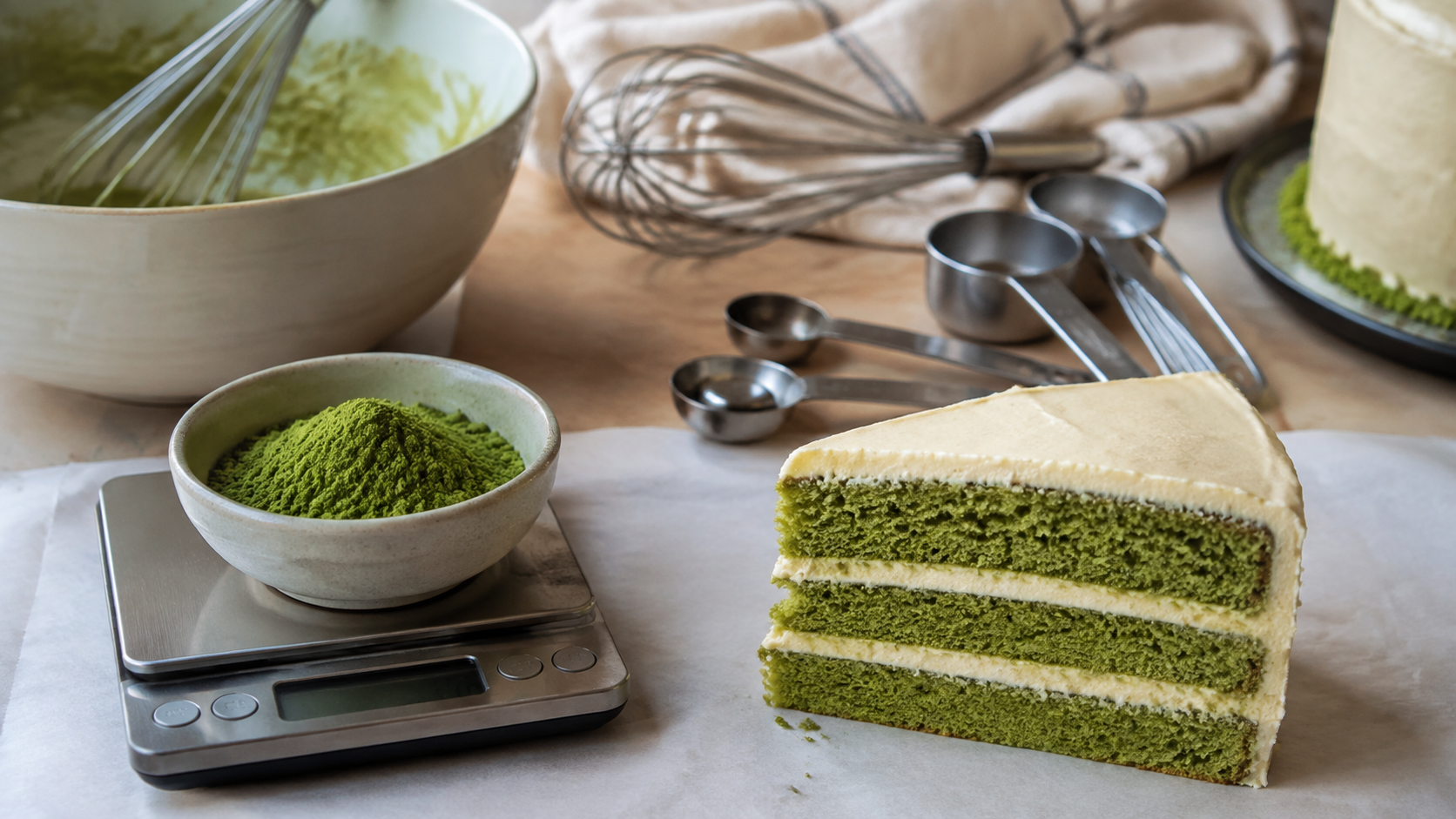
What this recipe is trying to solve
A lot of matcha cake recipes answer only one question: which ingredients go in the bowl. The harder question is why a cake that looks simple can cost more than expected. Matcha is color-sensitive, easy to overuse, and unforgiving when the powder is stale, too bitter or measured by a packed spoon. Cream, fruit, chocolate, decoration and labor add more cost, but the first avoidable waste is usually uncontrolled matcha dosing.
This page is therefore written as a recipe plus a decision guide. If you only want the meme meaning, read Sailtik’s meme explainer. If you are choosing powder for bakery production, use the commercial baking test guide instead. This article is the middle ground: a home baker or small test kitchen trying to make one convincing cake before scaling up.
6-inch starter formula
Use grams for the first run. Cups and tablespoons are too inconsistent for matcha because powder settles, clumps and varies by grind. A digital scale is cheaper than one ruined cake.
| Ingredient | Amount | Why it is there |
|---|---|---|
| Cake flour | 120 g | Soft crumb; all-purpose flour makes a firmer cake. |
| Baking powder | 5 g | Lift for a small sponge-style layer cake. |
| Fine salt | 1 g | Balances sweetness and matcha bitterness. |
| Matcha powder | 7–9 g | Visible green color and flavor without turning harsh. |
| Unsalted butter, softened | 85 g | Richness and structure. |
| Granulated sugar | 115 g | Sweetness, aeration and moisture. |
| Eggs | 2 large, about 100 g without shell | Structure and emulsification. |
| Whole milk | 80 g | Hydration and softness. |
| Vanilla | 3–4 g | Rounds the dairy and green-tea flavor. |
| Optional neutral oil | 10 g | Softens the crumb if your first test is dry. |
This gives two thin 6-inch layers or one thicker 6-inch cake that can be split after cooling. If you use 8-inch pans, the layers will be shallow; increase the formula by about 1.7× for a taller 8-inch two-layer cake.
Cream filling
For a simple expensive-looking version, use a light cream filling rather than heavy fondant. Whip 240 g cold heavy cream with 25–35 g powdered sugar and 2–3 g vanilla until it holds soft peaks. For a stronger matcha filling, sift in 2 g matcha with the sugar before whipping. Do not dump dry matcha straight into already-whipped cream; it streaks and leaves bitter specks.
Method
- Prepare the pans. Line two 6-inch pans with parchment. Heat the oven to 170°C / 340°F. If your oven runs hot, start at 165°C.
- Sift the dry ingredients twice. Combine cake flour, baking powder, salt and matcha, then sift. This is not cosmetic. Unsifted matcha makes dark dots and bitter pockets.
- Cream butter and sugar. Beat softened butter with sugar until lighter and slightly fluffy. Scrape the bowl before adding eggs.
- Add eggs gradually. Add eggs in two or three additions. If the batter looks split, mix in one spoonful of the dry mixture before continuing.
- Alternate dry mix and milk. Add dry ingredients in three additions and milk in two additions. Mix only until no dry streaks remain.
- Bake gently. Divide into pans and bake about 22–28 minutes, depending on pan material and oven accuracy. Pull the layers when the center springs back and a tester has a few moist crumbs, not wet batter.
- Cool completely. Warm cake melts cream and traps steam. Cool in the pan for 10 minutes, then unmold and cool fully before filling.
- Fill and chill. Add cream between layers, coat lightly, then chill 30–60 minutes before slicing.
How much matcha should you use?
For a 6-inch cake, start at 7 g if your powder is bold or slightly bitter, and 9 g if it is mild. Going higher can make the cake greener, but it also increases bitterness, dryness and cost. If the cake tastes weak at 7 g, do not immediately double the powder. First check whether the cake was overbaked, whether the cream is too sweet, and whether the powder is fresh enough to carry aroma.
| Matcha dose | Likely result | Best use |
|---|---|---|
| 5–6 g | Mild green-tea note; color may look pale after baking. | First test for children, mild palates or strong fillings. |
| 7–9 g | Clear matcha flavor with manageable bitterness. | Recommended first serious version. |
| 10–12 g | Stronger color and bitterness; higher powder cost. | Only after a successful 7–9 g test. |
| More than 12 g | Can taste grassy, drying or chalky unless the formula is adjusted. | Small test batch only, not the first full cake. |
What makes a matcha cake expensive?
The word expensive can mean several things. It may mean a bakery price, a luxury-looking dessert, a viral joke, or the real cost of ingredients. For a home baker, the useful breakdown is practical:
- Matcha grade and dose. A cake needs enough powder to survive baking, but the highest ceremonial powder is usually wasteful inside butter, sugar and cream.
- Failed color tests. Dull green cake often comes from stale powder, too much heat, overbaking or weak dosing, not from one missing decoration.
- Dairy and filling. Cream, mascarpone, white chocolate, fruit and imported decorations can cost more than the sponge.
- Labor. Layering, chilling, trimming and decoration take time. A bakery charges for that time.
- Small-batch risk. If a bakery makes only a few matcha cakes, the unused cream, powder and labor are spread over fewer orders.
For more on selecting powder by application, see the grade comparison guide. For commercial buyer tests, the more relevant page is the bakery matcha testing guide.
Do not use the most expensive matcha blindly
A delicate ceremonial-style matcha can be beautiful in a bowl of usucha and still be a poor value in cake. Baking mutes aroma and surrounds the powder with fat, sugar and flour. For cake, a vivid culinary or café-grade matcha often gives a better cost-to-color result than a very expensive drinking matcha. The right test is the finished slice, not the dry powder photo.
Before using a new powder in a full cake, make a tiny batter test: mix 20 g of finished batter with a proportional pinch of matcha, microwave or pan-bake it gently, and taste it with a little cream. This is not identical to oven baking, but it reveals obvious bitterness, stale aroma and color weakness before you commit a whole batch.
Color control: where most versions fail
Bright matcha cake is not only about adding more powder. Several avoidable choices make the green look dull:
- Old powder: matcha loses freshness after opening, especially with heat, light and air exposure.
- Overbaking: a dry cake often looks browner and tastes more bitter.
- Too much baking soda: this formula uses baking powder only. Do not add baking soda unless you are reformulating acid balance.
- Brown butter or dark sugar: tasty, but they push the color toward olive or tan.
- Unsifted matcha: clumps create dark specks instead of even green color.
If color matters more than maximum tea intensity, use a fresher powder and a gentler bake before increasing the dose. If flavor matters more than color, a slightly duller but aromatic cake is usually better than a neon-green cake that tastes harsh.
Cost-saving substitutions that still make sense
You can make the cake look more expensive without wasting matcha. Keep the sponge measured and simple, then add value where people notice it: clean layers, neat cream, one restrained garnish and a good slice. If you want fruit, strawberries, raspberries or a thin citrus layer can work, but they change moisture and sweetness. Add them after the base cake succeeds once.
Avoid using matcha in every component on the first attempt. Matcha sponge plus matcha cream plus matcha dusting can become expensive and bitter. A better first build is matcha sponge, vanilla cream and a very light matcha dusting just before serving.
Troubleshooting
| Problem | Likely cause | Next test |
|---|---|---|
| Cake is brown-green | Overbaked, stale powder or dark ingredients. | Lower oven temperature slightly, shorten bake and use fresher matcha. |
| Cake is bitter | Too much matcha, poor powder fit or not enough salt/cream balance. | Drop matcha by 1–2 g and keep the cream simple. |
| Green dots in crumb | Matcha was not sifted or dispersed. | Sift with flour twice and scrape the bowl well. |
| Dry crumb | Overbaking, too much flour or too much powder. | Weigh flour, reduce bake time and add 10 g neutral oil. |
| Cream turns streaky | Dry matcha added after whipping. | Sift matcha with powdered sugar before whipping or make a smooth matcha paste first. |
Can you scale this for a bakery?
Not directly. A home starter formula is useful for flavor direction, but a bakery needs controlled batch tests: pan size, oven load, cooling time, shelf life, margin, allergen labeling, supplier documents and repeatability across powder lots. If you are buying matcha for repeated baking, evaluate powder in the final baked product, not only in a latte or dry tasting. Sailtik’s bakery-focused buyer guide covers those purchasing and testing questions in more detail.
Bottom line
An expensive-looking matcha cake does not require the most expensive powder. It requires measured powder, fresh enough color, gentle baking, clean cream work and one successful small test before scaling. Start with 7–9 g matcha in a 6-inch cake, document the result, and adjust one variable at a time. That is how you make the meme idea useful without turning it into an expensive failed batch.
Sources checked
- Sailtik meme-origin article
- Sailtik commercial baking article
- Sailtik matcha grade guide
- Sailtik matcha powder use guide
- King Arthur Baking ingredient weight chart
FAQ
Is this the official viral cake formula?
No. It is a practical starter formula for people searching the cooking version of the phrase. It is not sourced from the meme creator, a franchise owner or a Sailtik product test.
Can I use ceremonial matcha for the cake?
You can, but it is often not the best value. A bright culinary or café-use powder may give better baked-cake color for less money.
Why did my matcha cake turn brown?
The common causes are stale powder, overbaking, too much heat, dark ingredients or weak dosing. Fix those before adding large amounts of matcha.
Can I make this without a scale?
You can try, but the first serious test should use a scale. Matcha and flour vary too much by spoon packing for consistent color and texture.
How do I make it look expensive without wasting matcha?
Use matcha mainly in the sponge, keep the cream clean, slice neatly, chill before cutting and finish with a very thin dusting at service.