
If “stronger” means caffeine, a regular coffee latte is usually stronger than a matcha latte. If “stronger” means taste, the answer is less tidy: a matcha latte can taste greener, sweeter or more earthy, while a coffee latte tastes more roasted and espresso-forward. The word stronger needs a unit.
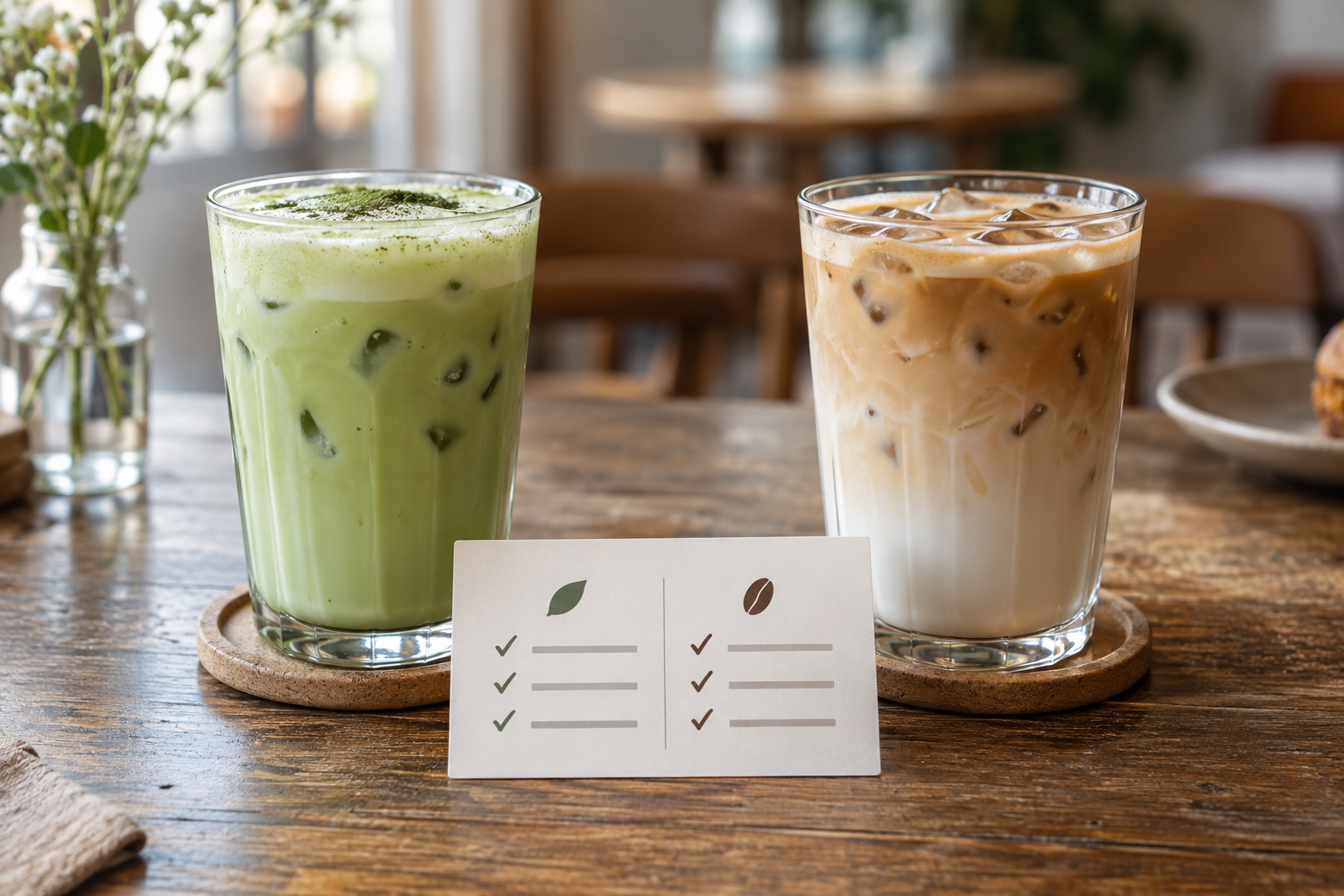
In café language, an unqualified latte normally means espresso and milk. A matcha latte means matcha powder, liquid and milk. Both can be smooth and milk-heavy, but their caffeine sources are different: brewed espresso on one side, powdered green tea on the other.
The quick comparison
| Meaning of “stronger” | Usually stronger | Why |
|---|---|---|
| Caffeine per standard café order | Coffee latte | Espresso-based lattes often use one or two espresso shots. |
| Green tea flavor | Matcha latte | Matcha is whole powdered tea leaf suspended in the drink. |
| Roasted bitterness | Coffee latte | Espresso brings roasted coffee compounds that matcha does not have. |
| Sweetness on many chain menus | Often matcha latte | Some chain matcha lattes include sweetener in the standard build. |
| Calm or smooth feel | Depends on the person | Caffeine tolerance, drink size, food intake and sleep matter more than the name. |
Strong taste is not the same as high caffeine. Current U.S. Starbucks nutrition pages show a useful café example: a Grande Caffè Latte at 150 mg caffeine and a Grande Matcha Latte at 65 mg. Those numbers are Starbucks examples, not a universal law for every café.
Why a coffee latte often has more caffeine
A coffee latte is built around espresso. At Starbucks, the current Grande Caffè Latte nutrition page shows 150 mg caffeine, which reflects a two-shot Grande espresso drink. Many independent cafés use similar one-shot or two-shot logic, though exact espresso dose and caffeine extraction vary.
A matcha latte uses tea powder instead. Sailtik’s matcha caffeine guide explains why matcha caffeine depends on the grams of powder and the caffeine concentration of that specific powder. Milk does not remove caffeine; it only changes the drink’s concentration and texture.
Why a matcha latte can still feel strong
Matcha can feel strong because you drink suspended tea leaf, not just brewed tea water. A greener, more bitter, more vegetal matcha latte may taste stronger than a mild coffee latte even when it contains less caffeine. Sweetness can also mask bitterness, so a sweet matcha latte may go down easily while still delivering caffeine.
That is where people get tripped up. Strength in the mouth is sensory. Strength in the body is dose. They overlap, but they are not the same measurement.
Starbucks example: Grande latte vs Grande Matcha Latte
| Current U.S. Starbucks example | Caffeine shown | What that tells you |
|---|---|---|
| Grande Caffè Latte, 16 fl oz | 150 mg | Usually the stronger caffeine choice. |
| Grande Matcha Latte, 16 fl oz | 65 mg | Moderate caffeine, but still caffeinated. |
Use those numbers as a dated example, not a permanent rule. Starbucks says nutrition information is based on standard recipes and can vary with customization. Other countries, other cafés and homemade recipes may use different espresso shots or matcha grams.
What if you add espresso to matcha?
A dirty matcha latte changes the answer because it combines matcha caffeine and espresso caffeine. If you add a shot of espresso to matcha, you no longer have a simple matcha-latte-versus-latte comparison. You have a hybrid drink, and the total caffeine is the matcha contribution plus the espresso contribution.
For homemade or café formulation, the cleanest way to control strength is to weigh matcha powder and count espresso shots. Cup color, foam height and sweetness are poor substitutes for actual dose.
Bottom line
A regular coffee latte is usually stronger for caffeine, especially in a Grande espresso-based café order. A matcha latte is stronger in green-tea character and may taste sweeter or more vegetal. For energy, compare caffeine numbers. For flavor, compare the drink style, sweetness and bitterness instead.
Sources checked
- Starbucks U.S.: Caffè Latte nutrition page
- Starbucks U.S.: Matcha Latte nutrition page
- Sailtik: matcha caffeine and coffee comparison
- Sailtik: matcha latte caffeine guide
- Sailtik: matcha versus coffee and chai context
FAQ
Is a matcha latte stronger than a regular latte?
Usually not for caffeine. A regular espresso latte often has more caffeine, while a matcha latte can taste stronger in green-tea flavor.
Does a matcha latte have less caffeine than coffee?
Often yes, especially compared with brewed coffee or a two-shot latte. The exact answer depends on matcha grams, espresso shots and serving size.
Which tastes stronger, matcha latte or latte?
A coffee latte tastes more roasted and espresso-like. A matcha latte tastes greener, earthier and sometimes sweeter, depending on the powder and recipe.
Can a matcha latte keep you awake?
Yes. Matcha latte contains caffeine unless it is made with a caffeine-free substitute, which would no longer be normal matcha.