
Good things to put in a matcha latte include vanilla, honey, maple syrup, brown sugar syrup, oat milk, coconut milk, strawberry, citrus, lavender, mint, white chocolate and a tiny pinch of salt. The best choice depends on what you want to fix. Bitter matcha needs a different add-in than a watery latte.
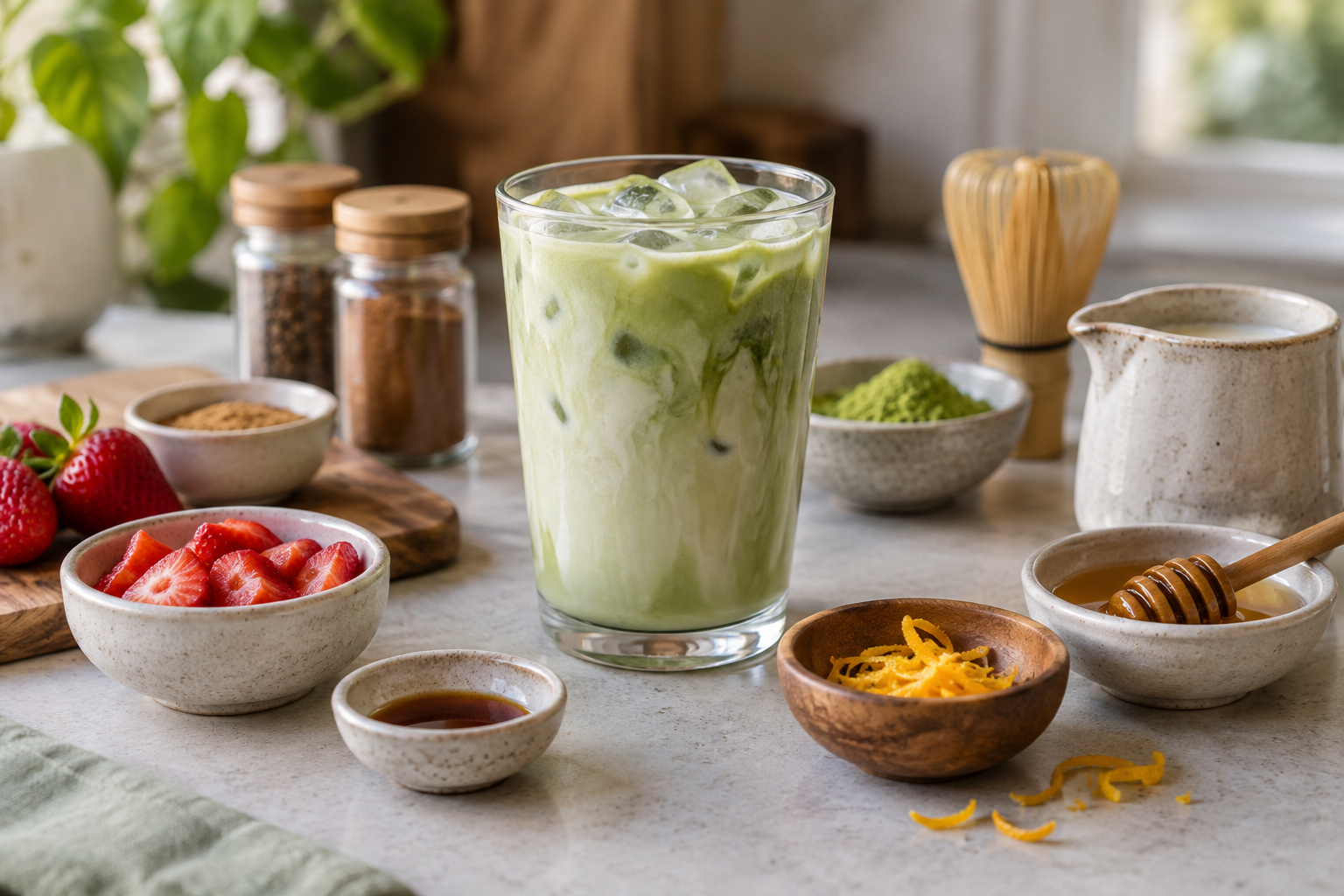
A matcha latte starts with matcha powder, a little water and milk. Add-ins work best when they support that base instead of burying it. If the powder is stale, harsh or clumpy, no syrup can fully hide the problem; fix the mixing and dose first.
Choose the add-in by the problem
| If the latte tastes… | Try this | Why it helps |
|---|---|---|
| Bitter or sharp | Vanilla, honey, maple or oat milk | Rounder sweetness softens the edge. |
| Grassy | Strawberry, citrus peel or coconut milk | Fruit and fat balance vegetal notes. |
| Flat | One small salt pinch or vanilla | Small aroma and seasoning cues wake up the drink. |
| Thin | Less water in the concentrate, creamier milk | The fix is often ratio, not more syrup. |
| Too sweet | More matcha concentrate, unsweetened milk, ice control | Sweetness needs dilution and tea structure. |
Flavor pairings that usually work
- Vanilla: the safest café-style add-in because it smooths bitterness without fighting the green-tea flavor.
- Strawberry: good for iced lattes; use puree or compote sparingly so it does not turn into dessert soup.
- Honey: round and floral, but it can dominate delicate matcha.
- Maple: warmer and deeper than white sugar; better in hot lattes than very bright iced drinks.
- Oat milk: gives body and natural sweetness, though brands vary a lot.
- Coconut: useful when the matcha tastes grassy, but easy to overdo.
- Citrus zest: a little lemon or orange aroma can brighten iced matcha; juice can curdle dairy milk, so use care.
- Lavender or mint: measure with restraint. These move from elegant to perfume quickly.
What to fix before adding flavor
If your matcha latte tastes bad, first check the base. Sailtik’s matcha taste guide covers the common faults: water that is too hot, too much powder, stale powder, weak whisking and too much dilution. A good latte usually starts around 1.5–3 g matcha per cup, then adjusts for milk, ice, sweetness and cup size.
For iced lattes, do not dump dry matcha straight into cold milk and expect it to dissolve. Make a small smooth concentrate first. Then add milk and ice. That one step improves almost every add-in because the flavor is cleaner before you customize it.
What not to add blindly
Do not add every trendy flavor at once. Strawberry plus vanilla can work. Lavender plus citrus can work. Strawberry, lavender, coconut, vanilla and cold foam in one cup usually hides the matcha instead of improving it.
Also be honest about sugar. A flavored latte can be delicious, but syrup, honey and sauces still count as sweeteners. If you want a daily latte, keep the base simple and rotate one add-in at a time.
Bottom line
Vanilla, oat milk, honey, maple, strawberry and citrus are the most reliable matcha latte add-ins. Use them with a reason: soften bitterness, add body, brighten aroma or create a specific flavor. If the base is clumpy or harsh, fix the matcha first.
Sources checked
- Sailtik: what is in a matcha latte
- Sailtik: hot and iced matcha latte method
- Sailtik: how to make matcha taste good
- Sailtik: grams of matcha per latte
FAQ
What syrup is good in a matcha latte?
Vanilla is the safest choice. Brown sugar syrup, maple and honey can also work, but use less than you would in coffee because matcha bitterness is different.
What fruit goes well with matcha latte?
Strawberry is the easiest pairing. Mango, raspberry and citrus can work, but they need careful sweetness and acidity control.
Is cinnamon good in matcha latte?
A small amount can be good in a warm, sweet latte. Too much cinnamon can make matcha taste dusty or muddy.
What milk tastes best with matcha?
Oat milk is popular because it adds body and mild sweetness. Dairy milk, soy milk and coconut milk can also work depending on the flavor you want.