
Too much coffee is often worse by caffeine dose, but too much matcha is not harmless. The practical question is not which drink has the better reputation. It is how much caffeine you consumed, how fast you consumed it and whether your body is already giving you symptoms.
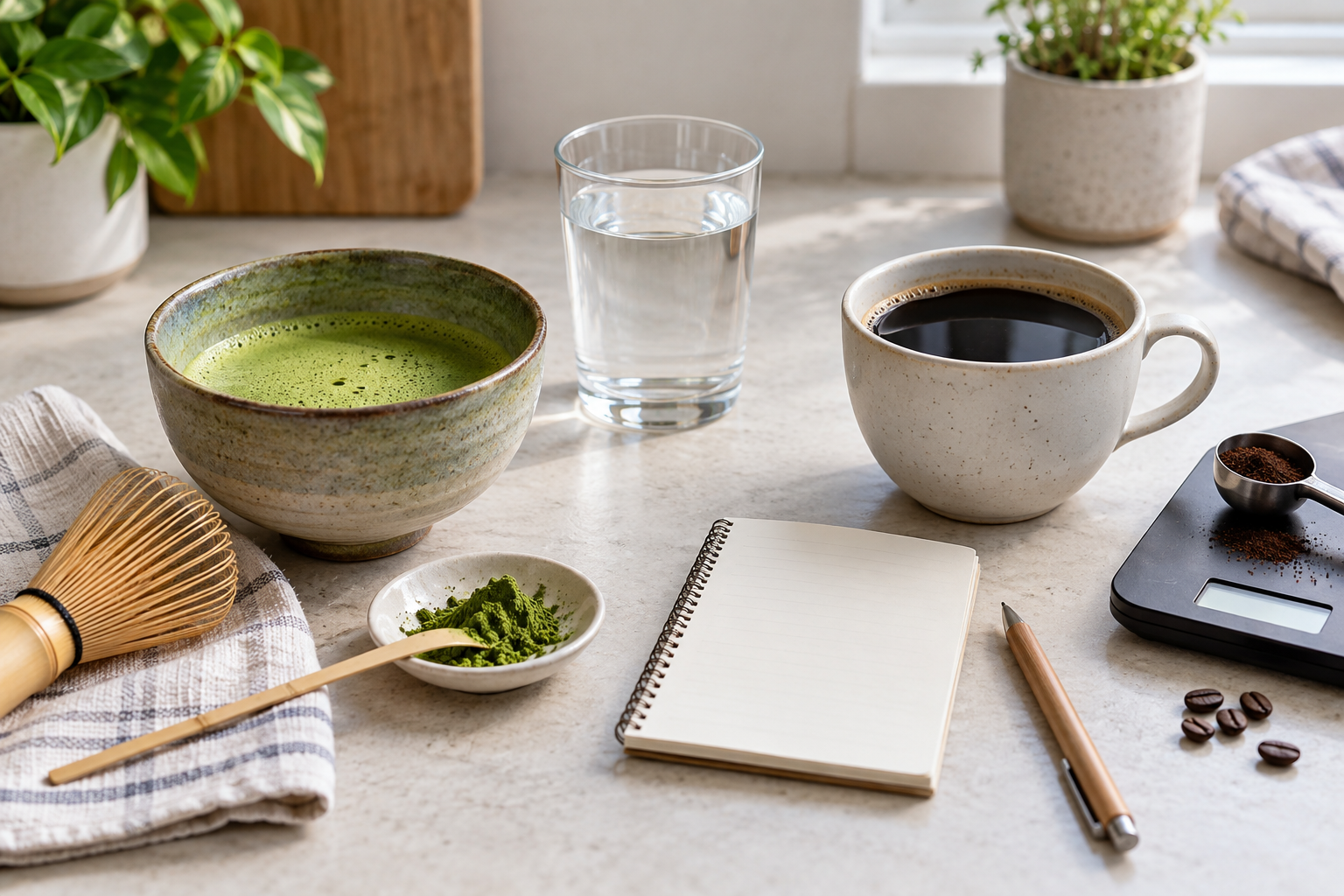
FDA says about 400 mg of caffeine per day is an amount not generally associated with dangerous negative effects for many adults, while also noting that sensitivity and metabolism vary. A large coffee, several espresso drinks or coffee plus energy drinks can reach that line quickly. Matcha usually contributes less caffeine per serving than a large coffee, but a strong bowl, multiple lattes or matcha stacked with coffee can still be too much.
A fair comparison
| Situation | Usually worse | Why |
|---|---|---|
| One strong coffee versus one modest matcha | Coffee | It often has more caffeine per serving. |
| Several sweet matcha lattes | Matcha can be worse | Caffeine adds up and sugar or milk changes the drink. |
| Caffeine-sensitive person | Either | Symptoms matter more than average caffeine tables. |
| Pregnancy | Either if it exceeds the limit | ACOG uses 200 mg per day as the moderate-caffeine boundary. |
| Green-tea extract supplements | Not comparable to normal matcha | NCCIH notes different safety concerns, including rare liver problems with extracts. |
Symptoms are the stop sign
MedlinePlus lists caffeine effects such as trouble sleeping, headaches, dizziness, fast heart rhythm, dehydration, anxiety and dependence. If those show up after matcha, coffee or both, the answer is not to argue which drink is healthier. The next step is to reduce total caffeine and look at timing, dose and other stimulants.
Also count hidden sources: black tea, green tea, cola, energy drinks, pre-workout products, chocolate and some medicines. People often blame the last drink of the day when the real problem is cumulative intake.
Where matcha gets unfairly overpraised
Matcha has a calmer image because it is green tea and is often served in smaller portions. That image can be useful if it helps someone choose a smaller unsweetened drink. It becomes misleading when it turns into “unlimited matcha is fine.” Powder dose, cup size and number of servings still matter.
For a normal serving comparison, use Sailtik’s matcha caffeine versus coffee guide. If your question is daily safety rather than one-drink comparison, see how much matcha is safe. For broader pros and cons, use is matcha healthier than coffee?
A practical rule
- If you feel jittery, nauseated, anxious or wired, stop adding caffeine for the day.
- If sleep is affected, move caffeine earlier and reduce the afternoon dose.
- If you are pregnant, trying to become pregnant or breastfeeding, follow clinician guidance and the lower caffeine limit.
- If you take medicines or have heart rhythm, anxiety, reflux or blood-pressure concerns, ask a clinician or pharmacist.
- Do not treat green-tea extract capsules as the same safety question as a cup of matcha.
Sources checked
- FDA: how much caffeine is too much?
- MedlinePlus: caffeine
- NCCIH: green tea safety
- ACOG: caffeine during pregnancy
FAQ
Is too much matcha safer than too much coffee?
Not automatically. Coffee often delivers more caffeine per serving, but matcha can still become too much if you drink several servings or use a strong dose.
What should I do if I had too much caffeine?
Stop caffeine for the day, drink water, eat normally if you can and rest. Seek urgent care for severe symptoms such as chest pain, fainting, confusion or a dangerously fast heartbeat.
Does matcha have less caffeine than coffee?
Usually per standard serving, yes, but recipe size matters. A strong matcha latte is not the same as a small traditional bowl.